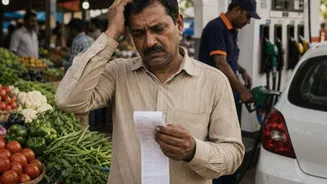


A Sharp Spike in Prices
India's wholesale price index (WPI) inflation jumped to 11.39% in September 2026, a significant increase from 9.92% in August. This figure, released by the Ministry of Commerce and Industry, represents the rate of price changes for goods traded in bulk
by wholesale businesses, rather than those bought by consumers. The spike to a multi-year high indicates that the costs for producers and businesses are rising broadly and rapidly across the supply chain, creating the foundation for future price hikes at the retail level.
What's Fuelling the Fire?
The surge isn't caused by a single factor but a combination of pressures across major sectors. A primary driver is the 'fuel and power' category, where inflation climbed to a staggering 25.85%. This is largely due to elevated global crude oil and natural gas prices, with geopolitical tensions in West Asia contributing to the volatility. Alongside energy, costs for manufactured products also saw a notable increase, with inflation in this large segment rising to 9.76%. This includes price rises for crucial industrial inputs like basic metals, chemicals, textiles, and plastic products. Furthermore, food inflation at the wholesale level also accelerated, reaching 8.66%, adding another layer of cost pressure.
The Retailer's Difficult Dilemma
This wave of wholesale price increases places retailers in a precarious position. They face a difficult choice: absorb the higher costs themselves, which directly erodes their profit margins, or pass the burden onto consumers through higher shelf prices. For many businesses, especially smaller ones, absorbing such significant cost hikes is not sustainable long-term. Analysts note that while many companies have been trying to hold back, sustained pressure will inevitably force their hand. Some retailers are reportedly accepting thinner margins for now to avoid deterring customers, particularly ahead of the festive season.
Is This Affecting Consumer Prices Yet?
There are clear signs the pressure is already trickling down. Data for retail inflation, measured by the Consumer Price Index (CPI), showed a rise to 5.54% in September. While WPI measures producer-level prices, CPI tracks the prices consumers actually pay for goods and services. The rise in CPI, particularly in food items where inflation hit 7.74%, shows that households are already feeling the pinch. Economists note that while the transmission from wholesale to retail isn't always immediate or one-for-one, persistent high WPI is a strong leading indicator of future consumer price hikes. Some companies in sectors like automobiles and consumer goods have already announced price increases that will likely reflect in coming months.
Sectors Feeling the Squeeze
The impact is broad but particularly acute in certain industries. Fast-moving consumer goods (FMCG) companies are facing significant margin pressure as raw material costs outpace their ability to raise prices without losing customers. The manufacturing sector is also heavily impacted, with industries dependent on basic metals, chemicals, and plastics facing a direct hit to their input costs. The textile and apparel industry has also been cited as a driver of wholesale inflation, suggesting that the cost of clothing could be under pressure. Ultimately, any business with significant fuel, transport, or raw material expenses is feeling the strain.