




A Universe of Overwhelming Data
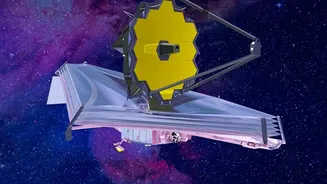
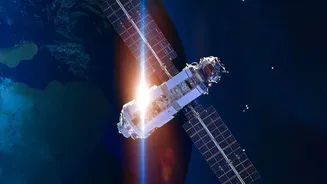
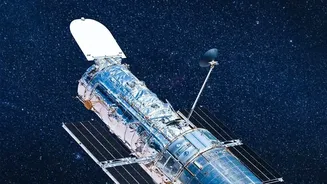
Every day, NASA’s missions generate a staggering amount of data. Telescopes like the James Webb and Hubble, rovers on Mars, and Earth-observing satellites are constantly collecting images and measurements. The agency's archives already hold over 150 petabytes
of information—an amount of data so large that it would take centuries for scientists to manually inspect. With new, more powerful missions on the horizon, this data deluge is only set to increase. This presents a monumental challenge: within this sea of data lie undiscovered planets, unforeseen cosmic events, and the answers to profound questions about our universe. But finding them is like searching for a needle in a cosmic haystack.
Building an AI Co-Pilot for Science
To tackle this challenge, NASA is championing a new approach centered on artificial intelligence, specifically through its Open Source Science Initiative. The goal is not to replace human scientists, but to provide them with a powerful 'co-pilot'. The core of this strategy involves creating 'foundation models'—large-scale AI systems trained on vast, unlabelled datasets. These models learn the fundamental patterns within the data, whether it's from images of distant galaxies, Earth's climate systems, or the surface of Mars. Once trained, these general-purpose models can be quickly adapted for a wide variety of specific scientific tasks, from identifying signs of life to predicting solar flares.
From Exoplanets to Earthly Disasters
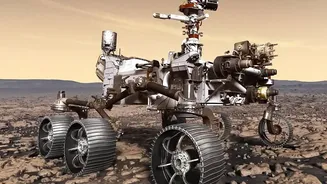
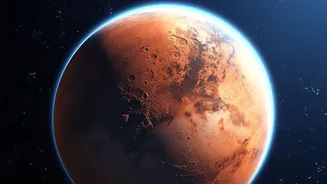
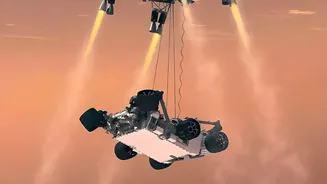
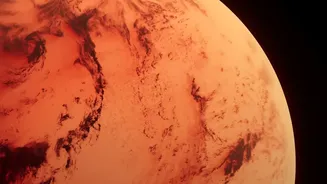
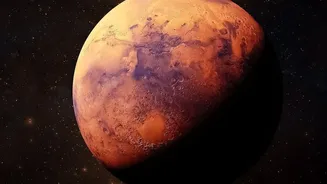
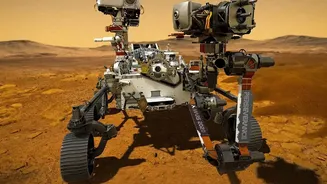
This isn't just a theoretical concept; NASA is already seeing results. An AI system called ExoMiner analyzed data from the Kepler Space Telescope and successfully identified 301 previously overlooked exoplanets. On Mars, the Perseverance rover uses AI to navigate treacherous terrain autonomously, making decisions on the fly without constant input from Earth. Back on our own planet, a foundation model named Prithvi, developed in collaboration with IBM, helps scientists analyze satellite imagery to monitor floods, wildfires, and changes in land use. NASA plans to develop a dedicated foundation model for each of its major science divisions, including astrophysics, planetary science, and heliophysics.
The Power of Open Science
A key pillar of NASA's AI strategy is its commitment to open science. Rather than developing these powerful tools in secret, the agency is making its foundation models, the data they're trained on, and the resulting code publicly available. This collaborative approach allows researchers, universities, and even citizen scientists from around the world to use, refine, and build upon NASA's work. By democratizing access to this cutting-edge technology, NASA aims to accelerate the pace of discovery across the board. This philosophy ensures that breakthroughs aren't confined within the agency but can spark innovation throughout the global scientific community.
A National Mission for AI Discovery
The significance of this approach has been recognized at the highest levels. In July 2026, NASA officially joined the White House's 'Genesis Mission,' a national initiative aimed at using AI to supercharge scientific research. This partnership connects NASA with the immense computing power and AI expertise of the Department of Energy's national laboratories. The collaboration will focus on applying advanced AI to NASA's vast data archives to unlock new insights into everything from astronomy and Earth science to space weather. This high-level backing underscores a fundamental shift in how science will be conducted in the 21st century, with AI playing a central role in discovery.