






The QR Code on Every Corner
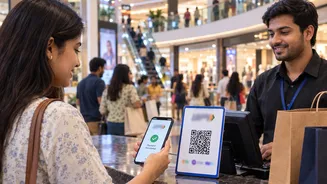
Walk through any commercial street in India, and you'll see them everywhere: small, pixelated squares taped to fruit carts, propped up in tailor shops, and displayed at restaurant counters. These QR codes are the public face of India's Unified Payments
Interface (UPI), a system that has fundamentally rewired the country's relationship with money. Unlike payment apps in the U.S., which often operate in closed loops (think sending money from Venmo to PayPal), UPI is an interoperable public utility. It allows a user on any of the dozens of certified apps, like Google Pay, PhonePe, or Paytm, to instantly transfer money to someone on any other UPI-enabled app, directly from their bank account. For small merchants, this has been a game-changer. The system is managed by the National Payments Corporation of India (NPCI), a government-backed entity, which has helped ensure widespread adoption and trust.
An Unexpected Catalyst for Change
While the technology was launched in 2016, its explosive growth was turbocharged by two major events. First, the government's sudden 2016 decision to withdraw high-denomination currency notes from circulation created an immediate cash crunch, forcing millions of consumers and businesses to explore digital alternatives. Then, the COVID-19 pandemic made contactless transactions a matter of public health, cementing digital payments as a daily habit. These events, combined with the government's broader 'Digital India' initiative and the proliferation of affordable smartphones and data, created the perfect environment for UPI to flourish. In just a few years, it has become the backbone of India's retail digital economy, accounting for the vast majority of all digital transaction volumes in the country.
Beyond Simple Convenience
For a small shopkeeper, or 'kirana' store owner, the benefits go far beyond just avoiding the hassle of handling loose change. Transactions are settled in real-time, directly into their bank account, improving daily cash flow. It enhances security by reducing the amount of physical cash held on-premises, a significant concern for many small enterprises. Perhaps most importantly, it creates a formal digital record of transactions. This digital footprint is invaluable, as it can be used to demonstrate proof of income and business health to banks and lenders, opening up access to small business loans and formal credit that were previously out of reach for many in the informal economy. Many small merchants report that adopting UPI has led to an increase in sales, as they can now cater to customers who prefer not to carry cash.
Lingering Hurdles in a Digital-First World
The transition has not been without challenges. The digital divide remains a significant barrier, particularly in rural areas where internet connectivity can be unreliable. Digital literacy is another major concern; many small vendors, especially older ones or those with less formal education, struggle with the technology and fear making mistakes. There is also the persistent threat of digital fraud, with scammers targeting less tech-savvy users. Some merchants express a preference for cash for its simplicity and immediacy, while others worry about a lack of control over funds or the need to travel to a bank or ATM to withdraw digital earnings for their own cash-based supply purchases. Despite these issues, customer demand is a powerful motivator, with many shoppers now expecting to see a QR code and potentially choosing a competitor if digital payment isn't an option.