





Our Planet's Engine Room
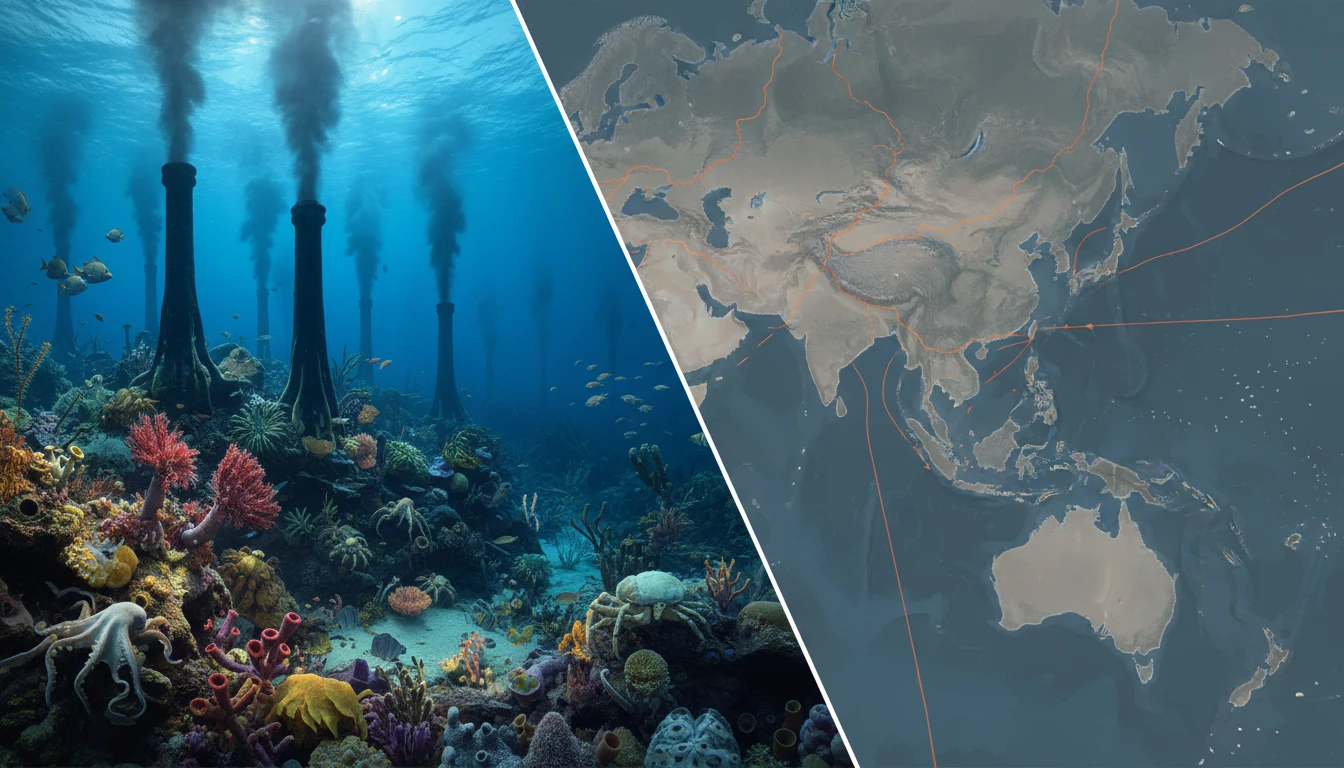
The Earth's surface is not one solid piece but a jigsaw puzzle of massive tectonic plates that are constantly in motion. At mid-ocean ridges, like the Southwest Indian Ridge and the Southeast Indian Ridge, these plates move apart in a process called seafloor
spreading. As they separate, magma from the hot mantle below rises to fill the gap, cools, and solidifies into new oceanic crust. This fundamental process has built two-thirds of our planet's surface, yet because it happens miles under the sea, it has remained largely mysterious and unwitnessed by human eyes. Until now, our understanding was based on studying ancient scars on the seabed, not observing the creation itself.
Caught in the Act
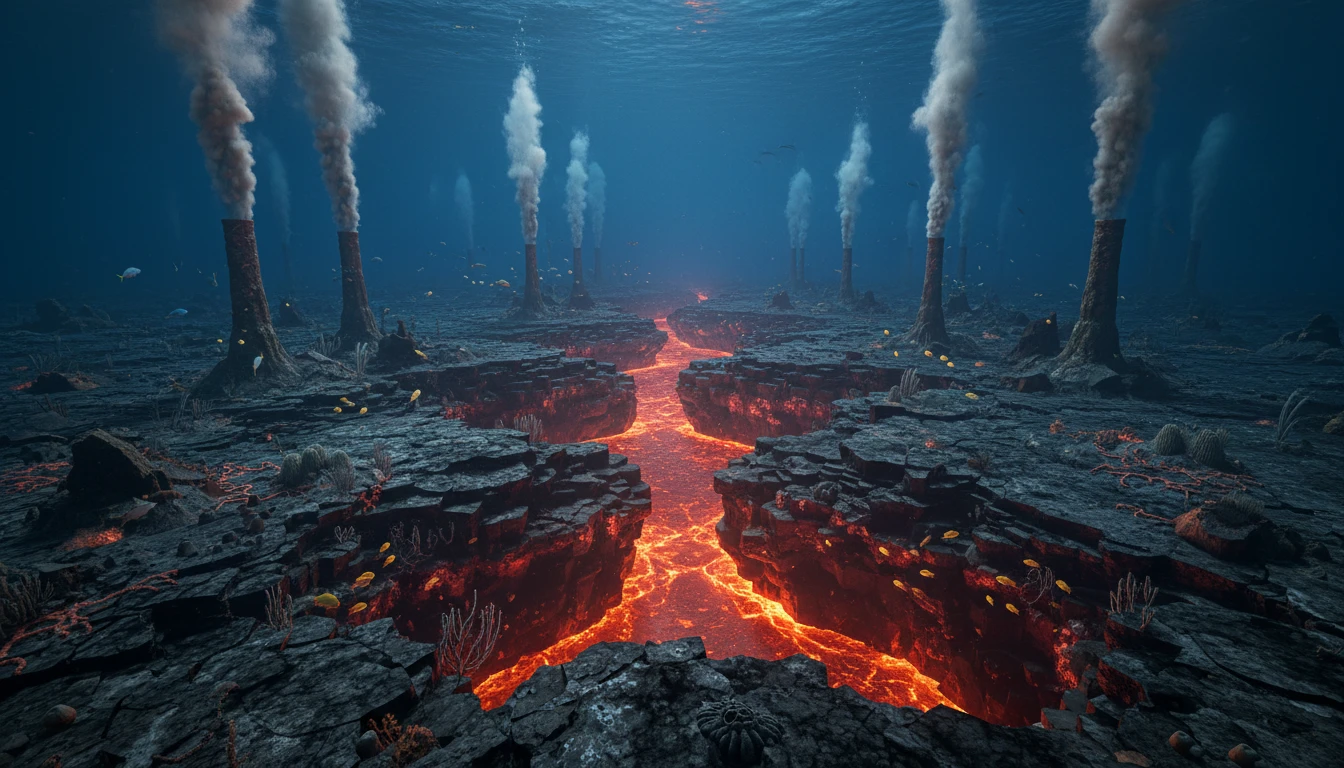
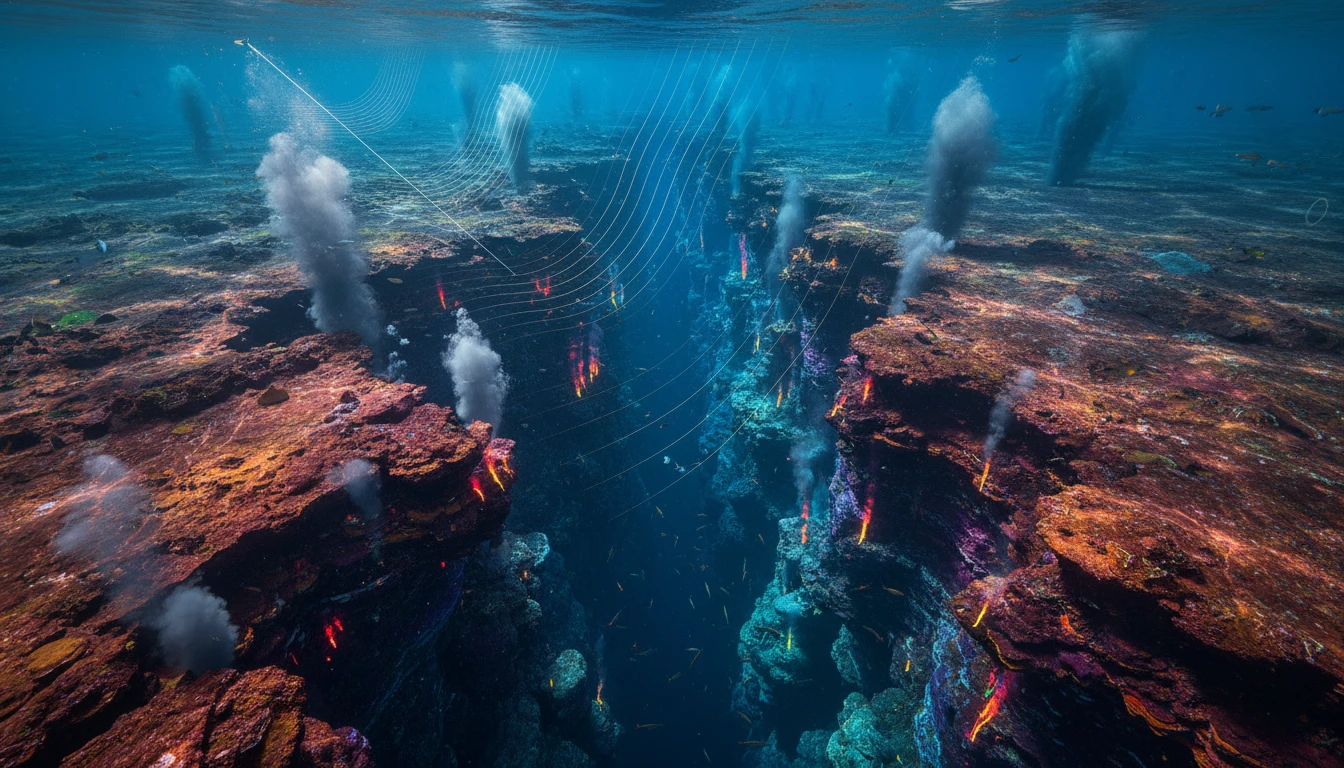
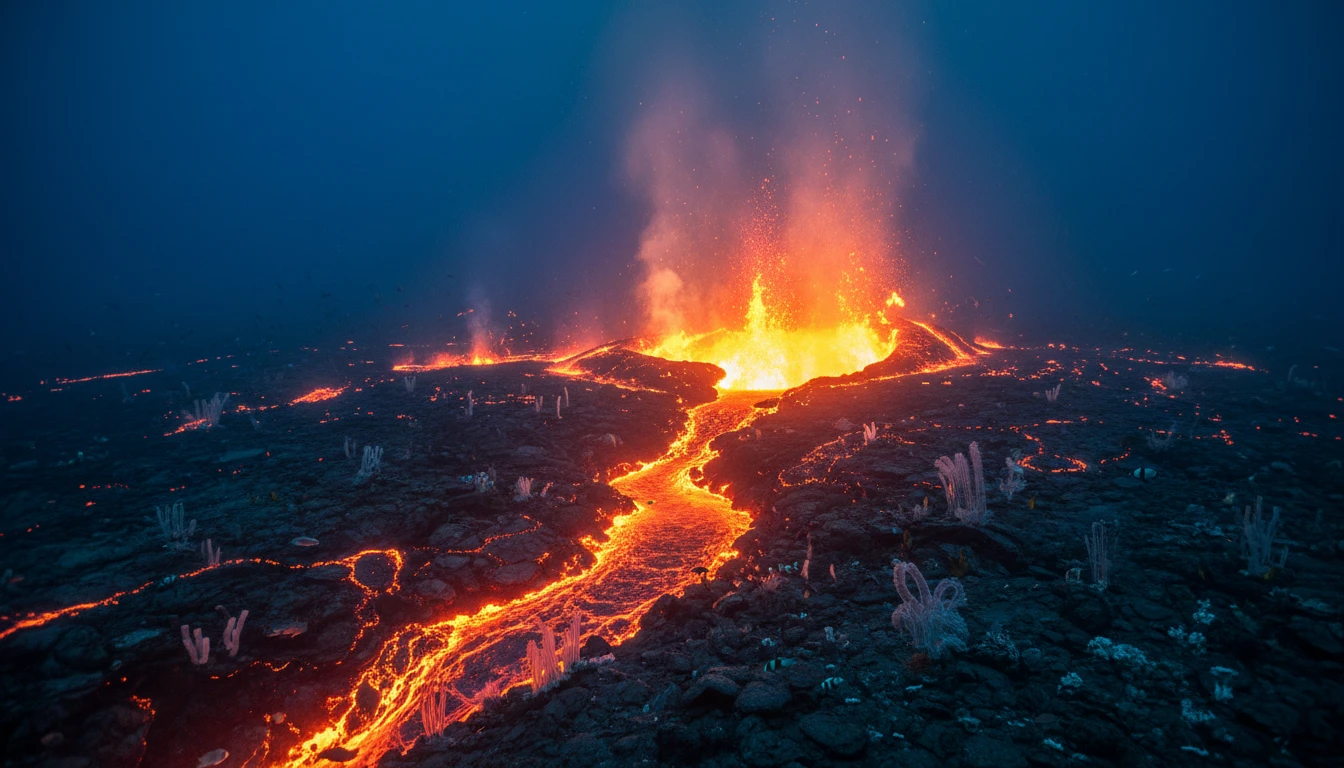
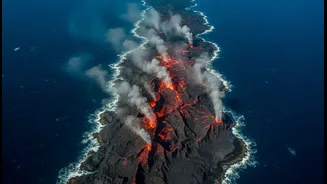
In a groundbreaking observation, scientists have captured a complete seafloor spreading event as it happened in the southern Indian Ocean. In April 2024, an array of instruments deployed just two months earlier on the Southeast Indian Ridge detected a swarm of earthquakes. Over the next few days, the seafloor tore apart, moving by as much as four metres and unleashing up to 160 million cubic metres of lava. This event confirmed that the creation of new crust is not always a slow, steady crawl. Instead, it can happen in sudden, violent lurches, accomplishing decades' worth of normal movement in just a week. This direct observation provides an unprecedented picture of one of Earth's most basic geological processes.
Solving the 'Seismic Deficit' Puzzle
One of the biggest changes this new research brings is to our understanding of earthquakes. For decades, scientists have faced a puzzle known as the 'seismic deficit': the movement measured from earthquakes along mid-ocean ridges didn't add up to the total movement of the tectonic plates. The 2024 event in the Indian Ocean provided the answer. Researchers observed a huge amount of 'aseismic slip'—fault movement that happens silently, without generating tremors. This silent slipping, driven by magma moving beneath the surface, appears to account for the missing motion. It means that a huge part of the tectonic story is told not by earthquakes, but by quiet, powerful shifts in the crust. This insight fundamentally changes how seismologists will model and interpret fault behaviour at these crucial plate boundaries.
A New View of Magma and Crust
The Indian Ocean ridges are also changing our ideas about magma. These are 'ultra-slow' spreading ridges, where it was once thought that mantle rock was often pulled up to the seafloor with very little melting—a process called amagmatic accretion. However, new studies, including seismic imaging of the Southwest Indian Ridge, have found evidence of surprisingly thick crust and large magma chambers deep below the seafloor. This suggests that even at the slowest spreading centres, robust magmatic activity plays a major role. Furthermore, older research on the Southwest Indian Ridge found incredibly ancient, 2.7-billion-year-old rocks that seem to have been transported from the African continent through the mantle, showing the ocean floor is far more complex and recycled than previously believed.
Why This Matters for India
While these events occurred deep in the southern Indian Ocean, their implications are significant for the entire region. The Indian Plate itself is under immense stress, showing signs of deformation and even splitting. Understanding the mechanics of how plates pull apart and the associated seismic behaviour is crucial. The 2012 intraplate earthquakes—major quakes that occurred in the middle of a plate—near Indonesia highlighted how stress can build and release in unexpected ways. By providing a real-world model of rifting, magma intrusion, and both seismic and aseismic slip, the new findings from the Indian Ocean ridges give scientists a vital toolkit to better understand the complex and active tectonic environment that affects billions of people.