






For over 35 years, the Hubble Space Telescope has been humanity's eye on the cosmos. But its time may be running out as its orbit slowly decays. Now, in an unprecedented move, NASA is turning to the private sector for a potential rescue mission.
A Ticking Clock in Low Earth Orbit
Like all
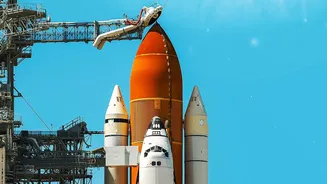
objects in low Earth orbit, the Hubble Space Telescope is in a constant battle with atmospheric drag. Though the atmosphere is incredibly thin hundreds of kilometers up, it still exerts a tiny pull on the school-bus-sized observatory, causing it to gradually lose altitude. Since the final Space Shuttle servicing mission in 2009, which did not include an orbital boost, Hubble has been slowly falling. It has no propulsion system of its own to counteract this decay. Originally orbiting at around 600 kilometers, its altitude has now dropped significantly. Current projections estimate that without intervention, Hubble will re-enter Earth's atmosphere sometime between 2033 and 2034. This impending deadline has prompted NASA to act, setting a target of 2032 for a potential mission.
An Unfunded Call to Action
In late October 2026, NASA issued a formal Request for Information (RFI), opening the door for commercial companies to pitch their ideas. The agency is seeking concepts for one of three possibilities: boosting Hubble to a higher, more stable orbit; servicing the telescope to enhance its capabilities; or performing a safe, controlled de-orbit at the end of its life. Importantly, this is not a traditional contract offer. NASA has made it clear that this is an 'unfunded' inquiry, meaning the agency has not allocated any budget for a mission at this stage. Instead, it's a market research effort to understand what is technically and financially feasible within the burgeoning commercial space industry. Companies have until November 30, 2026, to submit their concepts, which would need to cover everything from the launch vehicle and spacecraft to mission operations.
The Potential Commercial Rescuers
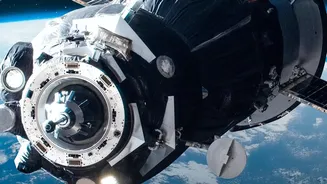
This isn't the first time a commercial rescue has been considered. In 2022, NASA and SpaceX signed an agreement to study the feasibility of using a Dragon spacecraft to dock with and reboost Hubble. That study, done in partnership with the Polaris Program led by billionaire Jared Isaacman, concluded that a mission was technically possible. However, concerns over risks and other factors led NASA to not pursue that specific plan at the time. Now, with Isaacman serving as NASA's Administrator, the question has been reopened to the entire industry. Besides SpaceX, other companies with expertise in in-space servicing, such as Astroscale and Momentus, have previously proposed robotic concepts. The new RFI allows any company, whether they propose a crewed or robotic solution, to present their architecture for saving the iconic observatory.
A Blueprint for the Future
Saving Hubble is about more than just preserving one of history's most important scientific instruments. A successful commercial mission would establish a new paradigm for space operations. It would prove that valuable, legacy assets in orbit can be serviced and have their lives extended by private companies, creating a new market for in-space servicing, robotics, and logistics. This shift from government-only missions to public-private partnerships could have profound implications, potentially saving taxpayers billions by upgrading existing satellites instead of replacing them. As NASA's Associate Administrator for Science, Nicky Fox, noted, the commercial industry has evolved rapidly, offering new capabilities that were unavailable during the Space Shuttle era. This mission, if it happens, could serve as a crucial test case for maintaining complex hardware in space and managing the future of orbital assets.