



Light’s Cosmic Speed Limit
Everything in the universe is bound by the laws of physics, and one of the most fundamental rules concerns the speed of light. Light travels incredibly fast — at about 300,000 kilometres per second. At that speed, a beam of light could circle the Earth
more than seven times in a single second. It feels instantaneous to us in our daily lives. When you flip a switch, the room is lit immediately. But across the vast, almost unimaginable emptiness of space, even this incredible speed isn't enough for light to travel instantly. The distances are just too great. Think of it like a message sent across a massive ocean; no matter how fast the boat, it still takes time to arrive.
What is a Light-Year?
Because the distances in space are so enormous, measuring them in kilometres is impractical. It would be like measuring the distance between Delhi and Chennai in millimetres. Instead, astronomers use a unit called a 'light-year'. A light-year is not a measure of time, but of distance. It's the distance that light travels in one full year. That’s a staggering 9.46 trillion kilometres. So, when we say a star is 10 light-years away, we mean the light hitting our eyes today started its journey 10 years ago. The closest star to our solar system, Proxima Centauri, is about 4.2 light-years away. The light you see from it tonight left when you were perhaps in a different school or job, over four years in the past.
A Tour of Your Night Sky's Past
This is where the headline's magic comes alive. Many of the famous stars you can spot from India are hundreds of light-years away. Let’s take a couple of examples. Polaris, known in India as Dhruva Tara, the steadfast pole star, is approximately 433 light-years away. This means the light we see from it tonight began its journey around the year 1591. While that light was travelling through space, the Mughal Empire under Akbar was at its peak in India. Another example is the bright red giant, Betelgeuse, which marks the shoulder of the Orion constellation and is known as Thiruvathirai or Ardra. It’s about 640 light-years away. The light from Betelgeuse reaching us now left the star around the year 1384, during the era of the Delhi Sultanate. You are, quite literally, seeing the light of a bygone age.
Telescopes as Time Machines
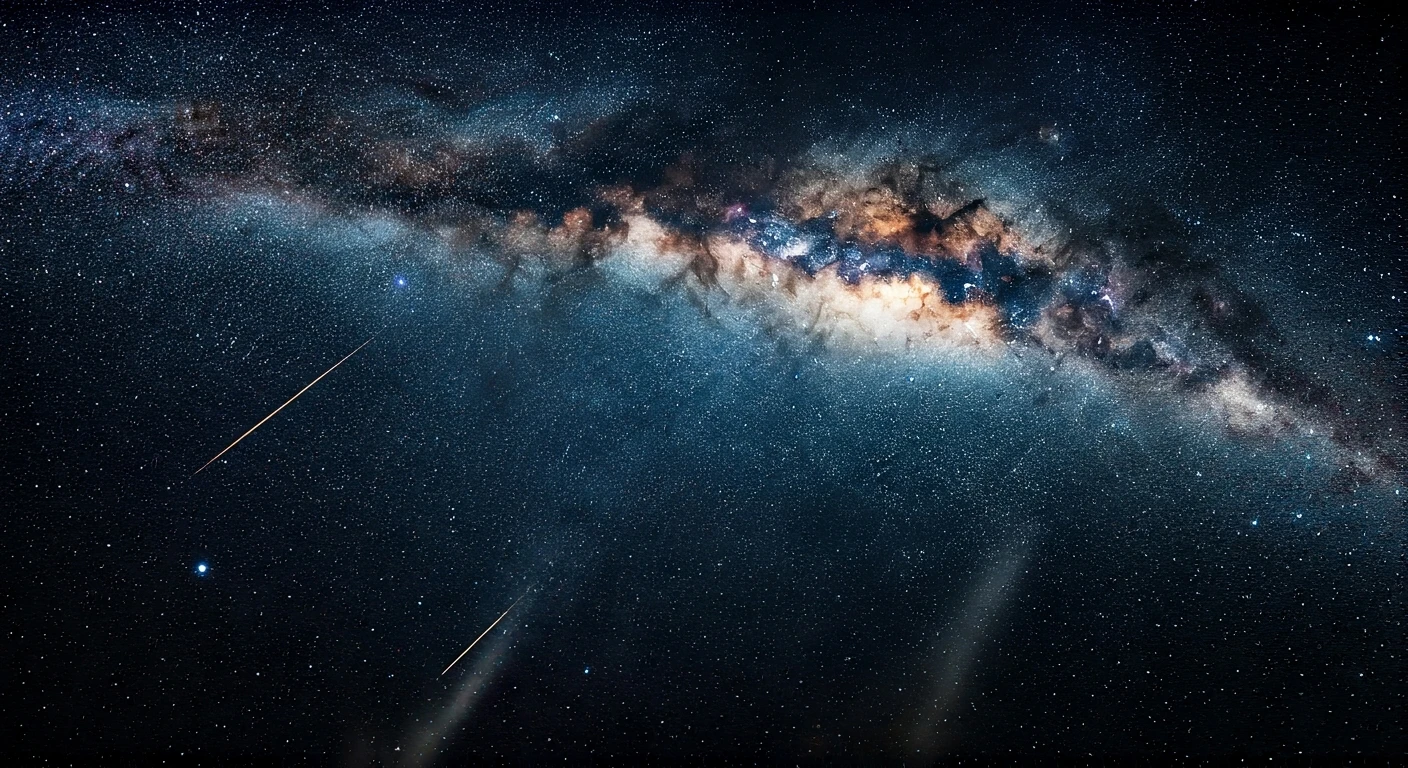
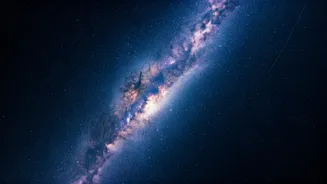
This principle is not just a cool piece of trivia; it is the foundation of modern astronomy. Because light takes time to travel, looking at distant objects is the same as looking back in time. The farther away an object is, the older the light we receive from it. When astronomers point powerful instruments like the Hubble or James Webb Space Telescope at galaxies billions of light-years away, they aren't seeing those galaxies as they are today. They are seeing them as they were billions of years ago, offering a glimpse into the early universe, not long after the Big Bang. Every deep-space photograph is a historical document, capturing a snapshot of a cosmic epoch that has long since passed. This makes every astronomer, in a sense, an archaeologist of the cosmos.