


Go Vertical, Not Horizontal
The first rule of adding greenery to a small space is to think upwards. Plants that grow tall and slender draw the eye vertically, creating an illusion of height and openness. Instead of choosing bushy plants that expand outwards and consume valuable
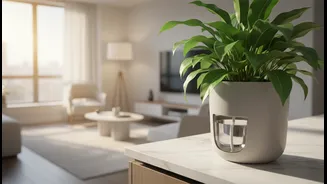
floor or table space, opt for varieties with an upright growth habit. These act like living sculptures, adding a dynamic, green element without contributing to clutter. A tall, slim plant placed in a corner can soften the lines of the room and make the ceiling feel higher than it is. This strategy is about using plants as architectural elements that work in harmony with your limited square footage, guiding the gaze and adding life without the bulk.
The Magic of Trailing Plants
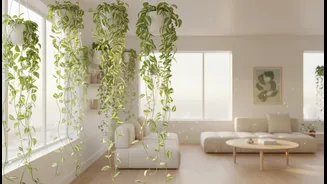
When floor space is at a premium, the best solution is to look up. Trailing and vining plants are perfect for small homes because they can be placed on high shelves, atop cabinets, or in hanging baskets, allowing their foliage to cascade downwards. This creates a beautiful curtain of green that adds texture and life without occupying a single inch of your living area. Varieties like the Money Plant (Pothos) are incredibly resilient and can thrive in various light conditions, making them ideal for beginners in India. Similarly, String of Hearts and certain Hoyas offer interesting textures that spill over the edges of their containers. Placing these plants high up draws attention to the vertical space in a room, making it feel more expansive.
Compact and Clutter-Free Choices
Not all plants are destined to become towering giants. Many popular houseplants have a naturally compact and contained growth habit, making them perfect for small apartments. The Snake Plant (Sansevieria) is a prime example; its stiff, upright leaves grow in a tight clump and it requires very little width. It’s also famously low-maintenance and an excellent air purifier. Another fantastic option is the ZZ Plant (Zamioculcas zamiifolia), which features glossy leaves on arching stems that grow from a central rhizome, keeping its footprint small. Succulents like Haworthia and Aloe Vera also stay small and tidy. These plants are ideal for windowsills, small side tables, or even a bathroom counter, providing a pop of green without demanding much room.
Slender Silhouettes, Big Impact
For those who want a bit more height without the accompanying width, look for plants with slender, elegant silhouettes. The Parlour Palm is a classic choice for a reason; it offers a lush, tropical feel with delicate fronds but maintains a relatively narrow profile, making it suitable for tight corners. Certain species of Dracaena, like the Dragon Tree (Dracaena marginata), are also excellent. They feature a slim, woody trunk topped with a spray of spiky leaves, essentially a tree-like form that takes up very little floor space. These plants provide the visual impact of a larger plant without the bulk, fitting neatly beside a sofa or desk where a wider plant would obstruct movement.
Smart Placement Strategies
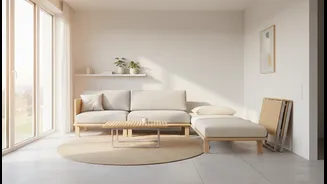
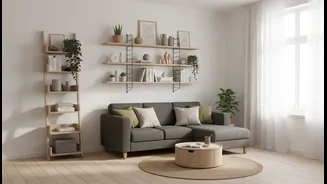
The right plant in the wrong place can still make a room feel crowded. Strategic placement is just as important as plant selection. Grouping a few small plants of varying heights together on a floating shelf creates a focal point without using any floor space. Use corners to your advantage; a tall, thin plant like an Areca Palm can transform an awkward, empty corner into a deliberate design moment. Windowsills are perfect for sun-loving succulents and herbs that stay contained. If you have the option, installing a ceiling hook for a hanging planter is perhaps the most space-efficient method of all. By considering how a plant interacts with the light, furniture, and flow of a room, you can ensure your greenery is a beautiful, space-enhancing feature.