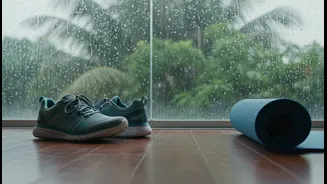









The Deceptive Danger of Humidity
Many people believe that rain automatically cools the air, making exercise safer. While a shower might lower the air temperature slightly, the real enemy to an exercising body is not the heat alone, but the humidity. Humidity is the amount of water vapor
in the air. When it's high, the air feels thick and heavy because it's already saturated with moisture. This is critical because your body relies on the evaporation of sweat to cool itself down. High humidity dramatically slows down this process, creating a hidden risk that many athletes and fitness enthusiasts overlook. Your perception of the temperature can be misleading; the 'feels like' temperature, or heat index, accounts for both heat and humidity and is a much more accurate measure of the stress your body will face.
How Your Body’s Cooling System Fails
Your body is a remarkable machine. When you exercise, your muscles generate a massive amount of heat. To prevent your core temperature from rising to dangerous levels, your brain triggers your sweat glands. The goal isn't just to be sweaty; it's for that sweat to evaporate from your skin, a process which pulls heat away from the body and releases it into the air. In dry conditions, this system works beautifully. However, in a high-humidity environment, the air is already full of water vapor, leaving no room for your sweat to go. As a result, sweat simply drips off your skin without providing its cooling benefit. Your heart has to work harder to pump blood to the skin's surface in an attempt to cool down, placing significant strain on your cardiovascular system.
Warning Signs of Overheating
When your body can't cool itself effectively, you risk developing heat-related illnesses, which progress from mild to life-threatening. The first stage is often heat exhaustion. Symptoms include heavy sweating, weakness, dizziness, headache, nausea, and muscle cramps. Your skin might feel cool and clammy despite the heat. If not addressed, heat exhaustion can escalate to heatstroke, a serious medical emergency. The hallmark sign of heatstroke is a change in mental state, such as confusion, disorientation, or even loss of consciousness. At this stage, the body's temperature regulation system has failed, and core temperature can rise to deadly levels. It is crucial to recognize the early signs and take immediate action.
Tips for Safer Humid-Weather Workouts
Exercising safely in humid, rainy weather requires smart adjustments. First, always check the heat index, not just the temperature. If it's high, consider moving your workout indoors or exercising during cooler parts of the day, like early morning or late evening. Hydration is non-negotiable; drink plenty of water before, during, and after your session, even if you don't feel thirsty. For longer workouts, a sports drink can help replace lost electrolytes. Wear lightweight, loose-fitting, and moisture-wicking clothing in light colors to help promote any possible evaporation and reflect heat. Most importantly, listen to your body. Slow down your pace or shorten your workout. If you start to feel dizzy, nauseous, or excessively fatigued, stop immediately, find a cool place, and rehydrate.