






The Science of a Rain Shadow
The magic behind this dry haven is a meteorological phenomenon called the “rain shadow effect.” It occurs when moisture-laden winds from the sea encounter a massive mountain range. Forced to rise, the air cools and condenses, dumping its rain on the side
of the mountains facing the wind, known as the windward side. Once this air crests the peaks, it is stripped of most of its moisture. As this dry air descends on the other side—the leeward side—it warms up, absorbing any remaining moisture and creating an arid or semi-arid landscape. This process effectively casts a dry “shadow” behind the mountains.
The Great Himalayan Wall
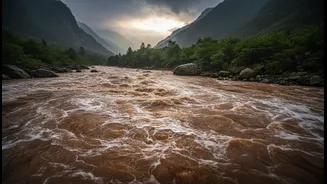
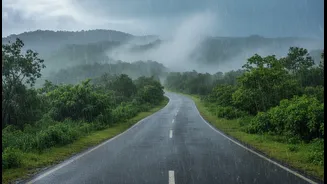
In India, the mighty Himalayas act as this colossal barrier. The southwest monsoon winds, originating from the Arabian Sea and the Bay of Bengal, sweep across the Indian plains laden with moisture. When they hit the southern slopes of the Pir Panjal and Great Himalayan ranges, they are forced upwards. This results in heavy rainfall across states like Himachal Pradesh and Uttarakhand, which lie on the windward side. These are the areas that frequently experience landslides, flash floods, and road blockages during the monsoon months from June to September.
Spiti and Ladakh: Life on the Leeward Side
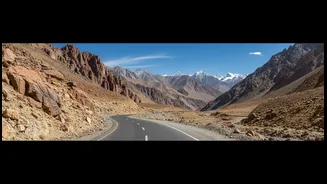
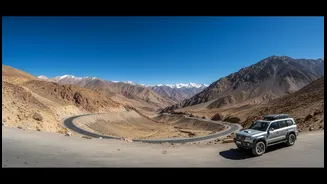
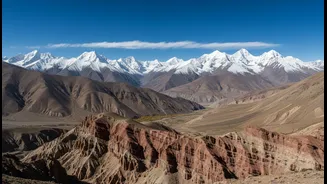
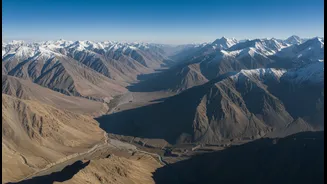
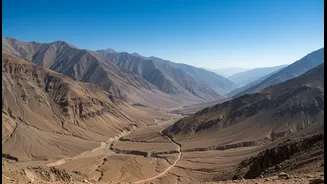
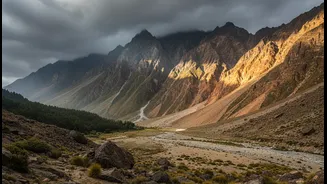
Spiti Valley in Himachal Pradesh and the Union Territory of Ladakh are situated on the northern, leeward side of these towering ranges. The Himalayas effectively block the monsoon clouds from reaching these trans-Himalayan regions. As a result, they receive very little rainfall, with annual precipitation often as low as 10 cm, qualifying them as cold deserts. Their high altitude, with elevations mostly ranging from 3,000 to 5,000 meters, contributes to the cold, dry climate where the sun can feel intense even when temperatures are low.
A Monsoon Travel Advantage
This unique climate makes Spiti and Ladakh exceptionally appealing destinations during the peak monsoon season. While other hill stations grapple with continuous downpours, travellers in these regions can often enjoy dry, sunny days and clear blue skies. The minimal rainfall means the risk of landslides and floods within the valleys is very low, making it a safe time for exploration. This is the season when the stark, barren landscapes are sometimes tinged with green from glacial melt, creating stunning visual contrasts. For adventurers, it is a peak time for trekking and motorcycling.
The Real Challenge: Getting There
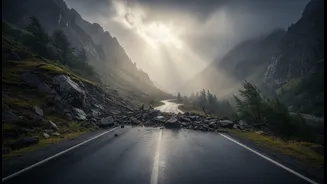
However, there is a significant catch: while the destinations are dry, the journey to reach them can be perilous. The primary road arteries, such as the Manali-Leh Highway and the roads to Spiti from Manali and Shimla, pass through the monsoon-battered windward side. These routes are notoriously prone to landslides, washed-out bridges, and roadblocks, which can leave travellers stranded for hours or even days. The Shimla-Kinnaur route to Spiti is generally considered more reliable than the Manali approach but is not entirely immune to disruptions. For Ladakh, flying directly into Leh is the safest and most reliable option to bypass these hazardous roads during the monsoon.
A Shifting Climate
It is also important to note that climate patterns are changing. In a significant departure from historical norms, Ladakh has recorded above-normal monsoon rainfall for five consecutive years as of 2026. This increase in precipitation, even if moderate, is raising concerns among scientists about a higher risk of flash floods and landslides in a fragile ecosystem not adapted to absorbing water quickly. While the rain shadow effect still largely defines the region's climate, these new patterns add a layer of unpredictability for future travel.