



Why Darkness Is the New Destination
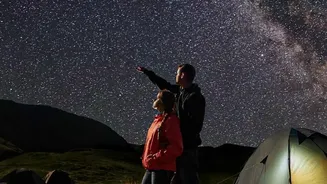
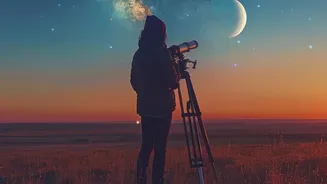
For an estimated 80% of the world's population, city lights have washed out the Milky Way. This has sparked a powerful desire to reconnect with the cosmos, fuelling a travel segment known as astrotourism or dark sky tourism. Travellers are increasingly
planning holidays around celestial events like meteor showers or simply the chance to see a sky thick with stars. This isn't just about a pretty view; it's about finding quiet, digital detox, and a sense of wonder. The trend is proving to be a significant economic driver for rural areas, as stargazing requires an overnight stay, boosting local spending on hotels, homestays, and food.
Ladakh: India's Stargazing Crown Jewel
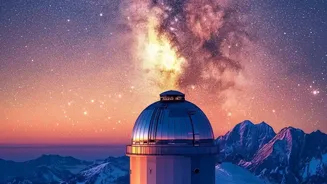
High altitude, dry air, and minimal light pollution make Ladakh an unmatched stargazing destination in India. Its crown jewel is Hanle, home to the Indian Astronomical Observatory and designated as India's first Dark Sky Reserve. The impact has been dramatic; after the designation, visitor numbers to the remote village reportedly surged from around 5,000 a year to over 30,000, bringing new life to the local economy. Community-led initiatives like 'Astrostays' are empowering locals by training them as guides and hosts, ensuring the economic benefits of tourism are shared. Here, the Milky Way isn't just a faint smudge but a brilliant river of light overhead.
Spiti Valley: A High-Altitude Desert Observatory
Another Himalayan treasure, the Spiti Valley in Himachal Pradesh, offers a raw and profound stargazing experience. This cold desert's remote villages, such as Kaza, Kibber, and Komic, become natural observatories after sunset, with crisp mountain air providing exceptional clarity. The valley's stark landscapes, dotted with ancient monasteries, create a dramatic backdrop for watching constellations and meteor showers. It has become a favourite for astronomers and astrophotographers seeking both adventure and celestial beauty, far from the light-polluted plains.
Rann of Kutch: Stargazing Over a White Desert
The Great Rann of Kutch in Gujarat offers a completely different but equally surreal stargazing setting. The vast, flat expanse of the white salt desert provides an unobstructed 360-degree view of the heavens, making you feel as if you are inside a celestial dome. During the winter months, especially around the Rann Utsav festival, the skies are exceptionally clear. The stark contrast between the shimmering white desert floor and the dark, star-filled sky is an unforgettable experience, offering a unique canvas for viewing the cosmos.
The Global Movement
This trend is not unique to India. Around the world, remote places are leveraging their dark skies. New Zealand's Aoraki Mackenzie International Dark Sky Reserve and Chile's Atacama Desert are world-renowned hubs for astronomy. In Namibia, the NamibRand Nature Reserve pairs safari adventures with views of a Milky Way so bright it can cast a shadow. These locations, certified by bodies like DarkSky International, are proving that protecting the night from light pollution is not just good for wildlife and human health—it's good for business, creating sustainable tourism that celebrates a universal heritage.