

The Myth's Green Roots
The belief that houseplants are natural air purifiers largely stems from a well-known 1989 NASA study. Researchers were looking for ways to clean the air in sealed environments like space stations. They placed common houseplants in small, sealed chambers
and introduced volatile organic compounds (VOCs) like formaldehyde and benzene—chemicals often found in furniture, paints, and cleaning products. The results were promising: some plants were able to remove a significant percentage of these pollutants from the chamber's air over 24 hours. This single study became the foundation for countless articles, blog posts, and product tags promoting specific plants as 'air-purifying powerhouses', capable of scrubbing your home clean of toxins. The idea was simple, green, and felt intuitively right.
From Lab to Living Room
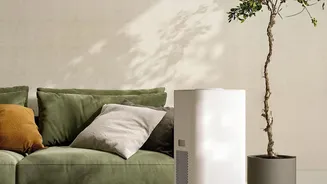
The problem is that your living room is not a sealed NASA chamber. Modern scientific reviews have put the original findings into perspective, and the conclusion is clear: in a normal home, plants have a negligible effect on air quality. The main reason is ventilation. The rate at which air in your home is exchanged with outside air—through open windows, doors, and building ventilation systems—is called the air exchange rate. This process dilutes and removes VOCs far more effectively and rapidly than a few potted plants ever could. One review of past studies concluded that plants remove VOCs so slowly that they simply can't compete with a building's natural air exchange. To make a real difference, the scale required is enormous.
A Forest in Your Flat
So, just how many plants would it take to actually clean the air in a typical room? The numbers are staggering. Researchers have estimated you would need anywhere from 10 to 1,000 plants per square metre of floor space to match the air-cleaning capacity of a standard building's ventilation system. To put that in perspective, for a small 100-square-foot room, you might need up to 10,000 plants to make a meaningful impact. Even the more conservative estimates from the original NASA researcher, which suggested two large plants per 100 square feet, are now considered insufficient for significant purification in a real-world setting. In short, unless you plan on living in a dense indoor jungle, your plants are not acting as effective air purifiers.
The Real, Proven Benefits of Plants
This doesn't mean your plants are useless—far from it. Their most significant benefits are psychological, not atmospheric. The concept of 'biophilia', our innate human tendency to connect with nature, explains why being around plants feels good. Studies have consistently shown that interacting with indoor plants can reduce psychological and physiological stress, improve mood, and enhance focus. One study found that simply having plants in an office setting reduced stress and increased productivity. Even the act of caring for a plant—watering it, watching it grow—can be a grounding, mindful practice that fosters a sense of accomplishment and connection. These benefits are real, scientifically supported, and a fantastic reason to fill your space with greenery.