


A Time Capsule From the Kuiper Belt
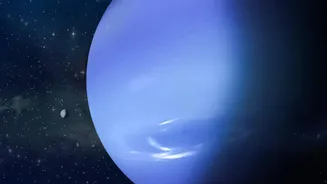
Beyond the orbit of Neptune lies a vast, doughnut-shaped ring of icy bodies known as the Kuiper Belt. This region is a relic of the early solar system, a deep-freeze storage unit containing materials left over from its formation some 4.6 billion years
ago. Scientists are fascinated by the Kuiper Belt because its comets and dust are believed to be pristine samples of the primordial soup from which the planets, including our own, were built. For years, the leading theory was that comets from this distant realm, knocked from their orbits and sent hurtling toward the inner solar system, delivered a significant portion of the water that now fills Earth’s oceans. By studying their composition, we can essentially look back in time.
Catching Stardust in Deep Space
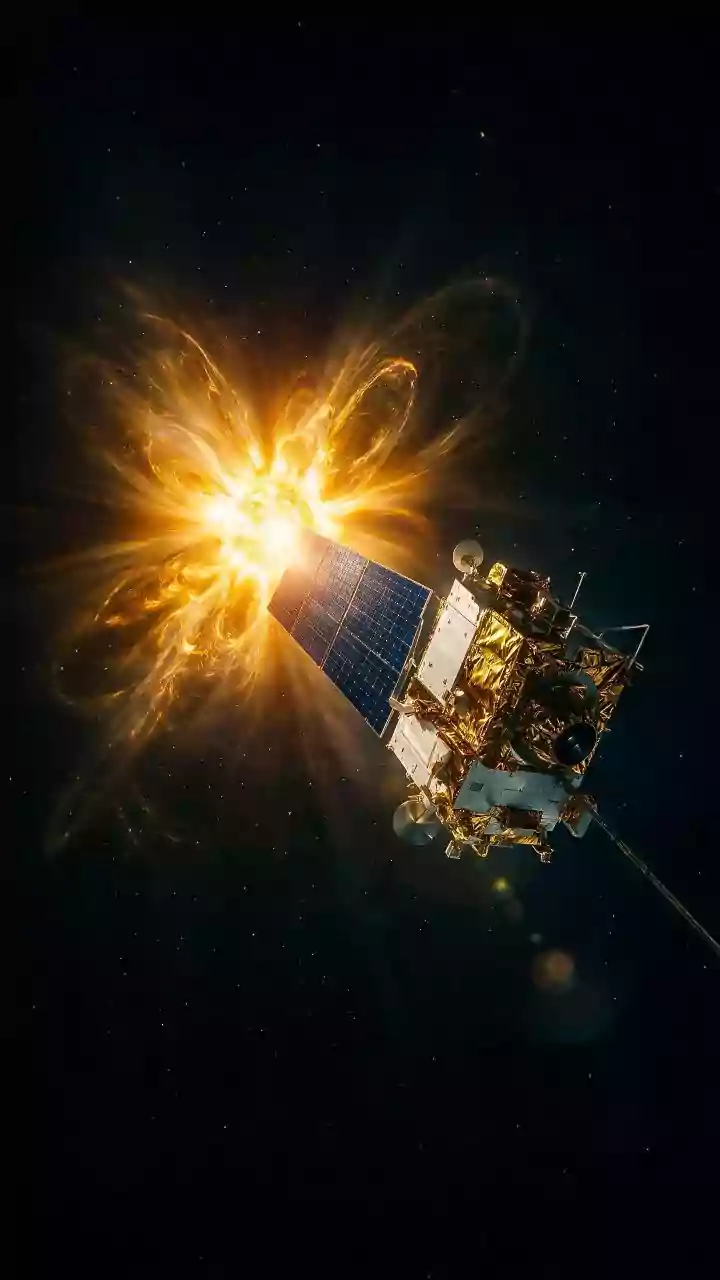
Getting a sample from the Kuiper Belt isn't easy. The key evidence comes from NASA's Stardust mission, an ambitious project launched in 1999. Its goal was to fly through the tail of a comet, collect dust particles, and return them to Earth for analysis. In 2004, Stardust successfully flew through the coma of Comet Wild 2, a comet believed to have originated in the Kuiper Belt before being nudged into the inner solar system. The spacecraft used a collector mitt filled with an ultra-light material called aerogel to trap the tiny, fast-moving dust grains without destroying them. After a seven-year, three-billion-mile journey, the sample-return capsule parachuted down to the Utah desert in 2006, carrying a precious cargo of primordial stardust for scientists to study in laboratories.
The Isotope Fingerprint
The central mystery lies in the chemistry of these dust particles, specifically their oxygen isotopes. Think of isotopes as different 'flavors' of an element. All oxygen atoms have 8 protons, but they can have different numbers of neutrons. The most common form is Oxygen-16, but heavier versions like Oxygen-17 and Oxygen-18 also exist. The specific ratio of these isotopes in a substance acts like a chemical fingerprint, revealing where in the solar system it formed. Water on Earth has a very specific and consistent isotopic signature. To prove that comets from the Kuiper Belt delivered our water, the oxygen isotope ratio in the cometary dust should match the ratio found in our oceans. Scientists meticulously analyzed the tiny grains from Comet Wild 2 to read this cosmic fingerprint.
A Surprising Mismatch
The results were not what many expected. The analysis revealed that the oxygen isotopes within the silicate and dust materials from Comet Wild 2 were significantly different from the signature found in Earth’s water. While the comet certainly contained water ice, its building blocks were not the same as ours. The findings, carefully examined by research teams, showed a composition that was 'un-Earthlike'. This discovery poured cold water on the simple theory that our planet's life-giving oceans were delivered wholesale by comets like Wild 2. It suggests that the materials that formed in the outer solar system are far more diverse and complex than previously thought, and their contribution to Earth's makeup is a more complicated story.
Rethinking the Source of Our Oceans
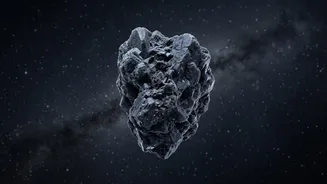
If not from Kuiper Belt comets, then where did Earth's water come from? This study shifts the focus to other potential sources. One leading alternative is asteroids, particularly the carbonaceous chondrites found in the asteroid belt between Mars and Jupiter. Samples from these asteroids have shown an isotopic composition much closer to that of Earth's water. Another possibility is that Earth's water came from a different class of comets originating from the Oort Cloud, a theoretical sphere of icy bodies even farther out than the Kuiper Belt. It’s also plausible that Earth retained some of its water from the very beginning, incorporated from the solar nebula as the planet itself was forming. The science is far from settled, but the Stardust results have pushed researchers to explore these other avenues more seriously.