








Your Financial Shock Absorber
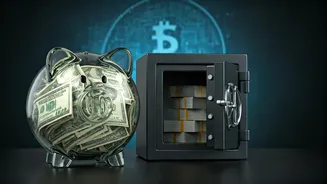
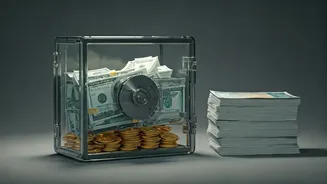
Think of a cash reserve, or emergency fund, as your personal financial shock absorber. It’s not an investment; it's insurance against life’s unpredictability. A sudden job loss, an urgent medical procedure, or an unexpected home repair can force you to
liquidate your investments at the worst possible time—often during a market downturn when prices are low. A secure cash reserve prevents this distress sale. It provides a buffer, allowing your long-term investments to grow undisturbed by short-term crises. Without this buffer, your carefully constructed investment portfolio is built on fragile ground, ready to crumble at the first sign of trouble. This fund gives you peace of mind and the confidence to stay invested for the long haul, which is where real wealth is built.
Calculating Your Magic Number
So, how much is enough? The standard financial planning rule is to have three to six months' worth of essential living expenses saved. To calculate this, list all your non-negotiable monthly costs: rent or EMI, utilities, groceries, transportation, insurance premiums, and basic loan payments. Multiply that total by three, and you have your minimum target. If you're a freelancer, have a single source of income, or work in a volatile industry, aiming for six to twelve months of expenses is a more prudent goal. This isn't about saving for a vacation or a new phone; it’s about covering your survival needs. Be honest and realistic with your calculation. This number is your primary financial goal, taking precedence over any new investment.
Where to Park Your Reserve Fund
The money in your cash reserve must be safe and easily accessible (liquid). This means it should not be in the stock market. The ideal place is an instrument that won't lose value and can be withdrawn at a day's notice. Good options in India include: 1. **High-Yield Savings Accounts:** These offer better interest rates than a standard savings account while keeping your money completely liquid. 2. **Liquid Mutual Funds:** These funds invest in very short-term debt instruments and are designed for safety and quick redemption, typically within one business day. 3. **Short-Term Fixed Deposits (FDs):** An FD offers guaranteed returns. You can 'ladder' them—creating multiple FDs with different maturity dates—so a portion of your fund becomes accessible every few months. Avoid locking your entire fund into a long-term FD that carries a penalty for premature withdrawal.
Defining 'Volatile' Investments
Once your cash reserve is in place, you can look at 'volatile' investments. Volatility simply means the potential for large price swings, both up and down. These are the assets that can generate significant returns but also carry a higher risk of loss. Examples include: * **Direct Equity (Stocks):** Buying shares of individual companies. * **Equity Mutual Funds:** Funds that invest primarily in a basket of stocks. * **Cryptocurrencies:** Digital assets like Bitcoin and Ethereum, known for extreme price fluctuations. * **Derivatives (Futures & Options):** Complex financial contracts whose value is derived from an underlying asset. These are for advanced investors only. These are vehicles for wealth growth, not safety. The money you put here should be money you can afford to not touch for several years, allowing it to recover from inevitable market dips.