




The First Line of Defence: A Nearly Impenetrable Door
Since the terror attacks of September 11, 2001, cockpit doors have been transformed into fortified barriers. Made of bulletproof composites and reinforced materials, they are designed to withstand significant force, including small arms fire and even
small explosive charges. However, security must be balanced with accessibility in a real medical emergency. This is managed through a sophisticated electronic keypad system. Cabin crew can't simply unlock the door; they must enter a specific code to request access. This triggers an alarm inside the cockpit, giving the conscious pilots a window to deny entry if they perceive a threat. If there's no response after a set time—usually 30 to 60 seconds—the system assumes the pilots are incapacitated, and the door automatically unlocks for a brief period, allowing help to enter.
When One Pilot Is Incapacitated
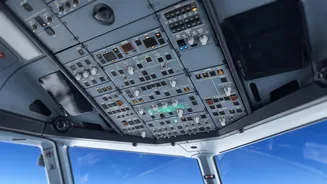
Commercial airliners always operate with at least two pilots, a fundamental safety redundancy. If one pilot becomes unable to perform their duties—whether due to a sudden medical issue or other cause—the other pilot is fully qualified and trained to fly and land the aircraft alone. The first and most critical step is for the remaining pilot to take firm control of the aircraft, ensuring it is flying safely. They will disengage the incapacitated pilot's controls to prevent any unintentional interference. Once the aircraft is stable, the pilot will declare an emergency with Air Traffic Control (ATC), explaining the situation and arranging for a diversion to a suitable nearby airport where medical teams can be on standby.
The Crucial Role of Cabin Crew
Flight attendants are much more than service professionals; they are highly trained safety experts. In the event of pilot incapacitation, the remaining pilot will summon the lead flight attendant (or purser) to the cockpit. Once inside, the cabin crew's first job is to secure the incapacitated pilot. Their training dictates specific procedures: they pull the pilot's seat fully back, away from the flight controls, and secure them tightly with their seatbelt and shoulder harness. They then administer first aid, which may include oxygen, and coordinate with other attendants to ask for any medical professionals who may be on board. A flight attendant may be asked to remain on the flight deck jump seat to assist the pilot, such as by reading checklists, allowing the pilot to focus solely on flying the plane.
Teamwork is Everything: Crew Resource Management
A concept known as Crew Resource Management, or CRM, is at the heart of modern aviation safety. CRM is a framework that trains all crew members—pilots and flight attendants alike—to work together as a cohesive team, using all available resources to ensure safety. It focuses on clear communication, situational awareness, and breaking down rigid hierarchies so that any crew member can voice a concern. In an emergency like a cockpit disruption, CRM ensures that there is a clear, established protocol for communication and action. Pilots are trained to constantly monitor each other for subtle signs of incapacitation or unusual behaviour, forming a proactive layer of defence. This philosophy means the entire crew is responsible for safety, not just the pilots.
Technology as a Failsafe
Modern aircraft are equipped with sophisticated automation that provides another critical layer of safety. The autopilot system can expertly manage the aircraft's flight path, altitude, and speed, freeing up the sole remaining pilot to manage the emergency, communicate with ATC, and prepare for landing. Even in a worst-case scenario where both pilots were somehow incapacitated and a flight attendant or qualified passenger entered the cockpit, ATC could potentially talk them through using the autopilot to execute an automatic landing at a suitably equipped airport. This technological backstop, combined with the extensive human training and procedural safeguards, creates a robust system designed to handle even the most unthinkable of in-flight emergencies.