






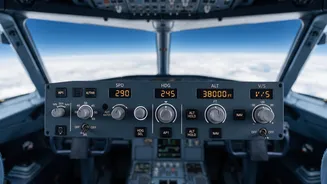
The Problem in the Cockpit
A diversion begins when a problem arises that makes continuing to the original destination unsafe or impractical. This could be a sudden medical emergency, a critical mechanical issue, or rapidly deteriorating weather at the destination. The flight crew
is the first to become aware, alerted by cockpit instruments, cabin crew reports, or weather updates. Their first priority is always to 'aviate'—maintain stable control of the aircraft. With the plane flying safely, they assess the situation, running through checklists and using their extensive training to understand the severity of the issue.
Making the Call to Divert
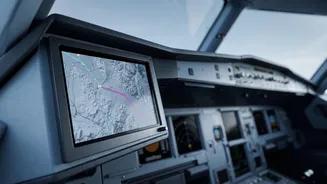
The final decision to divert rests with the pilot in command. It's a judgment call based on multiple factors. Is there enough fuel to reach a new airport with a safe reserve? Which nearby airports are suitable? A 'suitable' airport must have a runway long enough for the aircraft, the right ground support, and weather conditions that permit a safe landing. Pilots will use on-board navigation systems and may communicate with their airline's operations center to quickly evaluate options. The goal is to choose the safest and most logical alternative, not necessarily the absolute closest patch of asphalt.
Informing Air Traffic Control
Once a decision is made, the pilots communicate their intentions to Air Traffic Control (ATC). The nature of this call depends on the urgency. For a less critical issue, like a non-life-threatening passenger illness, it might be a straightforward request to change course. For a grave and imminent threat, like an engine failure or fire, pilots will declare an emergency by repeating "Mayday, mayday, mayday." This single word fundamentally changes the relationship; ATC stops giving instructions and starts providing assistance. The aircraft is now the absolute priority for everyone on the ground.
A Symphony of Coordination on the Ground
The moment a pilot requests a diversion or declares an emergency, ATC springs into action. The controller's primary job is to create a safe path for the aircraft. This involves vectoring other planes out of the way, clearing airspace, and providing the most direct route to the new destination. The controller becomes a critical source of information, relaying weather updates, runway conditions, and other essential data to the busy flight crew. Simultaneously, they coordinate with the tower at the diversion airport, ensuring that emergency fire and rescue services are on standby if needed.
Preparing the Cabin and the Aircraft
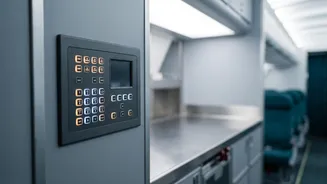
While the pilots focus on flying and communicating with ATC, the cabin crew prepares for the unscheduled landing. The senior crew member informs the flight attendants, who then make the cabin secure and prepare passengers. An announcement is made to inform passengers about the diversion, the new destination, and the expected arrival time. Depending on the reason for the diversion, pilots may need to perform certain procedures, such as burning off or dumping fuel to ensure the aircraft is below its maximum landing weight—a crucial safety step.
Safe on the Ground
As the aircraft makes its final approach, emergency vehicles may be positioned near the runway as a precaution. After a safe landing, the aircraft is guided to a gate or a remote parking stand. What happens next depends entirely on the reason for the diversion. It could be a 'fuel and go' scenario where the plane refuels and continues to its original destination after a weather system has passed. In other cases, such as a significant technical fault, the flight may be cancelled, with the airline arranging for passengers to continue their journey on another aircraft or providing hotel accommodation.