






The Unseen Universe in a Fistful of Soil
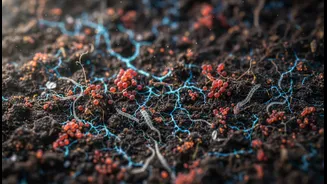
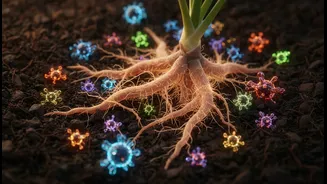
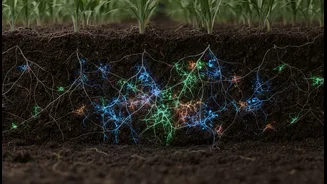
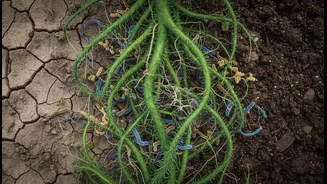
A single gram of healthy soil can contain billions of microorganisms, including bacteria, fungi, and other life forms. This teeming community, known as the soil microbiome, is the engine of a healthy farm. These microscopic allies perform critical functions
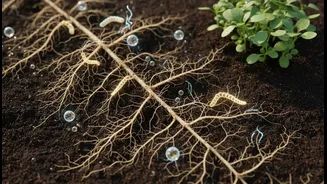
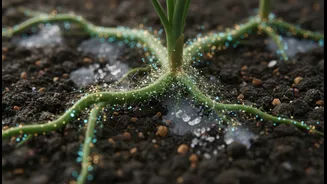
that no machine can replicate. They break down organic matter to create nutrient-rich humus, convert atmospheric nitrogen into a form that plants can use, and unlock essential minerals like phosphorus that are chemically bound to the soil. Some microbes form symbiotic relationships with plant roots, extending their reach for water and nutrients, while others act as a natural defense system, protecting crops from diseases. In essence, the microbiome is like the gut health of the soil; when it thrives, the entire agricultural system is more resilient and productive.
India's Chemical Treadmill
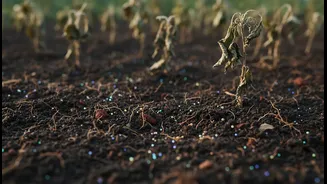
For decades, the narrative of modern Indian agriculture has been dominated by chemical inputs. The Green Revolution, while critical for achieving food self-sufficiency, introduced a reliance on synthetic fertilisers. This dependency has become what some experts call a "chemical treadmill." Farmers, incentivized by subsidies on urea, often apply nitrogen-heavy fertilisers in excess, leading to a severe imbalance of nutrients in the soil. This overuse has devastating consequences. It degrades soil structure, increases acidity, and decimates the native microbial populations that are essential for long-term fertility. The result is a vicious cycle: as soil health declines, crop yields stagnate or fall, forcing farmers to apply even more chemicals to get the same results, which further damages the soil. This not only increases farmer debt but also has significant environmental costs, including water pollution and greenhouse gas emissions.
A Biological Renaissance: Bio-Fertilizers
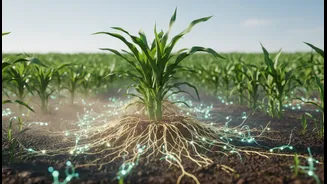
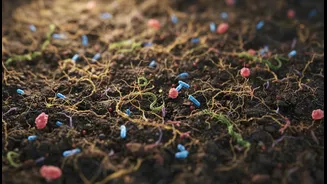
The answer to breaking this cycle lies in shifting from a chemical-centric approach to a biological one. This is where bio-fertilizers come in. These are formulations containing live, beneficial microorganisms that restore and enhance the soil's natural fertility. Instead of force-feeding the plant with synthetic chemicals, bio-fertilizers work with nature to make nutrients available. There are nitrogen-fixing bacteria like Rhizobium and Azotobacter, phosphate-solubilizing microbes that unlock phosphorus, and fungi that improve nutrient uptake. Studies show that integrating bio-fertilizers can supplement chemical fertilizer needs by 20-25% and boost crop yields by 10-25%. The Indian government has recognized this potential, launching initiatives like the PM-PRANAM scheme and supporting bio-fertilizer production through various agricultural programs. Yet, adoption remains low, hampered by a lack of farmer awareness and inconsistent quality control.
Rewriting the Agricultural Story
Changing Indian agriculture requires more than just new products; it demands a new story. The dominant narrative of fighting nature with chemistry must be replaced by one of partnership with biology. We need to celebrate the farmers and entrepreneurs who are already making this shift. From farmers in Jharkhand now purchasing microbes to restore their land to innovators developing new bio-fertilizer formulations, a movement is underway. For example, two entrepreneurs from Kerala recently gained international attention for developing a bio-fertilizer from agricultural waste that is being trialed on over 90 farms in the UK. Success stories like these demonstrate that a microbe-centric approach is not only sustainable but also profitable. To scale this, India needs a concerted effort: robust farmer training, reliable supply chains for quality bio-products, and continued research from institutions like the Indian Council of Agricultural Research (ICAR), which is spearheading the Indian Soil Microbiome Project to map the country's microbial diversity.