

A Sweet Tradition Reimagined
The move toward jaggery, or 'gur', is part of a larger wellness trend that favours natural, unprocessed ingredients. For generations, jaggery was a staple sweetener in India before refined sugar became widely available. Today, health-conscious home bakers
are leading its comeback, drawn by its rustic charm and perceived nutritional benefits. This trend isn't just about avoiding white sugar's empty calories; it’s about embracing an ingredient that offers a richer, more complex flavour profile and a connection to culinary heritage. Brands are taking note, too, with country jaggery appearing in everything from artisanal chocolates to health drinks.
Palm Jaggery vs. Cane Jaggery
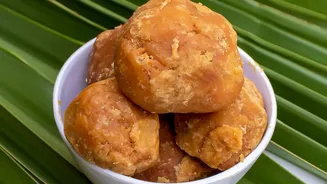
While most people are familiar with the common golden-brown jaggery made from sugarcane juice, the headline specifically mentions palm jaggery. Known as 'karupatti' in South India, palm jaggery is made from the sap of palm trees like coconut or date palms. It is typically darker, richer, and carries a distinct, almost chocolatey-caramel flavour that sets it apart from its sugarcane counterpart. Many purists consider palm jaggery superior due to its unique taste and traditional, chemical-free production methods, which often involve slow-cooking the sap over firewood. When a product is labelled 'organic,' it further assures that the palm trees were grown without synthetic pesticides or fertilisers.
The Health Halo: Is Jaggery Truly Better?
Compared to refined white sugar, which is essentially pure sucrose with no nutritional value, jaggery is a clear winner. Because it's unrefined, it retains minerals from the original plant sap. Palm jaggery contains iron, magnesium, and potassium. It also has a lower glycemic index (GI) than white sugar, meaning it releases energy more slowly and may not cause the same sharp spikes in blood sugar. However, it's crucial to remember that jaggery is still a form of sugar. It is high in calories and should be consumed in moderation. The real benefit comes from swapping it for refined sugar, not from adding more of it to your diet.
The Baker’s Guide to Making the Switch
Replacing sugar with jaggery in baking isn't always a simple one-to-one swap. Jaggery has a higher moisture content and a less intense sweetness than granulated sugar. A general rule of thumb is to use about 1.25 cups of grated or powdered jaggery for every 1 cup of white sugar. You may also need to slightly reduce the liquid in your recipe to compensate for the extra moisture in the jaggery. Its distinct caramel flavour shines in recipes like dense cakes, muffins, and cookies, but it can overpower more delicate desserts. It's best to start by substituting it in recipes that already have warm, spicy notes, like carrot cake or ginger biscuits, where its flavour will feel right at home.
Desserts That Shine with Jaggery
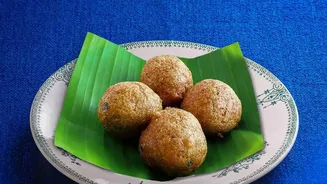
Palm jaggery is incredibly versatile and is the star of many traditional Indian sweets. Think of the delicious 'nolen gurer payesh' (rice kheer) from Bengal, 'karupatti pongal' from Tamil Nadu, or sweet 'kozhukattai' (steamed dumplings). But its use doesn't stop there. Modern bakers are using it to create healthier versions of popular desserts. It lends a wonderful depth to banana muffins, whole wheat pancakes, and even homemade energy bars. Its molasses-like notes pair beautifully with ingredients like coconut, ginger, cardamom, and whole grains like ragi and wheat, creating treats that are both nostalgic and nourishing.