




The Lifeline for Kharif Crops
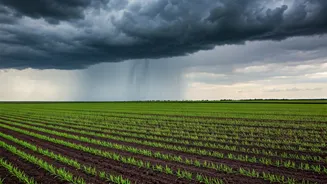
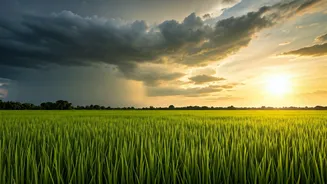
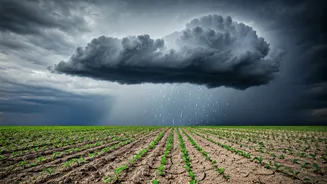
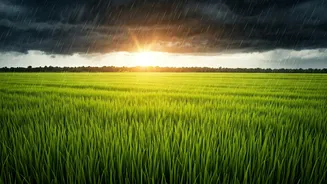
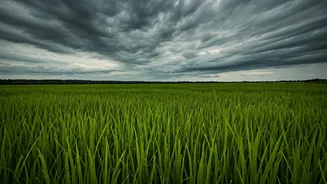
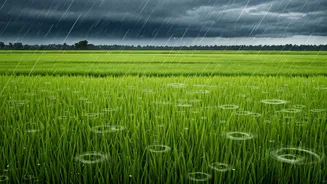
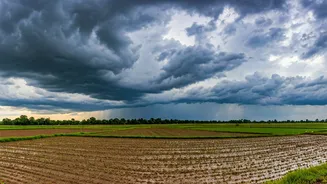
The most immediate and critical role of the southwest monsoon is watering the Kharif crops, which are sown in June and July. More than half of India's net sown area is rain-fed, meaning it lacks access to modern irrigation and is entirely dependent on the monsoon.
This season is when staples that form the backbone of the nation's food supply are planted. We're talking about water-intensive crops like rice, along with cotton, maize, soybean, and various pulses. A timely and well-distributed monsoon ensures that seeds germinate properly and that the plants receive the consistent moisture needed for healthy growth. Without these rains, sowing can be delayed or, in a worst-case scenario, fail entirely, jeopardizing the primary source of income for a vast portion of India's population.
Replenishing the Country's Water Banks
The benefits of the monsoon go far deeper than the topsoil. The four-month season, which delivers about 70-75% of India's annual rainfall, is essential for recharging the country's water reservoirs. This includes everything from massive dams that generate hydroelectric power to local ponds and, most importantly, the groundwater table. Abundant rains fill up aquifers, which are underground layers of water-bearing rock. This is crucial not just for drinking water in rural areas but also for the subsequent Rabi (winter) crop season. Farmers rely on this stored groundwater to irrigate winter crops like wheat and mustard, meaning a good monsoon effectively secures two harvests, not just one. A poor monsoon, on the other hand, can lead to depleted reservoirs and falling groundwater levels, creating water scarcity for months to come.
Fueling the Economic Engine
The monsoon is often called India's 'real Finance Minister' for good reason. Its performance has a direct and powerful ripple effect across the entire economy. A strong harvest puts more money into the hands of farmers and agricultural laborers, boosting rural incomes. This increased purchasing power drives demand for a whole host of goods and services. Sales of tractors, farming equipment, fertilizers, and consumer goods like motorcycles and smartphones all tend to rise after a good monsoon. This rural demand, in turn, stimulates industrial production and creates a positive feedback loop that can contribute significantly to the nation's GDP growth. Conversely, a drought can depress rural spending, leading to an economic slowdown that is felt far beyond the fields.
Keeping Food Prices in Check
For city dwellers, one of the most tangible impacts of the monsoon is on their household budget. A bountiful harvest ensures a steady supply of essential food items like cereals, pulses, and vegetables to the market. This increased supply helps to keep food inflation under control. When monsoon rains fail, agricultural output drops, leading to shortages. These supply constraints inevitably push up food prices, which can strain household finances and pose a major challenge for the Reserve Bank of India. Pulses and vegetables are particularly vulnerable to erratic rainfall as they are often grown in less-irrigated areas. Therefore, a steady monsoon is a key factor in maintaining price stability and ensuring food security for all.
A Shield Against Rural Debt
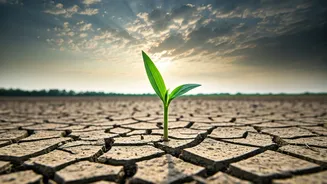
For countless farmers, agriculture is a high-stakes gamble against nature. Many take out loans at the beginning of the season to pay for seeds, fertilizers, and other inputs. A failed monsoon can lead to crop failure, trapping them in a devastating cycle of debt. A good season, however, offers a pathway to financial stability. A successful harvest allows farmers not only to repay their loans but also to make a profit, save for the future, and invest in better equipment or education for their children. The psychological relief that comes with a good monsoon is immense, offering hope and a sense of security after months of uncertainty. It is a season that can mend fortunes and sustain entire communities.