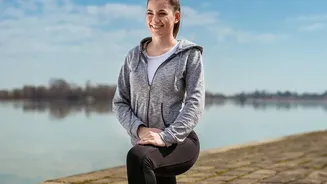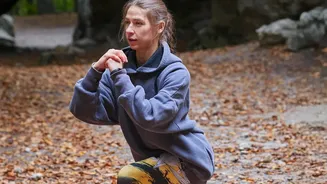






Walking is a fantastic, accessible exercise, but it might be missing a crucial element for long-term health: single-leg stability. Upgrading your routine with walking lunges can target this gap, building functional strength and balance.
Why Your Walk Needs an Upgrade
Walking is a foundational
human movement, but as a fitness routine, it has its limits. The motion is repetitive and primarily occurs in a straight line, which means your body becomes very efficient at it. While great for cardiovascular health, this efficiency means it doesn't significantly challenge your muscles or balance over time. A standard walking gait doesn't force your body to manage instability. Each step is part of a fluid, bilateral motion where one foot is always supporting the other. This pattern can neglect the smaller stabilizing muscles in your hips, core, and ankles that are crucial for preventing falls and improving overall functional fitness.
The Power of Single-Leg Stability
Single-leg, or unilateral, stability is your ability to balance and control your body when supported by only one leg. This skill is vital for everyday activities like climbing stairs, stepping off a curb, or recovering from a trip without falling. Walking lunges are a functional exercise that directly mimics and strengthens this ability. Each step in a walking lunge forces one leg to independently support your entire body weight through a large range of motion, engaging the core and hip muscles to maintain balance. This dynamic, controlled instability is precisely what builds superior balance and coordination.
Anatomy of the Walking Lunge
The walking lunge is a compound exercise that recruits multiple muscle groups simultaneously. The primary movers are the large muscles of the lower body: the quadriceps (front of the thigh), hamstrings (back of the thigh), and the glutes (buttocks). However, the real magic happens in the supporting cast. To keep your torso upright and prevent wobbling, your core muscles—including your abs and obliques—must fire throughout the movement. Furthermore, the gluteus medius, a key hip stabilizer, works overtime to keep your pelvis level, a job it isn't significantly tasked with during a normal walk.
How to Perform the Perfect Walking Lunge
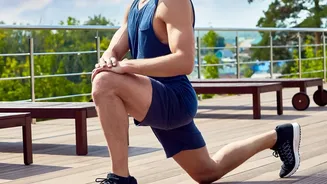
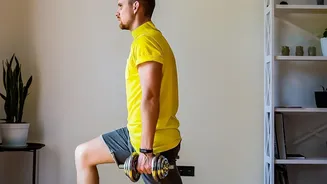
Proper form is essential to maximize benefits and prevent injury. Start by standing with your feet hip-width apart and your hands on your hips. Take a large step forward with your right leg, planting your heel first. Lower your hips until both knees are bent at approximately a 90-degree angle. Your front knee should be directly above your ankle, and your back knee should hover just above the ground. Keep your chest up and your core engaged. From the bottom of the lunge, press through your right heel to drive your body forward, bringing your left foot forward to step directly into the next lunge. Continue alternating legs as you 'walk' across the floor.
Common Mistakes to Avoid
There are several common errors that can reduce the effectiveness of the exercise and increase injury risk. The most frequent mistake is allowing the front knee to travel past the toes, which places excessive stress on the knee joint. Another is taking a step that is too short or too long; aim for a stride that allows both knees to comfortably reach a 90-degree bend. Leaning your torso too far forward is also common, often due to a weak core. Focus on keeping your chest proud and your back straight. Finally, avoid moving too quickly. Slow, controlled movements are safer and more effective for building stability.
Adding Lunges to Your Routine
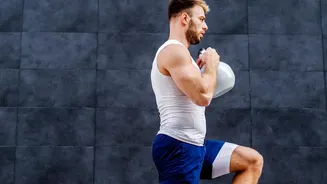
If you're new to lunges, begin with stationary lunges (stepping forward and then back to the start) to master the form. Once you're comfortable, you can progress to walking lunges. A good starting point is to perform 2 to 3 sets of 10 to 12 lunges per leg, two or three times a week. You can incorporate them as a dynamic warm-up, as part of your main workout, or as a finisher. As you get stronger, you can increase the challenge by holding dumbbells or a kettlebell. This adds resistance, further strengthening your muscles and enhancing the stability challenge.