



The Royal Shahi Litchi of Muzaffarpur
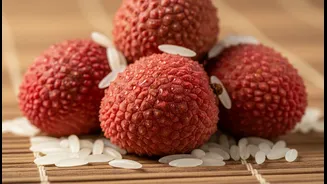
Arguably Bihar's most famous fruit, the Shahi Litchi from Muzaffarpur and its surrounding districts received its GI tag in 2018. This isn't just any litchi; it's celebrated for its unique combination of a rosy fragrance, juicy pulp, and a perfect balance
of sweet and tart flavours. The alluvial soil rich in calcium and the specific climate of northern Bihar give the Shahi Litchi its distinctive qualities that cannot be replicated elsewhere. Its pearly white, succulent flesh and relatively small seed make it a prized summer delicacy. For generations, litchi growers in the region have cultivated this fruit, which now enjoys protected status, ensuring that when you buy a Shahi Litchi, you are getting the authentic, high-quality fruit that has made Muzaffarpur the litchi capital of India.
The Fragrant Katarni Rice from Bhagalpur
Imagine a rice so aromatic that its fragrance fills the kitchen even before it's cooked. That is Katarni Rice, a superior fine-grain variety from the Bhagalpur, Banka, and Munger regions. Granted a GI tag in 2018, its name comes from the awl-like shape of the paddy's tip. Katarni is known for being soft, non-sticky, and easily digestible, making it a preferred choice for special occasions and for preparing delicacies like kheer and pulao. The unique aroma and palatability are attributed to the specific soil and climatic conditions of its native region. The GI tag has not only protected the farmers' interests but also boosted the rice's reputation, leading to increased cultivation and better prices for this ceremonial grain.
The Delicate Jardalu Mango from Bhagalpur
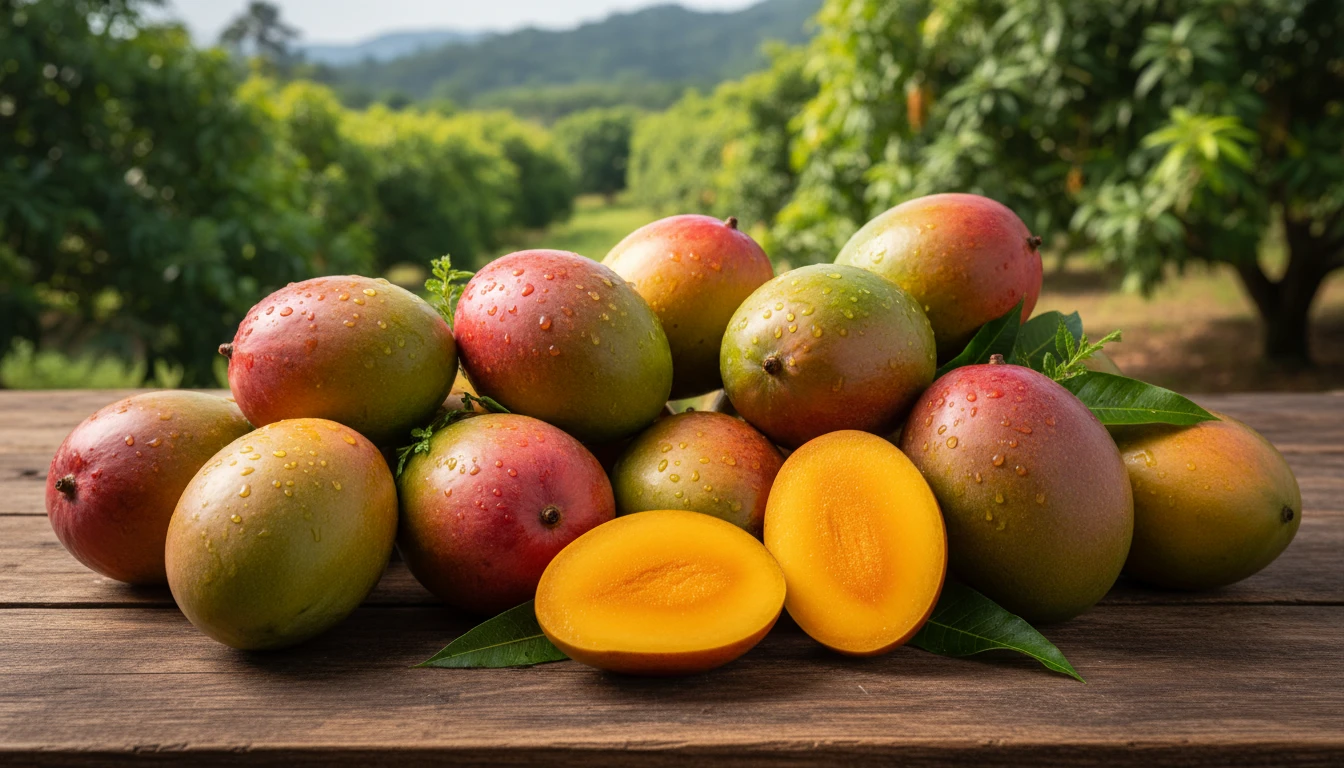
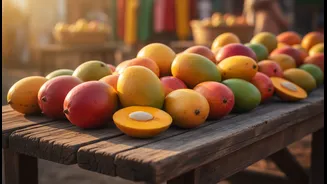
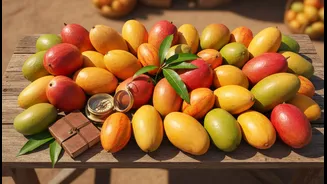
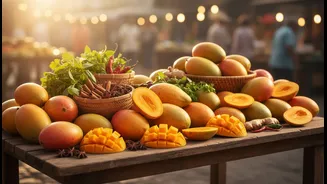
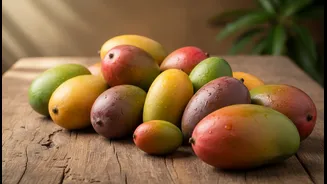
Another gem from Bhagalpur, the Jardalu Mango is a unique variety loved for its light yellow, thin skin and incredibly sweet pulp. Also awarded a GI tag in 2018, this mango is as famous for its delightful aroma as it is for its taste. Its name is derived from the Persian word 'zard,' meaning yellow. For years, it has been a tradition for the Bihar government to send consignments of these special mangoes to the President and Prime Minister of India, a testament to their esteemed status. Unlike other mangoes, the Jardalu is not fibrous and has a distinct, lingering sweetness that makes it a true connoisseur's fruit, representing the rich horticultural heritage of the state.
The Melt-in-Your-Mouth Magahi Paan
A symbol of hospitality and tradition in the Magadh region, Magahi Paan (betel leaf) is not your ordinary paan. Cultivated in the districts of Aurangabad, Gaya, Nawada, and Nalanda, it received its GI tag in 2018. What makes it special is its unique texture; it is soft, non-fibrous, and almost melts in the mouth. It has a distinctive pungent taste but is less fibrous than other varieties, making it highly sought after. The GI tag legally protects the name, ensuring that only leaves grown in this specific part of Bihar can be sold as Magahi Paan, preserving the centuries-old farming practices and the authentic quality that has made it famous across India.
The Crispy, Layered Silao Khaja
Hailing from Silao, a town between the historic sites of Rajgir and Nalanda, Silao Khaja is a traditional sweet that is deceptively complex. This delicacy, which also earned a GI tag in 2018, is known for its incredible crispiness and its many wafer-thin layers. Made from wheat flour, sugar, and ghee, the dough is meticulously layered—sometimes up to 16 sheets—before being deep-fried and soaked in sugar syrup. Local lore and even historical accounts suggest this sweet has been made here for centuries, with some legends tracing it back to the time of Lord Buddha. The local water and climate are said to contribute to its unique puffiness and taste, making it a truly save-worthy piece of Bihar's culinary history.