


Beyond Hardware to Intelligent Systems
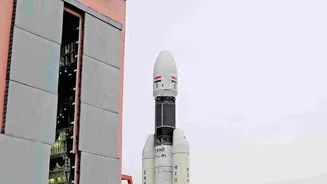
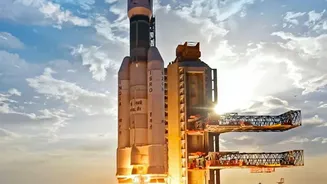
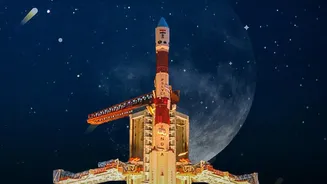
For decades, the story of space exploration was one of powerful rockets and sophisticated satellites. While that remains crucial, the next frontier is about the intelligence that operates these systems. India's space ambitions are shifting from a hardware-centric
model to one driven by software, data, and immense computational power. The Indian Space Policy 2023 sets the stage for this evolution, encouraging private sector participation and focusing the Indian Space Research Organisation (ISRO) on advanced research and development. This policy pivot is crucial, as the sheer volume of data from space missions now requires technologies that can process and analyse information faster than ever before. The goal is to move from simply collecting data to generating actionable, real-time insights, whether for national security, disaster management, or scientific discovery.
Artificial Intelligence: The Mission's New Brain
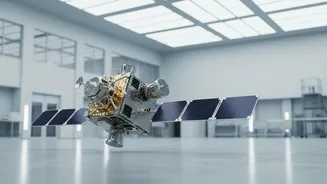
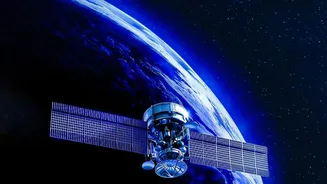
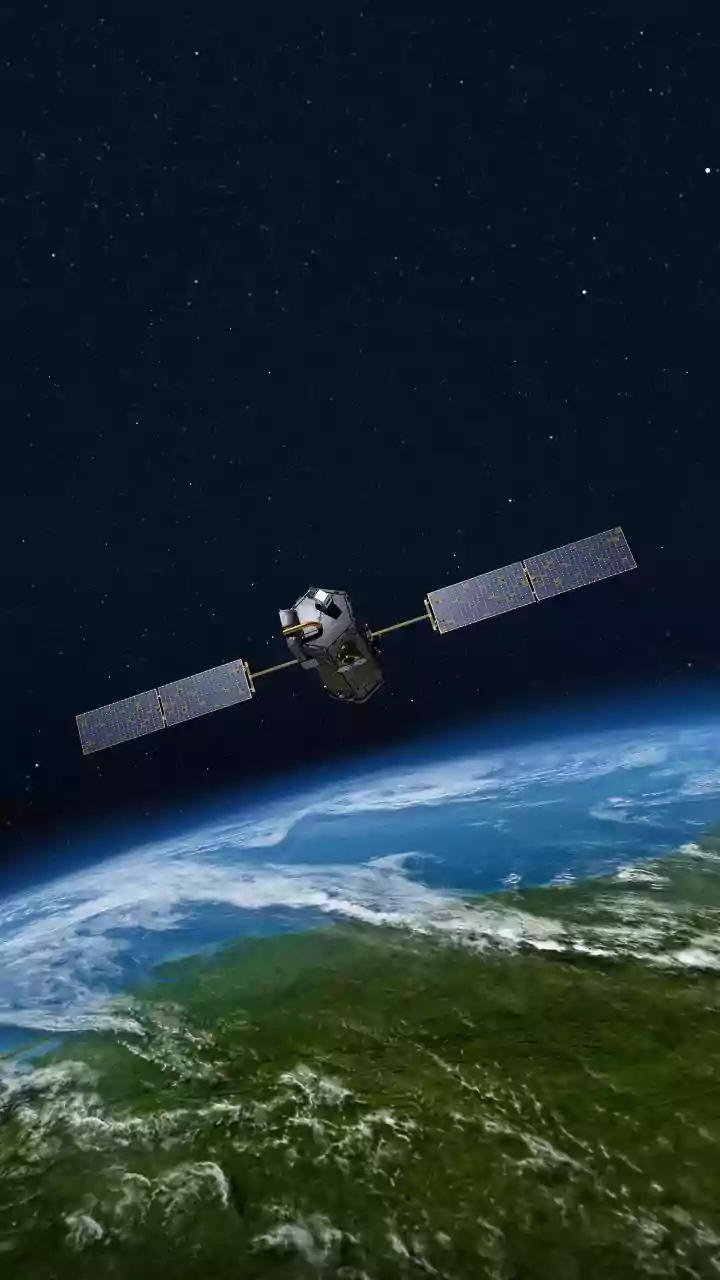
Artificial Intelligence (AI) and Machine Learning (ML) are poised to become the nervous system for future space operations. Experts at the recent National Space Technology Conclave 2026 highlighted that on-board processing with AI will allow satellites to analyse data in space itself. This concept, known as edge computing, means that instead of transmitting massive raw data files back to Earth, a satellite could identify a flood, analyse its spread, and send only the critical alert to ground stations. This drastically reduces latency and supports faster decision-making. ISRO is already exploring AI for its Gaganyaan human spaceflight mission, with the humanoid robot 'Vyommitra' being a prime example. Beyond mission control, AI algorithms will sift through petabytes of satellite imagery to monitor crop health, track urban development, and even predict climate patterns with greater accuracy.
Quantum's Leap for Secure Communication
While AI provides the brains, quantum technology promises to be the shield. One of the biggest vulnerabilities in the digital age is data security. Quantum Communication offers a solution by using the principles of quantum physics to create theoretically unhackable communication channels. ISRO has successfully demonstrated free-space Quantum Key Distribution (QKD) over a distance of 300 meters, a foundational step toward creating secure satellite communication networks. This technology is vital for protecting sensitive military communications, financial transactions, and critical infrastructure data relayed via satellites. In the future, quantum computing could also be used to perform incredibly complex simulations for mission planning, design new materials for spacecraft, and optimise orbital trajectories. It represents a long-term strategic capability that will define the next generation of secure and efficient space exploration.
Advanced Computing: Simulating the Cosmos
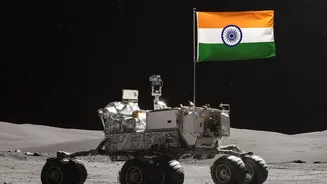
Underpinning both AI and quantum development is the raw power of advanced and high-performance computing (HPC). ISRO has long used supercomputers, like its 'SAGA-220', to perform the complex calculations needed for launch vehicle design and mission simulation. These powerful systems allow engineers to model everything from the aerodynamic stresses on a rocket during launch to the precise trajectory needed for a lunar landing, as was done for Chandrayaan-3. As missions become more ambitious, the need for computational power skyrockets. HPC enables faster and more detailed simulations, reducing mission risk and optimising payload capacity. This capability is no longer confined to ISRO; the Indian government's push for a national supercomputing network and the rise of private firms signal a broader embrace of HPC as a critical national resource.
The Private Sector and Startup Ecosystem
This technological leap is not happening in a vacuum. The Indian Space Policy 2023 has catalysed a vibrant startup ecosystem, with companies now taking the lead in specialised areas. The Indian National Space Promotion and Authorisation Centre (IN-SPACe) is actively funding startups working on everything from Earth observation AI to new rocket engines. Some startups are even planning to launch orbital AI data centres, aiming to process data directly in space. This synergy between ISRO's research focus and the private sector's commercial drive is creating an environment ripe for innovation. By allowing non-governmental entities to build, launch, and operate space assets, India is not just fostering competition but also accelerating the adoption of these next-generation technologies across the entire space value chain.