




The Balcony Gardener’s Watering Dilemma
Overwatering is one of the most common reasons container plants fail. Unlike plants in the ground, pots have a limited volume of soil and can quickly become waterlogged if drainage isn't perfect. This leads to soggy soil that suffocates roots by depriving
them of oxygen, creating ideal conditions for root rot and fungal diseases. The confusing part for many gardeners is that the symptoms of overwatering—yellowing, wilting leaves—often look exactly like the symptoms of underwatering. This can lead to a vicious cycle of adding more water to a plant that is already struggling, ultimately doing more harm than good. The traditional “finger test,” sticking a finger an inch into the soil, is a good starting point but doesn't tell you what’s happening deeper in the pot where the main root ball resides.
What Exactly is an IoT Soil Probe?
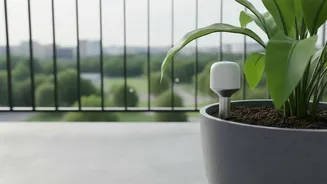
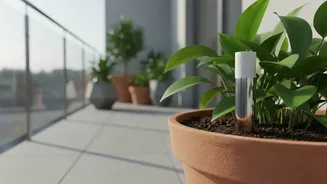
Enter the Internet of Things (IoT) soil probe, a small, smart device designed to take the guesswork out of watering. In simple terms, it's a sensor you stick into the soil of your pot. This sensor continuously measures the moisture level at the root zone and uses technology like Wi-Fi or Bluetooth to send that data directly to an app on your smartphone. Think of it as a dedicated health monitor for your plant's soil. Instead of watering on a fixed schedule or relying on surface-level checks, you get precise, real-time information about when your plant is actually thirsty. These devices are part of a growing trend in smart gardening that makes plant care more accessible and data-driven for everyone, from beginners to experienced horticulturists.
How Technology Prevents Overwatering
The magic of an IoT soil probe lies in its ability to measure moisture accurately. Most modern probes use a capacitive method. They measure the soil's ability to hold an electrical charge, which is directly related to its water content. Dry soil and wet soil have different electrical properties, and the sensor translates this difference into a moisture percentage. The companion app displays this data in an easy-to-understand format, often with simple labels like 'Dry,' 'Moist,' or 'Wet.' You can set custom alerts for each plant, so your phone will notify you the moment the soil moisture drops below an optimal threshold. This completely flips the script on watering: instead of guessing when to water, your plants tell you exactly when they need it, ensuring they get a drink only when necessary and preventing the chronic problem of overwatering.
What to Look for in a Smart Probe
When choosing an IoT soil probe for your balcony, there are a few key features to consider. First, think about connectivity. Bluetooth sensors are simple and great for close range, while Wi-Fi-enabled sensors allow you to check on your plants from anywhere, a useful feature if you travel. Next, check the probe length and ensure it’s suitable for the size of your pots to measure moisture at the root level. Battery life is also crucial; look for models that can last for several months or even a year to minimize maintenance. Finally, evaluate the companion app. Is it user-friendly? Does it provide historical data so you can track moisture trends over time? Some advanced systems even integrate with weather forecasts or allow you to automate watering with a smart valve, though a simple, reliable sensor is often enough for a balcony setup.
Getting Started is Surprisingly Simple
Adopting this technology is not as complicated as it might sound. The setup process for most home-garden probes is designed to be user-friendly. Typically, it involves inserting the batteries, downloading the manufacturer’s app to your phone, and pairing the device following on-screen instructions. Once connected, you simply push the probe into the soil of your chosen plant, making sure it’s deep enough to reach the root zone. Within the app, you can often select the type of plant you are monitoring from a database, which helps the system recommend ideal moisture levels. From there, the sensor does the work, silently monitoring the soil and sending you an alert when it’s time to bring out the watering can. It's a small piece of tech that provides significant peace of mind.