








Beyond the Barbell
Forget what you think you know about gym workouts. A powerful movement is reshaping fitness feeds, and it looks less like a modern gym and more like a traditional Indian Akhada. The rhythmic swings of a Gada (mace), the powerful rotation of Jori (clubs),
and the flowing movements of bodyweight exercises are captivating a new generation of fitness enthusiasts. This isn't just a fleeting trend; it's a rediscovery of a holistic approach to strength that has been honed in India for centuries. For years, the global fitness industry has been dominated by a Western model of isolated muscle training. But as people search for more functional, sustainable, and meaningful ways to move, they are looking to the past, and finding profound wisdom in India’s physical culture.
The Ancient Toolkit
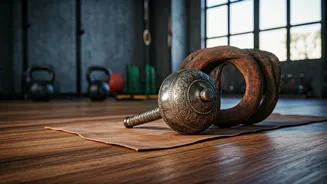
At the heart of this revival are the iconic tools of the Pehlwan, or traditional Indian wrestler. The most recognisable is the Gada, a mace made from a bamboo stick with a stone or concrete weight at the end. Famously wielded by Lord Hanuman, the Gada is not lifted, but swung. These swings build formidable grip strength, a rock-solid core, and powerful shoulders, all while improving mobility and cardiovascular endurance. Then there are the Jori, a pair of heavy wooden clubs. Unlike modern clubbells, Joris are swung in complex, symmetrical patterns that challenge coordination, build rotational power, and decompress the spine. They are the original functional tool for creating a physique that is as resilient as it is strong, designed to build a 'bulletproof' upper body ready for the demands of combat or sport.
The Body as the Temple
This fitness philosophy isn't just about external tools; it’s deeply rooted in mastering one's own bodyweight. Two foundational exercises are the Dand and the Baithak. The Dand is often called the ‘Hindu push-up,’ but it’s much more than that. It’s a dynamic, flowing movement that combines elements of a push-up with a downward-dog-to-cobra yoga transition. It builds upper body strength, spinal flexibility, and endurance simultaneously. Its counterpart, the Baithak, is a form of squat performed in high repetitions. Unlike the static, heavy-lifting squat of modern powerlifting, Baithaks are about endurance, mobility, and building powerful legs that can work tirelessly. A typical Akhada workout might involve hundreds of Dands and Baithaks, building a base of strength that is both profound and practical.
The Rise of the Hybrid Athlete
So, why now? The viral popularity of these ancient methods coincides perfectly with the rise of the ‘hybrid athlete.’ Today’s fitness enthusiasts are no longer content with being one-dimensional. They don't want to just be strong, or just have endurance; they want both. They want to be able to lift heavy, run a 10K, and still have the mobility to play with their kids without getting injured. This is the essence of hybrid fitness. Ancient Indian calisthenics is the perfect system for this goal. It doesn’t separate strength, endurance, and mobility into different workouts. Instead, each exercise and every tool is designed to develop all these qualities at once. It’s a system that builds a complete, well-rounded athlete, which is exactly what the modern fitness world is starting to crave.
More Than Just Muscle
Perhaps the most compelling aspect of this revival is its holistic nature. Swinging a Gada or performing hundreds of Dands is a meditative practice. It requires focus, breath control, and a deep mind-muscle connection. It’s a workout for the mind as much as the body. Practitioners report a sense of calm and mental clarity that they don't find in a typical gym session filled with distractions. This return to foundational, mindful movement provides a powerful antidote to our hyper-stimulated modern lives. It connects users to a rich history and a philosophy that sees the body not just as something to be sculpted, but as an integrated part of a whole, healthy life.