
Our Planetary Defence System
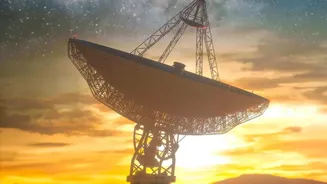
First, let's talk about planetary defence. Near-Earth Asteroids (NEAs) are rocky bodies whose orbits bring them into Earth's neighbourhood. While most are harmless, some pose a potential impact threat. Observatories dedicated to this task don't just look
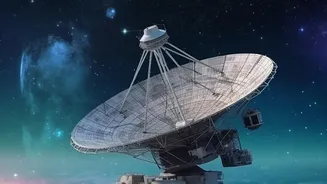
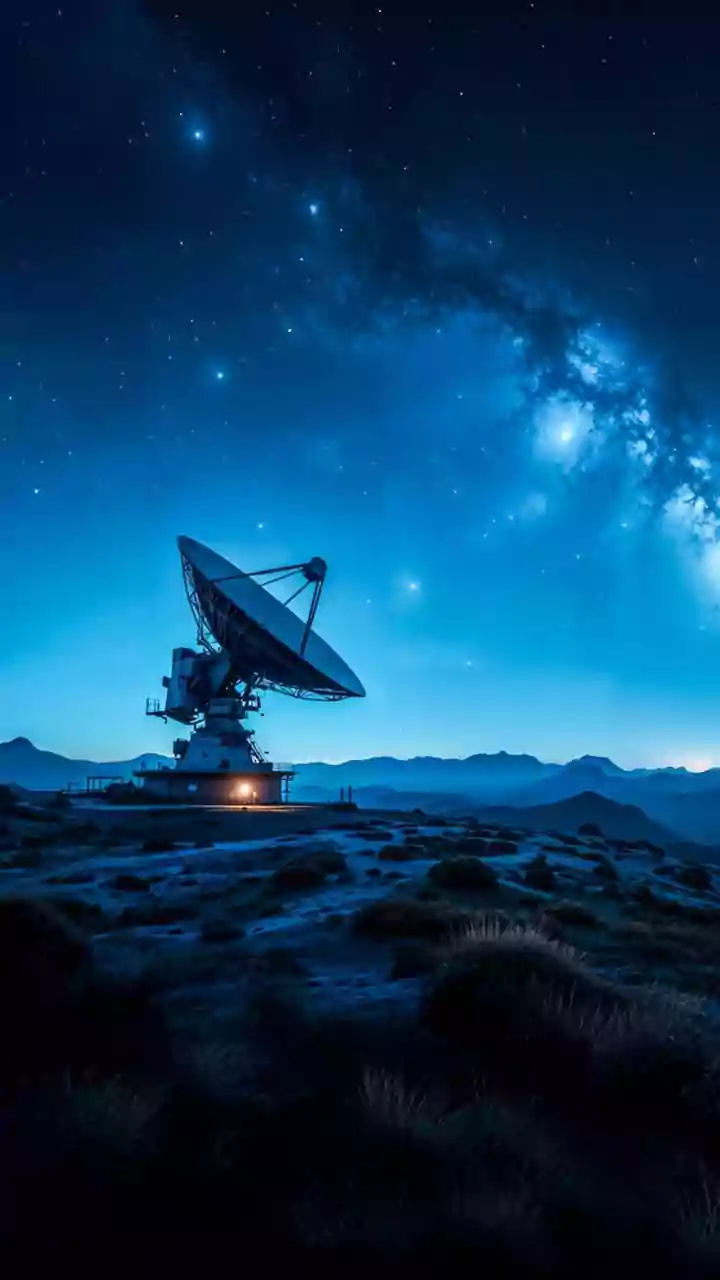
through an eyepiece; they employ a systematic process. Wide-field telescopes repeatedly photograph large patches of the sky. Specialised computer software then analyses these images, looking for tiny points of light that have moved relative to the background stars. This is the tell-tale sign of an asteroid. Once a candidate is spotted, its position is reported to a global network of astronomers for follow-up observations to confirm its path and determine if it poses any risk. Major players in this global effort include the Catalina Sky Survey and Pan-STARRS.
A New Era of Asteroid Hunting
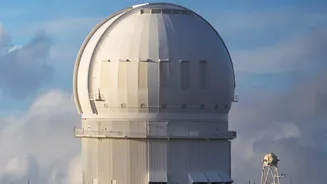
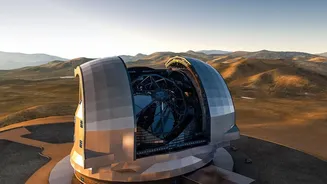
The game is about to change significantly with the Vera C. Rubin Observatory in Chile. Having begun its 10-year Legacy Survey of Space and Time (LSST) in mid-2026, this facility is a marvel of modern astronomy. Its massive 8.4-metre mirror and the world's largest digital camera will photograph the entire southern sky every few nights. This unprecedented speed and breadth will generate a vast catalogue of our solar system, identifying millions of asteroids. Its mission is to map at least 90% of the potentially hazardous NEOs larger than 140 metres, a size that could cause regional devastation. The Rubin Observatory will create what is essentially a decade-long movie of the universe, revealing anything that moves or changes.
Listening to Cosmic Messengers
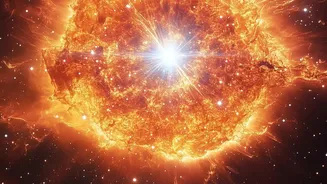
Beyond our solar system, observatories are also hunting for something far more enigmatic: cosmic rays. These are not rays of light, but high-energy subatomic particles—protons and atomic nuclei—accelerated to nearly the speed of light by cataclysmic events like supernova explosions or supermassive black holes. They are messengers from the most violent corners of the universe. Studying them gives scientists a unique window into fundamental physics at energies far beyond what we can create in labs on Earth. However, detecting them from the ground is a challenge, as the primary cosmic ray particle almost never makes it to the surface.
Catching an Invisible Particle Shower
So how do you catch something you can't see? Scientists look for the aftermath. When a high-energy cosmic ray hits the upper atmosphere, it shatters atmospheric molecules, creating a cascade of billions of secondary particles known as an 'extensive air shower'. Ground observatories use two main techniques to detect these showers. The first involves arrays of detectors, like the water-filled tanks of the Pierre Auger Observatory in Argentina. When shower particles pass through the ultra-pure water faster than the speed of light in water, they produce a faint blue glow called Cherenkov radiation, which is then registered by sensitive sensors.
Making the Air Itself Glow
The second method is even more subtle. As the particle shower cascades through the atmosphere, it excites nitrogen molecules, causing them to emit a faint, ultraviolet fluorescence light. On clear, moonless nights, specialised fluorescence telescopes can track this faint streak across the sky, effectively watching the shower develop. Observatories like Pierre Auger use both methods in a 'hybrid' approach, giving them two independent ways to measure a cosmic ray's energy and direction with remarkable precision. Here in India, the GRAPES-3 experiment in Ooty, operated by the Tata Institute of Fundamental Research, is a world-class facility that uses an array of scintillators and a large muon detector to study these cosmic phenomena, contributing significantly to our understanding of space weather and the universe's most energetic events.