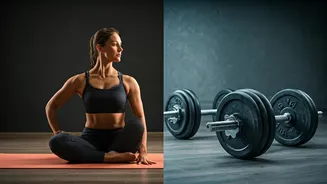









The Zen of Strength: The Case for Yoga
Yoga, a practice with roots stretching back over 5,000 years in India, is far more than a set of physical postures. It is a holistic discipline designed to unite the mind, body, and spirit through asanas (postures), pranayama (breath control), and meditation.
For its proponents in this debate, yoga offers a form of strength that is sustainable and deeply integrated. The emphasis isn't on brute force, but on flexibility, balance, mobility, and body awareness. Experts point out that consistent yoga practice improves posture, enhances respiratory function, and significantly reduces stress by calming the nervous system. In the context of modern Indian identity, yoga is also a symbol of cultural heritage and soft power on the global stage. The argument for yoga is that it builds a resilient, flexible body and a calm, focused mind, offering a comprehensive path to wellness that transcends mere muscle.
The Power of the Lift: The Case for Powerlifting
On the other side of the debate is powerlifting, a sport focused on maximal strength in three specific lifts: the squat, bench press, and deadlift. Its appeal is visceral and its results are visible. Advocates argue that nothing builds raw strength, increases bone density, and boosts metabolism quite like lifting heavy weights. In recent years, powerlifting has seen a surge in popularity across urban India, moving from a niche sport to a mainstream fitness pursuit. This trend is fueled by a new generation that equates muscular development with empowerment, health, and discipline. For many, especially women, embracing weight training is a way to challenge traditional notions of femininity. The case for powerlifting is straightforward: it is an efficient and measurable way to build functional strength, sculpt the body, and foster a mindset of progressive overload, pushing past perceived limits.
Clash of Philosophies: Why The Heated Debate?
The viral nature of the "yoga vs. powerlifting" debate stems from the fact that they represent two different philosophies of fitness and well-being. The conflict is often framed around perceived stereotypes: the serene yogi versus the aggressive lifter. One camp argues that a focus on heavy lifting leads to a stiff, muscle-bound physique that lacks true functional mobility. They point to lifters who can't bend properly or have a limited range of motion. The other side contends that yoga alone is insufficient for building significant muscle mass or the kind of strength needed for powerful, explosive movements. The debate is amplified in India, where yoga is intertwined with cultural and national identity. Some see the rising popularity of Western-style weight training as a departure from traditional Indian wellness systems, turning a simple fitness choice into a more complex cultural conversation.
Beyond The 'Versus': An Expert Perspective
Fitness experts and physiotherapists, however, largely view this as a false dichotomy. The consensus is that yoga and powerlifting are not mutually exclusive; in fact, they are highly complementary. For a powerlifter, incorporating yoga can dramatically improve flexibility, core strength, balance, and mind-muscle connection, all of which are crucial for executing heavy lifts safely and effectively. Better mobility from yoga can lead to a deeper squat and a more stable deadlift, reducing the risk of injury. Conversely, a yogi who incorporates strength training can build the muscular power to hold challenging poses more easily and correct imbalances that yoga alone might not address. Strength training builds the engine, and yoga ensures the chassis is flexible and aligned. The ultimate goal of any fitness routine is longevity and health, and a blended approach often provides the most balanced and sustainable results.