


Goodbye to the 'One-Style' Rulebook
For years, interior design was presented as a choice between rigid categories: minimalist, traditional, industrial, or bohemian. Homeowners were encouraged to pick a lane and stick to it, resulting in spaces that were stylish but often lacked personal
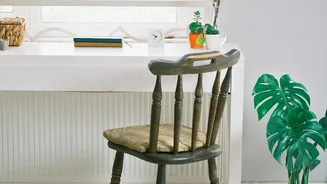
character. That approach is now giving way to a more fluid and expressive philosophy. Today, the goal isn't to replicate a showroom but to create a home that feels curated over time. This eclectic approach celebrates individuality, allowing a sleek, contemporary sofa to coexist with a grandmother's antique wooden chest or a Scandinavian pendant light to hang over a rustic dining table. It’s a shift from a 'one-size-fits-all' model to one that is deeply personal and dynamic.
The Art of the Global-Local Blend
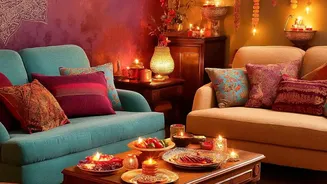
This new wave in Indian interiors is defined by its artful fusion of global trends with local craftsmanship and heritage. It's about 'Indian Modernism'—a style rooted in Indian culture but with a contemporary charm. We're seeing the clean lines and neutral palettes of Scandinavian design warmed up with vibrant Indian textiles like block prints and handloom cottons. Another popular blend is 'Japandi', which merges Japanese wabi-sabi's appreciation for imperfection with Scandinavian hygge's focus on comfort. This philosophy resonates deeply in India, where values of honest materials and considered craft have always been part of the design tradition, seen in everything from Rajasthani carved furniture to Southern terracotta.
A Reflection of Modern Indian Identity
So why is this happening now? This trend is a mirror to the identity of the modern Indian: globally aware yet deeply connected to their roots. Increased travel and digital exposure have introduced a world of design possibilities, while a renewed appreciation for heritage has made homeowners eager to showcase their cultural history, travels, and experiences. It’s a move away from simply copying Western trends towards forging a unique identity. The home has become a canvas for personal storytelling, where a family heirloom sits beside a souvenir from a trip abroad, each object adding a layer to the narrative. This approach also champions sustainability, as it encourages restoring and repurposing old furniture rather than discarding it.
Curated Maximalism, Not Chaos
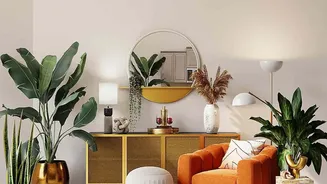
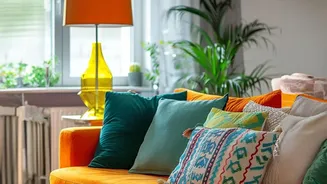
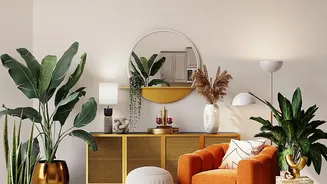
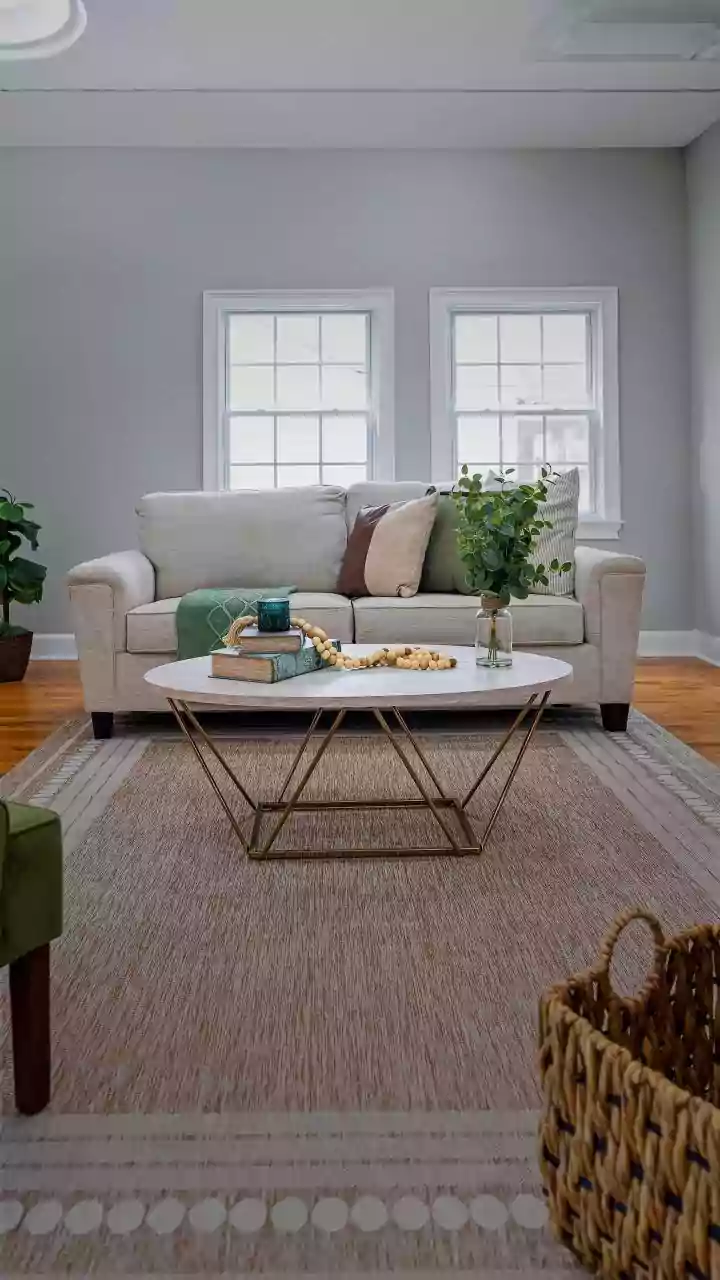
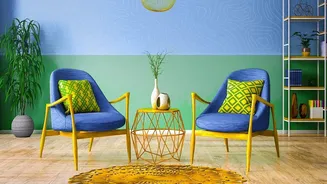
It's easy to mistake this eclectic style for clutter, but it is far from random. The key is 'intentional' curation. While India has a cultural tradition of maximalism—celebrating abundance in colour, pattern, and detail—the modern approach is more edited. Successful eclectic rooms are unified by a common element, whether it's a consistent colour palette, a repeating material like wood or brass, or a similar scale among furniture pieces. This is often described as 'warm minimalism': a restrained base of neutral walls and clean-lined furniture, brought to life with deliberate, meaningful accents—a single carved wooden stool, a vibrant piece of art, or cushions made from traditional textiles. This balance prevents the space from feeling visually overwhelming.
How to Master the Mix
Blending styles can feel intimidating, but a few simple principles can guide you. Start with a neutral base for your walls and large furniture items to create a calm backdrop. Then, introduce contrast by mixing old and new—pair a modern dining table with vintage chairs, or place a traditional brass lamp on a sleek, contemporary side table. Use textiles like rugs, cushions and throws to tie different elements together. Finally, don't be afraid to let your personality shine. The most successful mixed-style homes are those that are a genuine reflection of the people who live in them, filled with objects that hold meaning and tell a story.