



The Great Lunar Illusion
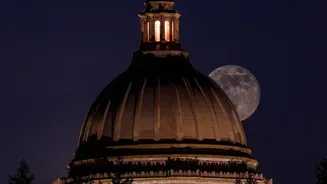
This powerful experience is known as the Moon Illusion, and despite what our eyes tell us, it’s not real. The Moon does not physically change size as it travels across the sky. In fact, its angular size—the amount of space it takes up in our field of view—remains
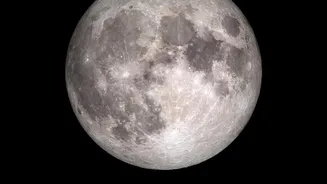
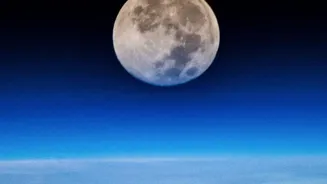
virtually constant throughout the night. If you were to measure it with a scientific instrument, the moon high in the sky is the same size, or even marginally larger, than the one on the horizon. The 'giant' harvest moon is a perceptual trick, an illusion created entirely within our brains.
Why Our Brains Get It Wrong
So, why are we so easily fooled? The leading theory is the 'Apparent Distance Hypothesis'. Our brains are wired to interpret the sky as a flattened dome, with the horizon perceived as much farther away than the zenith directly overhead. We are used to seeing objects like clouds and airplanes appear smaller as they move toward the distant horizon. When the Moon appears near the horizon, our brain receives cues from trees, buildings, and the terrain that suggest it is very far away. Because its angular size is the same as the 'closer' overhead moon, our brain concludes the horizon moon must be physically enormous to compensate. This is similar to the Ponzo illusion, where two identical lines placed on converging tracks appear to be different sizes.
The Camera Never Lies
While our brains add context and interpretation, a camera simply records the light that enters its lens. Photography serves as the perfect, objective tool to debunk the Moon Illusion. Using a telephoto or zoom lens strips away the psychological trickery. A long lens compresses the distance and captures the Moon's angular size without being fooled by the surrounding landscape. The terrestrial cues that tell our brain the horizon is 'far away' don't influence the camera's sensor, which only cares about the light it receives. The result is an honest depiction of reality, proving that perception and actuality can be two very different things.
Your Own Cosmic Experiment
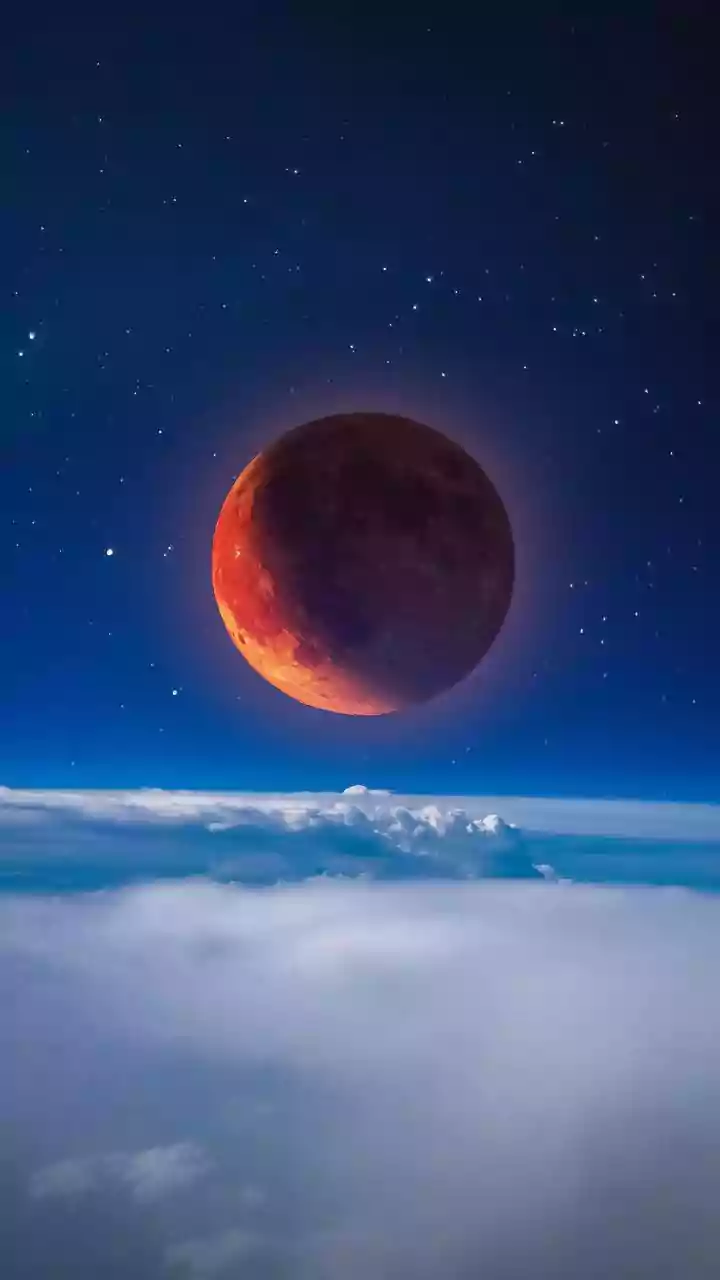
You can easily prove this for yourself without any fancy equipment. The next time you see a full moon rising, grab your camera—even a smartphone with a decent zoom will work. First, take a photo of the Moon when it's low on the horizon, seemingly massive next to distant objects. Then, wait a few hours until it has climbed high into the dark sky. Without changing the zoom setting on your camera, take a second photograph. When you place the two images side-by-side, you will see definitive proof: the Moon is the exact same size in both pictures. The only noticeable difference might be its color, which appears more reddish on the horizon as its light travels through more of Earth's atmosphere.