




A Monsoon Elixir for Mind and Body
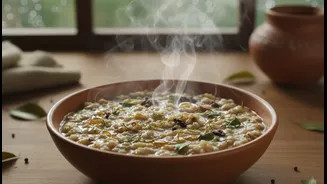
Karkidaka Kanji, also known as Oushadha Kanji (medicinal porridge), is a cornerstone of seasonal wellness in Kerala. It is traditionally consumed during Karkidakam, the final month of the Malayalam calendar, which falls between mid-July and mid-August.
Historically, this was a challenging time marked by incessant rain, low agricultural productivity, and a higher risk of illness. According to Ayurveda, the body's digestive fire, or Agni, is at its weakest during this damp, cool season, making us more vulnerable to disease. This special porridge is designed to counteract that, serving as a restorative treatment to cleanse the body, boost immunity, and prepare it for the year ahead.
The Science of a Simple Gruel
At first glance, Karkidaka Kanji is a simple rice gruel, but its power lies in a sophisticated blend of ingredients. The base is typically Njavara rice, a unique medicinal variety from Kerala prized for being easy to digest and deeply nourishing. To this, a host of spices and herbs are added. Ingredients like cumin, fenugreek, and dry ginger help rekindle the digestive fire and reduce bloating, which are common complaints during the monsoon. The porridge is further enriched with potent herbal mixtures, which can include Dashamoola (a blend of ten medicinal roots) and Dashapushpam (a group of ten sacred flowers), each with specific properties to support immunity and reduce inflammation. Coconut milk often provides healthy fats and a comforting creaminess, making it both medicine and a wholesome meal.
From Family Ritual to Modern Wellness Trend
While Karkidaka Kanji has been a staple in Keralite homes for centuries, its recent surge in popularity marks a significant cultural shift. What was once a tradition passed down through grandmothers is now being embraced by a new, health-conscious generation. This revival is driven by a broader global trend of looking towards ancestral wisdom and traditional foods for modern wellness solutions. Health-conscious consumers are increasingly seeking natural ways to boost their immunity, a movement that has gained significant momentum. As a result, the humble kanji is no longer confined to home kitchens; it's now featured on cafe menus and is readily available in convenient, ready-to-make kits from Ayurvedic brands and online stores.
Adapting an Ancient Recipe for Today
The beauty of Karkidaka Kanji lies in its adaptability. While traditional recipes are followed, there is no single rigid formula, allowing for personalisation. Packaged kits have made the process incredibly simple, providing pre-portioned rice and the essential dried herbs for those with a busy lifestyle. Home cooks are also putting their own spin on the dish, adding ingredients like sautéed shallots for extra flavour or a touch of palm jaggery for sweetness. Some are even experimenting by swapping traditional red rice for other grains like broken wheat or quinoa to align with different dietary preferences, proving that this ancient tradition can evolve while keeping its core wellness principles intact.