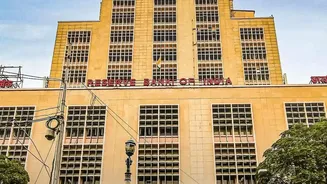






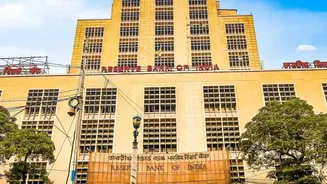

Rising prices are a growing concern for households across India. This surge in inflation could prompt the Reserve Bank of India to raise key interest rates, a move that would directly impact millions of home loan borrowers.
The Current Inflation Situation
Retail inflation has become
a significant economic headline. In October 2026, India's retail inflation, measured by the Consumer Price Index (CPI), rose to 6.09%. This figure is important because it has crossed the upper tolerance limit of 6% set for the Reserve Bank of India (RBI). The primary driver for this increase has been a sharp rise in food prices, with food inflation climbing to nearly 9%. This sustained price pressure has put the RBI on high alert, as its main mandate is to maintain price stability. Economists and market analysts are now widely expecting the central bank to take action in its upcoming meetings.
Why the RBI Raises Interest Rates
The RBI's main tool to control inflation is the policy repo rate. Think of the repo rate as the interest rate at which the central bank lends money to commercial banks. When the RBI wants to cool down inflation, it increases the repo rate. This makes borrowing more expensive for banks. Consequently, banks pass on these higher costs to their customers in the form of increased interest rates on loans, including home loans. By making borrowing more expensive, the RBI aims to reduce the overall demand for money in the economy, which in turn helps to bring down inflation. The RBI's Monetary Policy Committee (MPC) already raised the repo rate by 0.25 percentage points to 5.50% in its October 2026 meeting, signalling a focus on controlling inflation.
How a Rate Hike Reaches Your EMI
If you have a home loan with a floating interest rate, any change in the RBI's repo rate can affect you directly. Since 2019, most new floating-rate loans are linked to an external benchmark, which for the majority of banks is the RBI's repo rate. Your loan's interest rate is typically composed of this repo rate plus a 'spread' or margin that the bank charges. When the RBI increases the repo rate, your bank will adjust its lending rate upwards at the next reset date for your loan, which usually happens every three months. This means borrowers with floating-rate loans are the most exposed to these changes, while those on fixed-rate loans are not immediately impacted.
Calculating the Impact on Your Wallet
Even a small increase in the interest rate can have a noticeable impact on your finances. For example, consider a home loan with an outstanding principal of ₹40 lakh and a remaining tenure of 20 years, currently at an 8.5% interest rate. Your Equated Monthly Instalment (EMI) would be approximately ₹34,748. If the RBI raises the repo rate and your home loan rate increases by 0.50% to 9.0%, your EMI would rise to about ₹35,989. That's an increase of over ₹1,200 per month. Lenders might also offer the option of keeping the EMI the same but extending the loan tenure. While this may seem easier on your monthly budget, it results in you paying significantly more interest over the lifetime of the loan.
What Can Borrowers Do to Prepare?
With many economists predicting another rate hike of 0.25 to 0.50 percentage points at the upcoming MPC meeting in early December, it is wise for borrowers to be prepared. If you have a floating rate loan, review your budget to see if you can accommodate a higher EMI. One of the most effective strategies to mitigate the impact of rising rates is to make partial prepayments towards your principal amount whenever you have surplus funds. This reduces the outstanding loan balance, which in turn lowers the total interest you pay. Another option could be to voluntarily increase your EMI. This helps you pay off the loan faster and reduces the overall interest burden. Before making any decisions, it is always a good idea to use an online EMI calculator to understand the specific impact on your loan and plan accordingly.