


The So-Called Election
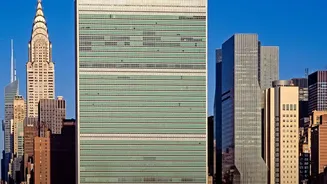
On paper, the process seems straightforward. Article 97 of the UN Charter states that the Secretary-General is appointed by the 193-member General Assembly upon the recommendation of the 15-member Security Council. In reality, the General Assembly has
never rejected a candidate recommended by the Council. This means the real decision is made by the Security Council, and specifically by its five permanent members: China, France, Russia, the United Kingdom, and the United States, collectively known as the P5. To be recommended, a candidate needs at least nine votes in the Council and, crucially, no vetoes from any of the P5.
The Power of the Veto
The veto is the ultimate weapon in this selection process. A single 'no' from a P5 member can instantly eliminate a candidate, regardless of how much support they have from other nations. This power dynamic fundamentally shapes the race. Instead of appealing to the world, candidates must first and foremost ensure they are acceptable to the P5. This often leads to a preference for candidates who are seen as less likely to challenge the interests of the major powers, rather than the most dynamic or visionary leader. The entire process is shrouded in secrecy, involving informal 'straw polls' where Council members vote to 'encourage' or 'discourage' candidates. In later rounds, these ballots are colour-coded to reveal how the permanent members are voting, exposing any potential vetoes.
A Process Under Fire
With the term of the current Secretary-General, António Guterres, ending on December 31, 2026, the race is in a tense phase. As of late November 2026, multiple rounds of straw polls have failed to produce a consensus candidate, with all contenders receiving 'discourage' votes from at least two permanent members. The frontrunner, Rebeca Grynspan of Costa Rica, has consistently led but still faces potential vetoes. This deadlock highlights long-standing criticisms of the selection process: it is opaque, undemocratic, and susceptible to geopolitical gridlock. Critics argue that a process dominated by the P5 undermines the UN's credibility and its ability to act decisively on global challenges.
Calls for Reform and Transparency
In recent years, there have been moves to make the process more transparent. For the first time in 2016, and again in the current cycle, candidates have published vision statements and participated in public dialogues with the General Assembly. These reforms allow the broader UN membership and the public to see and question the candidates. However, these changes are largely cosmetic. They have not altered the fundamental power structure where the final decision remains a backroom negotiation among the P5. As one analyst noted, it is a system that is hardly a rational way to select the world's chief diplomat.
Why It Matters for India
For India, this process is more than just a distant diplomatic drama. As a major global player and an aspirant for a permanent seat on the Security Council itself, the selection of the UN chief has significant implications. The current system, where five nations hold disproportionate power, is the very structure that India and other countries in the G4 (Brazil, Germany, and Japan) are pushing to reform. The choice of Secretary-General influences the global agenda on everything from climate change and peacekeeping to development and security council reform. A chief who is beholden to the P5 may be less inclined to push for reforms that would dilute their power, directly affecting India's long-term strategic goals on the world stage.