




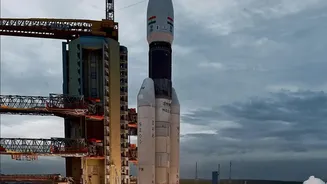
Meet Pushpak: India's Reusable Space Plane
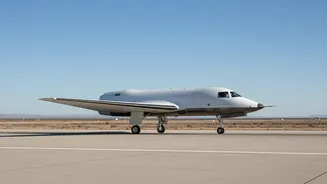
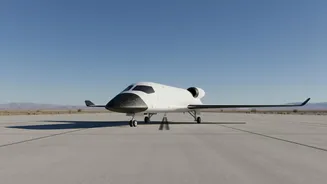
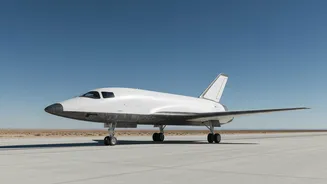
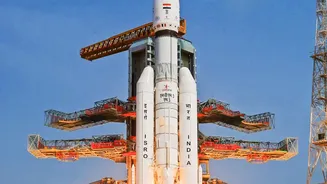
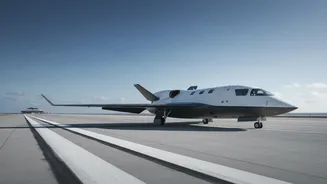
The star of the show is ISRO's Reusable Launch Vehicle (RLV), nicknamed 'Pushpak'. This winged vehicle is the centerpiece of a series of crucial Landing Experiments (LEX). In these tests, a Chinook helicopter lifts Pushpak to an altitude of 4.5 kilometres
and releases it. From there, the vehicle has to find its own way to a runway and land perfectly without any human intervention. The most recent tests have demonstrated Pushpak's ability to handle challenging wind conditions and execute precise landings from off-nominal release points, showcasing a sophisticated level of autonomous control. These experiments successfully simulate the high-speed, unmanned landing conditions a vehicle would face when returning from space.
The Old 'Use and Throw' Model
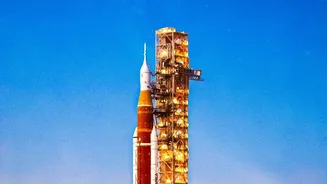
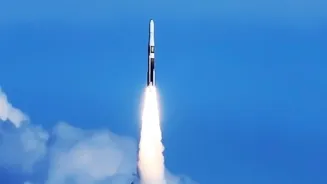
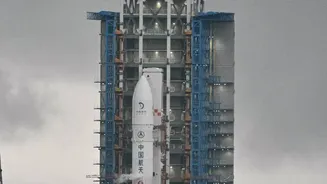
To understand why Pushpak is a game-changer, we first need to look at how we've traditionally reached space. For decades, space agencies around the world have relied on expendable launch vehicles, like ISRO's own workhorses, the PSLV and GSLV. Imagine buying a brand-new car, driving it from Delhi to Mumbai, and then throwing it away. That's essentially the model for most rockets. The most expensive and complex parts of the rocket—the engines, avionics, and structural components—are used just once before they are discarded. This makes space access incredibly expensive, with studies showing that the physical structure of a rocket can account for up to 80% of its total cost.
The Economics of Reusability
This is where the concept of reusability creates a paradigm shift. By designing a vehicle that can return to Earth and land safely on a runway like an airplane, ISRO aims to recover the most valuable parts of the launch system. The goal is to reuse these components for multiple missions. This drastically reduces the cost per launch because you are no longer building a new rocket from scratch each time. The primary expense shifts from manufacturing to refurbishment and fuel, which constitutes a much smaller portion of the overall cost. Success in this endeavour is projected to slash launch costs by as much as 80%, transforming the financial dynamics of space exploration and satellite deployment.
Paving the Way for India's Space Economy
Lower launch costs have a ripple effect across the entire space sector. For India, it strengthens its position in the competitive global launch market, which is expected to be worth over a trillion dollars by 2030. Cheaper access to space allows ISRO to launch more scientific and strategic missions. It also energises India's burgeoning private space industry, making it more affordable for startups to launch their own satellite constellations for communication, Earth observation, and data services. Ultimately, mastering reusable technology is critical for India's ambitions of achieving sustainable, cost-efficient, and self-reliant access to space.
What Lies Ahead on the Path to Orbit
The successful landing tests are a monumental step, but they are part of a much larger journey. The LEX missions have validated the critical autonomous navigation, guidance, and control systems needed for landing. The next major phase is the Orbital Re-entry Experiment (ORE). This will involve launching a vehicle into orbit on a conventional rocket, having it re-enter the Earth's atmosphere at hypersonic speeds, and then perform an autonomous landing. This will test the vehicle's thermal protection systems and its ability to handle the extreme heat of re-entry. Success in the ORE will be the final piece of the puzzle, leading to a fully realised Two-Stage-To-Orbit (TSTO) reusable launch vehicle for ISRO.