








What is Gemini Live?
First, let's break down the technology. Gemini is Google's family of powerful AI models, but Gemini Live takes it a step further. Instead of just typing prompts and reading text responses, Gemini Live is designed for natural, real-time conversation. You
can talk to it, interrupt it, and have a fluid, back-and-forth dialogue, much like you would with a person. This interactive, voice-first approach is what makes it a powerful tool, especially for learning complex subjects. It transforms the AI from a simple search tool into a potential conversational tutor.
The Multilingual Breakthrough
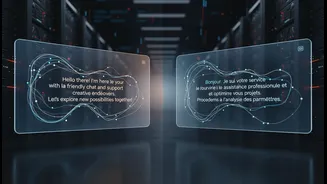
The latest upgrade is all about language. Google recently expanded Gemini Live and its related services to understand and speak over 70 languages. Crucially, it can auto-detect languages and even understand when a user mixes them in the same sentence. This isn't just a basic word-for-word translation. The system, known as Gemini 3.5 Live Translate, is designed to process speech directly, preserving the speaker's tone and intonation with very low delay. This allows for smooth, near real-time conversations across different languages, a significant leap from older systems that had noticeable lag and robotic voices.
Unlocking AI Education for Everyone
So, how does this specifically help someone wanting to learn about AI? Imagine a student in a small town in India who is more comfortable learning in Hindi, Tamil, or Bengali. Previously, most high-quality AI tutorials, coding examples, and expert discussions were primarily in English. With a multilingual Gemini Live, that student can now have complex topics explained in their native language. They can ask follow-up questions, have the AI role-play as a tutor to explain a concept differently, or even get help debugging code written with non-English comments. This breaks down a fundamental barrier to entry, democratizing access to skills that are crucial for the future economy.
The Indian Context: A Potential Game-Changer
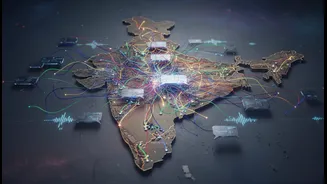
In a country as linguistically diverse as India, with 22 officially recognized languages and hundreds of dialects, this technology is particularly impactful. The National Education Policy 2020 already emphasizes mother-tongue-based instruction in early education, recognizing that students learn best in a language they understand. AI tools that can provide tutoring and translate educational content into regional languages address a core challenge in the Indian education system. They act as a force multiplier, supporting teachers in mixed-language classrooms and giving students personalized learning aids. Initiatives from institutions like IIT Madras are already proving that language-inclusive AI education can rapidly scale and reduce the intimidation factor for first-time learners.
Beyond Translation to True Understanding
The promise of this upgrade goes beyond simple translation. It’s about comprehension. The AI is better equipped to understand context, idioms, and cultural nuances, providing more natural and accurate explanations. For a learner, this means the AI can act as a non-judgmental practice partner, helping them gain not just theoretical knowledge but practical fluency. For example, a student could practice for a technical interview, ask for explanations of complex jargon in simple terms, and build the confidence to participate in the global tech conversation, all in the language they are most comfortable with. This fosters a deeper understanding that rote memorization often misses.
Challenges and the Road Ahead
Of course, the technology is not a magic bullet. For these tools to be effective, challenges like ensuring accuracy across all regional dialects, providing the necessary digital infrastructure like reliable internet, and training both educators and students to use these tools effectively must be addressed. While the potential is immense, its real-world impact will depend on a concerted effort to integrate these AI capabilities into existing educational frameworks thoughtfully. The goal is not to replace teachers, but to empower them with tools that make learning more accessible and personalized for every student.