
What Exactly Is Nordic Walking?
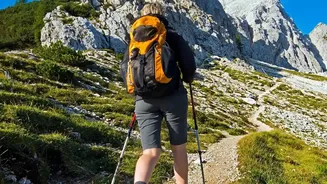
Originating in Finland as a summer training method for cross-country skiers, Nordic walking is much more than just walking with a pair of poles. It’s a specific technique that turns a simple walk into a full-body workout. Unlike hiking or trekking where
poles are primarily used for stability on uneven terrain, Nordic walking uses specially designed poles to actively propel you forward with each step. The motion engages your arms, shoulders, back, and core, transforming your walk into a more holistic and intense exercise. Studies show that while regular walking uses about 50% of your body's muscles, proper Nordic walking technique can engage up to 90%.
The Full-Body Benefits
The reason for its growing popularity lies in its impressive and well-researched benefits. By engaging the upper body, Nordic walking significantly increases your heart rate and calorie burn compared to regular walking—some studies estimate an increase of anywhere from 18% to over 60%. This makes it a highly efficient cardiovascular workout. Furthermore, the use of poles helps distribute your body weight, reducing the stress on your hips, knees, and ankles. This low-impact nature makes it an excellent choice for older adults, individuals with joint pain, or those recovering from injuries. Research has also highlighted its benefits for improving posture, balance, and upper-body strength. Recent studies have even linked it to improved mood and reduced symptoms of depression.
Why the Sudden Revival?
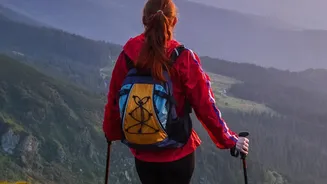
While it has been a staple in Europe for decades, Nordic walking is finding a new, younger audience. This revival seems fueled by a collective desire for accessible, outdoor fitness that is both effective and sustainable. It offers a step up in intensity from a casual stroll without the high impact of running. The activity is highly adaptable; you can enjoy a gentle walk or ramp up the intensity for a more vigorous workout, making it suitable for all fitness levels. Its social aspect is another draw, as the walking pace allows for easy conversation, turning exercise into a community-building activity. As people seek holistic wellness solutions, Nordic walking's blend of physical exercise, time outdoors, and potential for social connection hits all the right notes.
Gearing Up: The Right Poles Matter
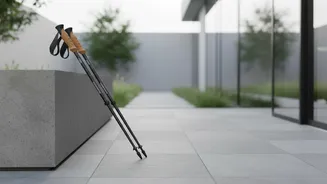
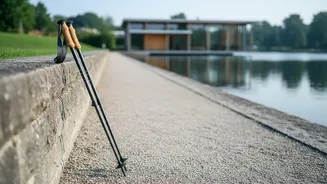
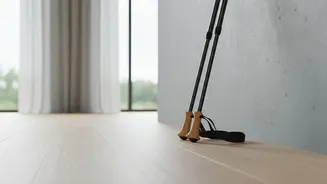
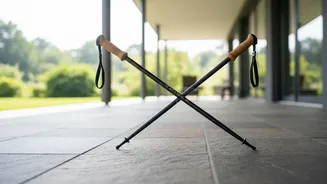
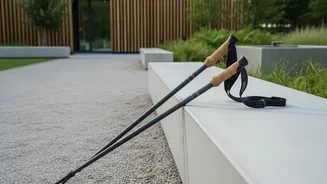
You can't just grab any old hiking stick. Nordic walking poles are specifically designed for the sport. They are generally lighter than trekking poles and feature a unique glove-like strap system that is crucial for the correct technique. This system allows you to open your hand at the end of the push-off phase, which is a key part of the movement. The poles also have angled rubber tips, or 'paws', for use on hard surfaces like pavement, providing better grip and propulsion. Trekking poles, by contrast, are built for stability on rough terrain and have different grips and straps that aren't suited for the Nordic walking motion. Investing in a proper pair of Nordic poles is essential to reap the full benefits and avoid improper form.
Your First Steps: Mastering the Basics
While getting lessons from a certified instructor is the best way to learn, you can start with the fundamental principles. The core movement is based on a natural walking rhythm with an opposite arm-and-leg motion. When your right leg comes forward, your left arm comes forward to plant the pole, and vice versa. Stand tall, keeping your shoulders relaxed and look forward. Plant the pole at an angle behind you, roughly in line with the heel of your opposite foot. As you stride forward, push through the strap to propel yourself, letting your arm swing backward. A key is to open your hand at the end of the push, allowing the pole to swing freely from the strap. It can feel a bit uncoordinated at first, but it quickly becomes a smooth, rhythmic motion.