







A Power Source You Can Wear
The daily frustration of a dead smartwatch or wireless earbuds is a universal modern annoyance. We are surrounded by powerful personal technology, but it’s all tethered to the nearest charging cable. Researchers are now developing an ingenious solution:
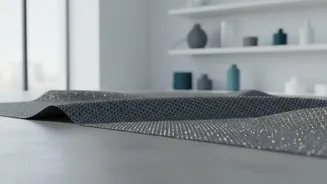
smart fabrics that generate their own electricity. These are not just fabrics with wires woven in; they are textiles engineered at a molecular level to become power sources themselves. By integrating advanced thermoelectric materials directly into the threads, scientists are creating clothing that can harvest the thermal energy your body naturally produces and convert it into usable electrical power. The goal is to create a seamless, self-powering ecosystem for the wearable devices we rely on for fitness, health, and communication.
The Simple Science of Body Heat
The principle behind this technology, known as the Seebeck effect, has been understood since the 19th century. It states that when two different conductive materials are joined together and there is a temperature difference between them, a small electrical voltage is created. Thermoelectric fabrics apply this by using your skin as the 'hot' side and the surrounding air as the 'cool' side. As your body radiates heat, specially designed polymers or semiconductor materials woven into the fabric capture this thermal gradient and produce a steady, low-voltage current. The key innovation today is making these materials flexible, breathable, and efficient enough to be comfortably worn. Recent breakthroughs involve new printing processes and nanocomposites that allow these power-generating properties to be embedded without creating a stiff, bulky, or uncomfortable garment.
From Watts to Workouts
So, how much power are we talking about? Currently, not enough to charge your smartphone while you jog. The output is typically measured in microwatts or milliwatts per square centimeter. However, this is more than enough to power low-energy devices like biometric sensors that track heart rate, body temperature, or respiration. The immediate goal for many research teams is to create a fabric that can trickle-charge the battery of a fitness tracker or smartwatch, extending its life between traditional charges or, eventually, eliminating the need for charging altogether. As the technology becomes more efficient, it could power everything from GPS chips in athletic wear to integrated LEDs for nighttime visibility, all without a separate battery pack.
The Hurdles to Commercialization
Before you can buy a self-powering t-shirt, researchers must overcome several significant challenges. The first is efficiency. There's a constant trade-off between a material's ability to conduct electricity and its ability to maintain a temperature difference. Another major hurdle is durability and practicality. To be viable, these smart fabrics must be able to withstand the rigors of daily life, including stretching, bending, and most importantly, washing. Traditional thermoelectric materials like bismuth telluride are often rigid and brittle, making them unsuitable for clothing. Finally, there is the issue of cost. Developing and manufacturing these high-tech textiles is currently expensive, and scaling production to a commercial level is a significant obstacle that must be addressed for widespread adoption.
A Future Unplugged
Despite the challenges, the potential for thermoelectric fabrics is immense. Beyond the world of consumer fitness, this technology has profound implications for medical and military applications. Imagine self-powered, continuous health monitors for patients that never need a battery change, or gear for soldiers that powers communication equipment from their own body heat. Some devices even produce a noticeable cooling effect on the skin as they draw heat away, opening up possibilities for personal thermoregulation systems. While some researchers suggest we could see the first commercial products within the next decade, the technology is still firmly in the development phase. Still, the progress is rapid and exciting.