





India’s Watchful Eye on the Sun
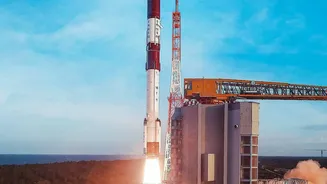
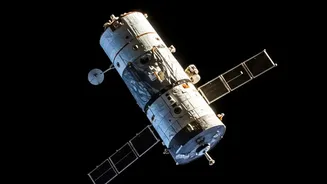
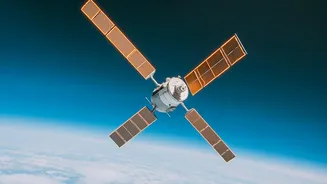
Since its celebrated launch, the Aditya-L1 spacecraft, an achievement of the Indian Space Research Organisation (ISRO), has settled into its orbit at Lagrange Point 1 (L1), about 1.5 million kilometres from Earth. This strategic position allows it an uninterrupted
view of the Sun, free from the eclipses or occultations that hinder ground-based observation. The mission's seven advanced payloads are designed to study the Sun's atmosphere, its explosive events, and the space environment between the Sun and Earth. These instruments provide crucial information for understanding phenomena like coronal heating, coronal mass ejections (CMEs), and the dynamics of space weather.
Decoding the Shifting Solar Wind
One of Aditya-L1's key tasks is to study the solar wind, a continuous stream of charged particles flowing from the Sun. The Aditya Solar wind Particle Experiment (ASPEX) payload, which includes the Solar wind Ion Spectrometer (SWIS) and STEPS (SupraThermal and Energetic Particle Spectrometer), is central to this effort. SWIS has been successfully measuring solar wind ions, primarily protons and alpha particles. Scientists have noted that a change in the ratio of alpha particles to protons can be a sensitive indicator of an approaching Coronal Mass Ejection (CME). By precisely measuring the direction and energy of these particles, ASPEX helps unravel long-standing questions about the solar wind's properties and how it behaves on its journey through space.
Tracking Deep Space Radiation Weather
Beyond the solar wind, Aditya-L1 is a crucial tool for monitoring 'space weather'—the conditions in deep space that can affect our planet and technology. Powerful solar events, like the intense geomagnetic storms of May and October 2024, create significant disturbances in Earth’s magnetic field. Data from Aditya-L1 was vital in confirming that sudden changes in solar wind pressure caused unusual magnetic disturbances on the ground, particularly in the dawn sector. The mission's instruments, including the Plasma Analyser Package for Aditya (PAPA), directly measure the particles and fields associated with these events. During one major storm, Aditya-L1’s observations helped explain why Earth's magnetic shield was strongly compressed, briefly exposing some geostationary satellites to harsh radiation.
Early Warnings and Future Protection
The insights from Aditya-L1 are not just academic; they have profound practical implications. Data from the Solar Ultraviolet Imaging Telescope (SUIT), along with X-ray sensors SoLEXS and HEL1OS, have identified small brightenings in the Sun's atmosphere that occur hours before a major solar flare. These pre-flare events suggest a gradual build-up and release of magnetic energy that could act as an early warning system. A better understanding of these triggers is a critical step toward reliably forecasting solar flares and CMEs. Such predictions are essential for protecting vital infrastructure, including satellites, communication and navigation systems like NavIC, power grids, and ensuring the safety of astronauts in space.