



A Threat from the Sun
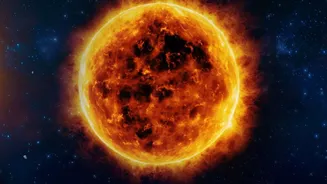
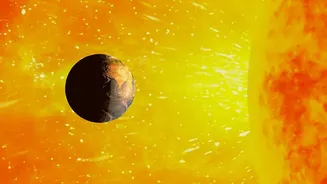
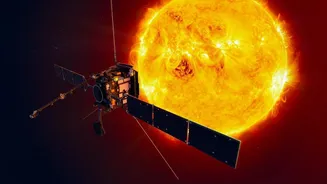
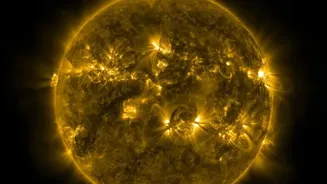
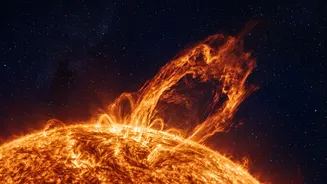
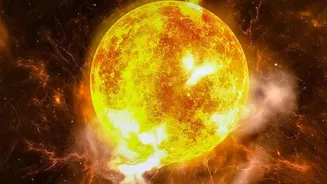
The Sun isn't just a source of light and warmth; it also ejects immense clouds of magnetised particles and energy in events called coronal mass ejections (CMEs), or solar storms. While Earth's magnetic field protects us from most of this, a powerful,
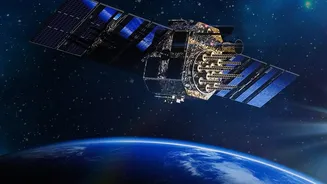
well-aimed storm can be devastating. Such an event could overwhelm power grids, leading to widespread and long-lasting blackouts. It could also fry the electronics in the thousands of satellites we rely on for everything from GPS navigation and financial transactions to television broadcasts and internet connectivity, potentially causing them to fail or even fall out of orbit. In a world deeply dependent on this infrastructure, the consequences could be catastrophic.
The Challenge of Prediction
For years, the biggest challenge has been forecasting the impact of these storms. Scientists can see a CME erupt from the Sun, but determining if it will hit Earth and, if so, where the impact will be most severe, has been a slow and imprecise process. Previous models could provide global predictions, but often without the speed or location-specific detail needed for utility companies or satellite operators to take protective action. This left a dangerous gap between detection and impact, giving authorities very little time to prepare for the arrival of a potentially crippling geomagnetic disturbance. Essentially, we could see the cannon fire, but had little idea where the cannonball would land.
NASA's AI-Powered Solution: DAGGER
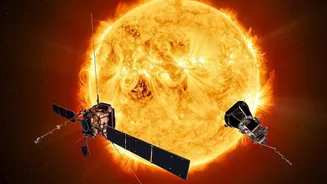
This is where NASA's new AI model comes in. Called DAGGER (Deep Learning Geomagnetic Perturbation), it represents a major leap forward in space weather forecasting. Developed in a collaboration that includes researchers from India, the model uses artificial intelligence to analyse real-time data from spacecraft that monitor the solar wind—the stream of particles constantly flowing from the Sun. By training on vast amounts of historical data, the AI learned to identify the subtle connections between changes in the solar wind and the resulting magnetic disruptions on Earth. The result is a system that can predict the specific, localised impacts of a solar storm anywhere on the globe.
How AI Changes the Game
The key advantage of DAGGER is its speed and precision. The model can issue a specific forecast for any location on Earth just 30 minutes before a solar storm hits. While half an hour might not sound like much, it's a critical window of opportunity. It’s enough time for power grid operators to re-route power or take sensitive transformers offline to prevent them from overloading. Satellite controllers could have time to put their spacecraft into a protective safe mode or adjust their orbits to minimise potential damage. Think of it less like a long-range weather forecast and more like a tornado siren—an urgent, actionable alarm that signals immediate danger, allowing crucial preparations to be made just in time.
Why This Matters for India
For a rapidly digitising nation like India, this technology is especially significant. India’s economy is increasingly reliant on stable power grids, a vast telecommunications network, and a growing fleet of satellites for everything from weather monitoring to national security. The country's own solar observatory, Aditya-L1, is already contributing to the global effort to understand the Sun's behaviour. An advanced warning system like DAGGER could be crucial for protecting these vital national assets. From safeguarding the digital payment systems that millions use daily to ensuring the reliability of GPS for logistics and transportation, the ability to anticipate and mitigate the effects of space weather is a matter of economic and national resilience. Indian researchers have also been actively involved in developing models to predict CME travel times, highlighting the country's stake in this field.