

A New Home in the Heavens
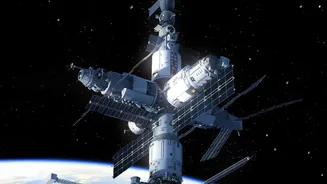
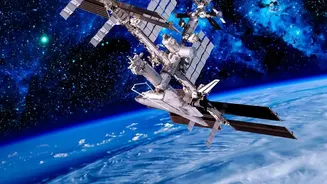
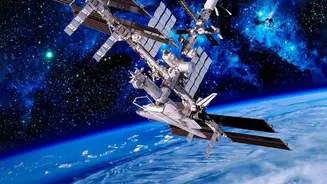
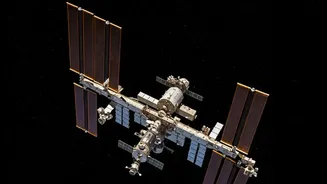
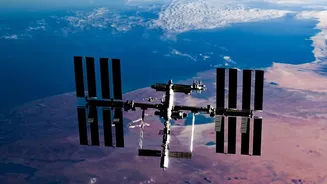
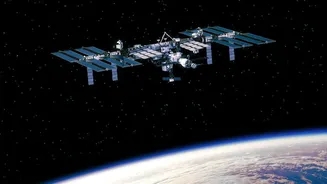
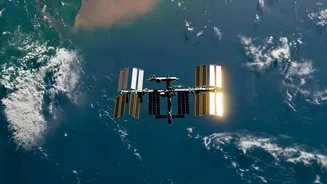
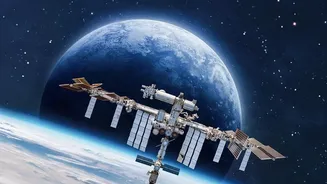
India's next great ambition in space is taking shape 400 kilometres above Earth. The Bharatiya Antariksha Station (BAS), a modular orbital outpost, is slated to become operational by 2035, with its first component targeted for a 2028 launch. This project,
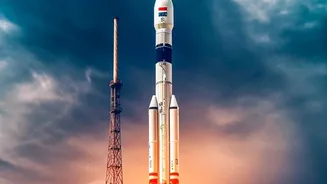
spearheaded by the Indian Space Research Organisation (ISRO), marks a significant evolution from short-term missions to establishing a sustained human presence in space. The station is envisioned as a five-module structure with a mass of around 52 tonnes, designed to host crews of three to four astronauts for long-duration stays of three to six months. As the logical successor to the Gaganyaan programme, which will qualify India for human spaceflight, the BAS represents a quantum leap in the nation's scientific and technological prowess.
A Laboratory in Microgravity
One of the primary purposes of the Bharatiya Antariksha Station is to serve as a world-class laboratory in the unique environment of microgravity. This opens up new frontiers for Indian scientists to conduct experiments that are impossible on Earth. Fields set to benefit include materials science, where researchers can create new alloys and crystals with unique properties, and fluid physics. The most profound impact, however, may be in the life sciences and medicine. Studying how the human body adapts to long periods in space provides invaluable data on everything from bone density loss to cardiovascular health, with direct applications for treating diseases on Earth. Furthermore, the station will be a hub for biotechnology research, potentially leading to breakthroughs in drug development and disease modelling.
Mastering Long-Duration Spaceflight
Simply sending humans into space is a monumental achievement; learning to keep them healthy, safe, and productive for months at a time is another challenge entirely. The BAS will be India's training ground for mastering the art of long-duration spaceflight. This involves perfecting indigenous Environmental Control and Life Support Systems (ECLSS) to manage air, water, and waste. It also means developing robust astronaut health monitoring protocols and countermeasures to the negative effects of space travel. The experience gained from operating the BAS and supporting its crews will be indispensable. It is a crucial stepping stone, providing the operational confidence and technological maturity required for more ambitious future undertakings, such as sending Indian astronauts to the Moon by 2040.
A Proving Ground for Future Tech
A space station is not just a destination; it's an engineering incubator. The BAS will serve as a vital platform for testing and validating a host of new technologies in the harsh environment of space. This includes next-generation docking and berthing systems, which are essential for assembling the station module by module and for future missions involving orbital rendezvous. ISRO will also use the station to pioneer technologies like in-orbit servicing and refueling, which could one day be used to repair or extend the life of satellites. Success in these areas will not only support India's own space ambitions but also position the country as a key player in the emerging global space economy, driving growth in high-tech domestic manufacturing and private sector participation.
Strengthening India's Global Standing
Beyond the scientific and technical gains, the Bharatiya Antariksha Station is a powerful statement of strategic intent. Constructing and operating its own space station will cement India’s position in the top tier of spacefaring nations, enhancing its strategic autonomy. It opens the door for deeper international collaboration on India's own terms, moving from being a partner in foreign-led projects to a leader hosting international researchers on its own platform. This capability strengthens India's geopolitical influence and serves as a powerful source of national inspiration, encouraging a new generation of scientists, engineers, and innovators to aim for the stars and contribute to the nation's technological future.