
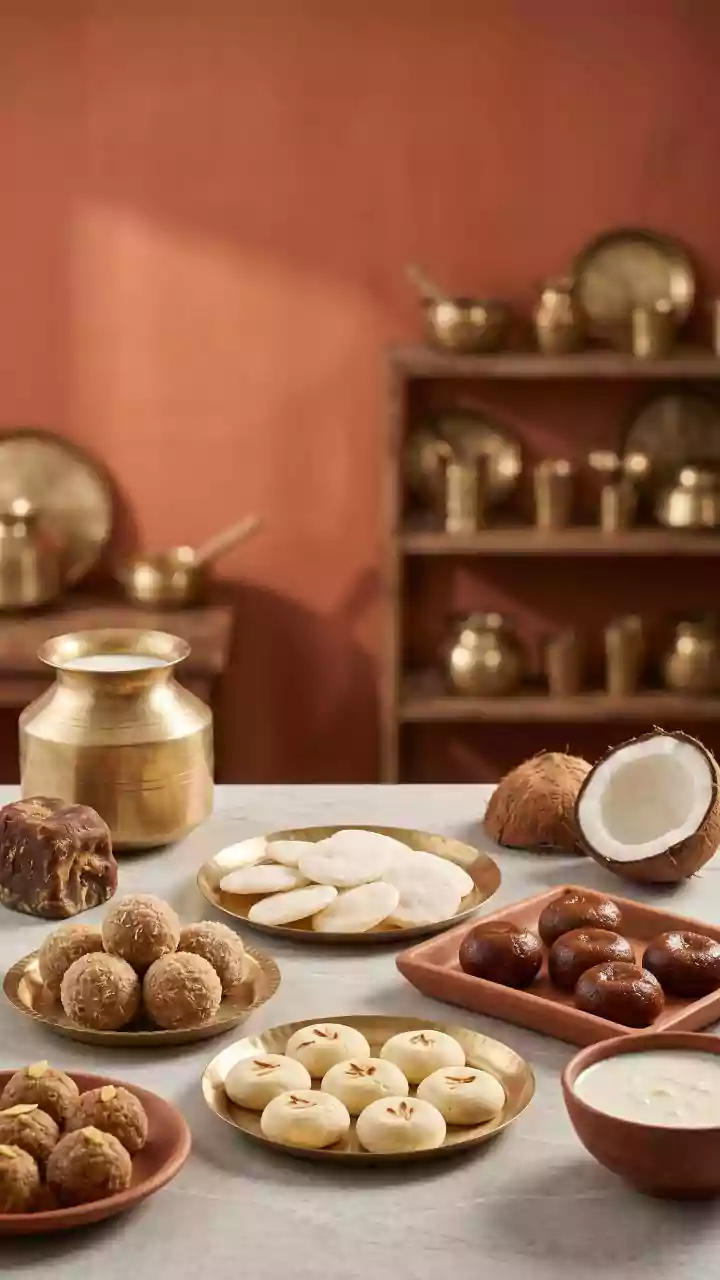
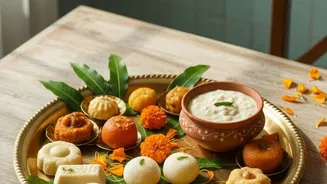
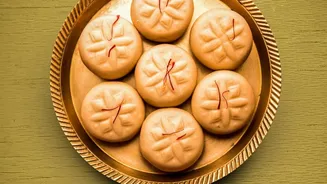
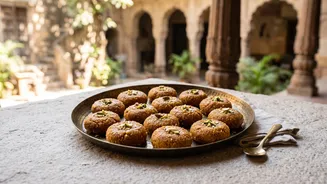
The Foundation: More Than Just Milk
At the heart of every peda lies khoya, also known as mawa. It is made by simmering full-cream milk in a large, heavy-bottomed pan for hours, a patient process of constant stirring until most of the water evaporates, leaving behind the concentrated milk solids.
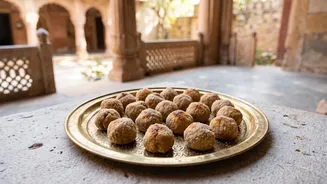
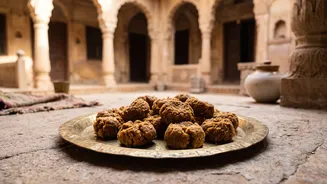
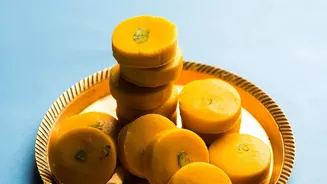
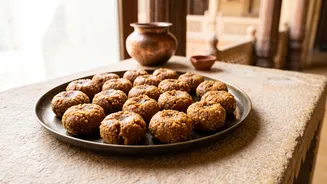
But what sets Mathura's version apart is the next step: roasting. The khoya is cooked further, slowly and meticulously, until the milk sugars begin to caramelise. This isn't a quick browning; it's a transformation that can take up to 40 minutes, turning the pale solids into a rich, dark golden-brown crumbly mixture. This roasting process is the secret to the peda's signature nutty aroma and distinct granular texture.
A Special Kind of Sweetness
The second key ingredient is sugar, but not just any sugar. Traditionally, halwais (professional sweet makers) in Mathura use 'tagar' or 'bura'. This isn't simply powdered sugar. Tagar is made by cooking sugar with water to a specific crystallization point, then stirring it as it cools to form a porous, sandy-textured powder. This process makes the sugar more flavourful and less intensely sweet than regular powdered sugar. It blends seamlessly with the roasted khoya, providing sweetness without being overpowering and contributing to the peda's beloved melt-in-the-mouth quality. The use of tagar is often cited as the reason homemade pedas don't quite taste like the ones from a specialist shop.
A Legacy of Faith and Flavour
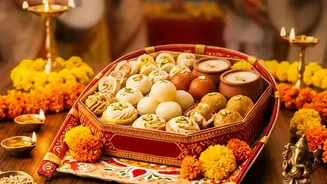
The history of the Mathura Peda is deeply intertwined with the city's identity as a sacred pilgrimage site. While exact origins are difficult to trace, culinary historians believe milk-based sweets have been part of the region's diet for centuries, thanks to the area's strong dairy farming culture, famously associated with Lord Krishna's childhood. The peda became a popular prasad—a religious offering to a deity that is then shared among devotees. For many pilgrims, a visit to Mathura or Vrindavan is incomplete without tasting these blessed sweets, often taking boxes home for family and friends. This tradition transformed the peda from a local specialty into a nationally recognised symbol of Braj culture.
An Enduring, Authentic Identity
The fame of 'Mathura ke Pede' is so widespread that the name itself acts as a brand, a benchmark against which other pedas are measured. This reputation has led to efforts to secure a Geographical Indication (GI) tag for the sweet. A GI tag would provide legal protection against imitation and formally recognise its unique characteristics tied to its place of origin. While an application was filed by the Mithai Association Mathura in early 2024, the process is still ongoing. This move underscores the cultural and economic importance of preserving the authentic recipe and the livelihood of the thousands of artisans involved in its production. The process guards against adulteration, such as the use of fake khoya, which can become a problem around festival times.