





A Partnership Years in the Making
The collaboration between the National Aeronautics and Space Administration (NASA) and the Indian Space Research Organisation (ISRO) isn't new, but it has accelerated significantly. For years, the two agencies have shared data and worked on smaller projects.
This relationship was formalized with agreements signed in 2014 to pursue joint missions. This laid the groundwork for a more ambitious, strategic partnership that is now moving beyond Earth's orbit and aiming for the Moon. The cooperation is seen as a natural evolution, combining NASA’s decades of experience and advanced technology with ISRO’s proven track record of cost-effective and innovative missions, like the successful Chandrayaan-3 landing near the lunar south pole. This success made India the fourth country to land on the Moon and the first to reach its south polar region, a feat that solidified its status as a major space power.
The Crown Jewel: NISAR Mission
The most significant joint project to date is the NISAR (NASA-ISRO Synthetic Aperture Radar) satellite. Launched in July 2025, this $1.5 billion mission is likely the world's most expensive Earth-imaging satellite. It's a true collaboration: NASA provided the L-band radar, a high-rate communication system, and other key components, while ISRO contributed the S-band radar, the spacecraft itself, and the launch vehicle. NISAR is the first satellite to use two different radar frequencies, allowing it to observe our planet in unprecedented detail. It can see through clouds and darkness, mapping Earth’s surface every 12 days to monitor everything from glacier melt and ice-sheet collapse to volcanic activity and changes in vegetation. The data will be crucial for understanding climate change and managing natural disasters.
To the Moon: Artemis and the Lunar Base
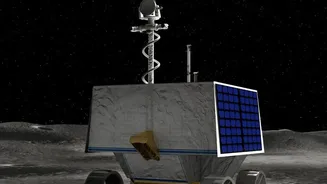
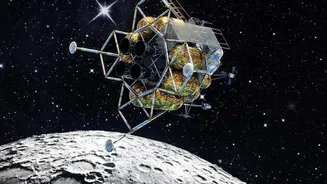
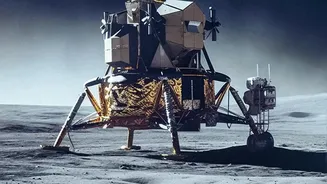
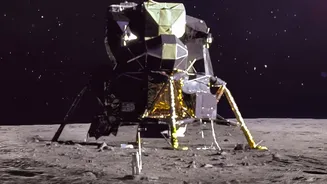
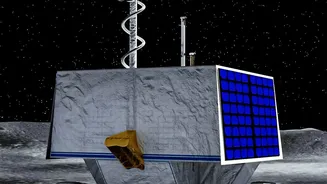
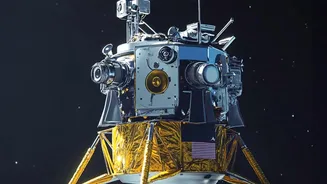
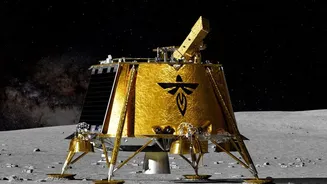
The partnership's future is squarely focused on the Moon. In 2023, India became a signatory to the Artemis Accords, a U.S.-led set of principles for peaceful and transparent lunar exploration. This move aligned India with a coalition of dozens of nations and paved the way for deeper collaboration. More recently, in August 2026, NASA formally invited ISRO to participate in its plan to build a permanent Moon Base near the lunar south pole. This ambitious project, part of the broader Artemis program, aims to establish a long-term human presence on the Moon. For NASA, partnering with ISRO brings India's proven engineering and frugal innovation into the fold. For India, which has its own goal of landing an astronaut on the Moon by 2040, joining the program would provide invaluable experience with crewed missions and access to cutting-edge technologies.
Why This Alliance Matters Now
This isn't just about science; it's also about strategy. As a new era of space exploration dawns, the U.S. is building an international coalition to counter the ambitions of rivals like China and Russia, who are not part of the Artemis Accords. By bringing a capable and democratic partner like India into the fold, NASA strengthens the U.S.-led framework for how humanity will operate on the Moon and beyond. The cooperation complements India's own ambitious space program, which includes the Gaganyaan human spaceflight mission and future Chandrayaan missions. While some in India advise caution to maintain strategic autonomy, the consensus is that collaboration is essential to keep pace. This partnership allows both nations to achieve their goals faster and more efficiently, shaping the future of lunar exploration together rather than separately.