


A balcony garden brings joy and greenery to urban homes, but tiny pests can quickly turn delight into distress. Instead of reaching for harsh chemicals, two of the most effective solutions are already in your home: neem oil and simple soap.
Why Choose Natural Pest Control?
In the contained
space of a balcony or home, using chemical pesticides poses a risk to family members and pets. Natural, homemade solutions are a safer alternative. They are not only better for your immediate environment but also protect beneficial insects like bees and ladybugs, which might visit your urban garden. By choosing solutions like neem oil and soapy water, you target the pests causing problems without the collateral damage of broad-spectrum chemical sprays. These methods are cost-effective, easy to prepare, and break down quickly, leaving no harmful residue on your plants or in your home.
Know Your Enemy: Common Balcony Pests
Before you can treat your plants, it helps to know what you are fighting. Balcony gardens in India are often susceptible to a specific set of tiny intruders that thrive in warm, sheltered conditions. The most common culprits are small, soft-bodied insects that suck the sap from leaves and stems. These include aphids, which are small pear-shaped insects; mealybugs, which look like white, cottony masses; spider mites, which create fine webbing on leaves; and whiteflies, which are tiny, moth-like insects that fly up in a cloud when disturbed. These pests cause yellowing leaves, stunted growth, and sticky residue.
Neem Oil: The All-in-One Solution
Derived from the seeds of the Indian neem tree, neem oil is a powerful, multifaceted tool for organic gardeners. It works in several ways: as a repellent, an appetite suppressant, and an insect growth disruptor that interferes with pests' ability to moult and reproduce. It's effective against a wide range of pests including aphids, mealybugs, spider mites, whiteflies, thrips, and even some fungal diseases like powdery mildew.To prepare a neem oil spray, you will need cold-pressed neem oil, a mild liquid soap (like castile soap, not detergent), and a spray bottle. The key is proper dilution. For general use, mix about 5 ml (1 teaspoon) of neem oil with 1 litre of warm water and a few drops of liquid soap. The soap acts as an emulsifier, allowing the oil and water to mix. Shake the mixture well before and during application.
Soapy Water: A Simple First Defence
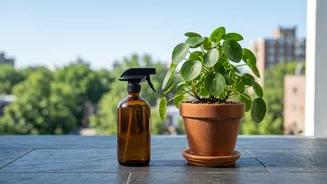
For a quick and easy solution, especially for soft-bodied insects like aphids and spider mites, soapy water is highly effective. The fatty acids in soap dissolve the insect's protective outer layer, causing it to dehydrate and die. It is crucial to use a true soap, like liquid castile soap, rather than a modern dishwashing detergent, which can contain degreasers and other chemicals harmful to plants.A standard recipe is to mix 1 to 2 teaspoons of liquid soap into 1 litre of water. Create a gentle solution; too much soap can damage plant leaves. Pour the mixture into a spray bottle and shake gently to combine. This solution works on contact, meaning it must directly coat the pests to be effective. It has no residual effect, so it won't harm beneficial insects that arrive after the spray has dried.
Best Practices for Application
To get the most out of your natural sprays without harming your plants, follow these essential guidelines. Always apply these solutions in the early morning or late evening. Spraying in direct sunlight can cause the oil or soap to burn the leaves.Before spraying an entire plant, perform a patch test on a single leaf and wait 24-48 hours to check for any signs of damage or stress. When you do spray, ensure thorough coverage. Pests love to hide on the undersides of leaves and in the joints of stems, so be sure to spray these areas diligently. Since these sprays work on contact and break down quickly, you may need to reapply every 5-7 days for an active infestation until the pests are gone. Do not apply to plants that are already stressed from heat or lack of water.