





The Tale of Two Starches
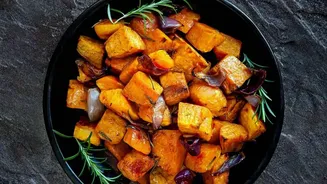
They may share space on the autumn dinner table, but sweet potatoes and butternut squash are not closely related. The sweet potato is a starchy, tuberous root from the morning glory family. It's dense and grows underground. Butternut squash, on the other
hand, is technically a fruit. It's a type of winter squash that grows on a vine and has a hollow seed cavity at its base. This fundamental difference in how they grow—one a dense root, the other a more water-filled fruit—is the starting point for their distinct nutritional makeups.
The Carbohydrate Showdown
Here is the main event. For anyone tracking their carbohydrate intake, the difference is significant. A 100-gram serving of sweet potato contains about 17 to 20 grams of carbohydrates. In contrast, the same amount of butternut squash has only about 12 grams of carbs. Looking at a typical one-cup serving of cooked cubes makes the gap even clearer: a sweet potato packs around 41 grams of carbs, while butternut squash comes in at roughly half that, with about 22 grams. Most of this difference comes from natural sugars; sweet potatoes have more than three times the sugar content of butternut squash per serving. For those on low-carb diets or simply looking to reduce their carb load, butternut squash is the clear winner.
Calories, Fibre, and Other Nutrients
The carbohydrate difference is directly reflected in the calorie count. A one-cup serving of cooked sweet potato contains around 180 calories, whereas the same portion of butternut squash has just 82 calories. This makes butternut squash a great option for those seeking a larger, more voluminous meal for fewer calories. Interestingly, despite the calorie and carb gap, their fibre content is nearly identical at about 6.6 grams per cooked cup, making both excellent choices for digestive health. Sweet potato does pull ahead in a few areas, offering more protein (4 grams vs. 1.8 grams) and significantly more potassium per serving.
The Vitamin A Advantage
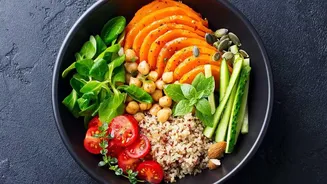
Both vegetables are nutritional powerhouses, largely thanks to their high concentration of beta-carotene, the antioxidant that the body converts into Vitamin A. This is what gives them their brilliant orange colour. However, sweet potato has a distinct edge here. A single cup of cooked sweet potato can provide nearly 200% of your daily value for Vitamin A. Butternut squash is no slouch, offering a very respectable 127% of the daily value in the same portion size. Both are also good sources of Vitamin C, which is crucial for immune support.
Impact on Blood Sugar
For individuals managing blood sugar levels, the glycemic index (GI) is an important consideration. Butternut squash has a relatively stable, moderate GI of around 51, regardless of how it's cooked. Sweet potatoes are more variable. A boiled sweet potato has a low GI of about 46, but baking or roasting can cause its GI to soar as high as 94, as the heat converts more starches to sugar. This makes butternut squash a more predictable and often safer choice for maintaining steady blood sugar levels.
So, Which One Should You Choose?
There is no single 'healthier' option; the best choice depends entirely on your personal goals. If your priority is a lower-carb, lower-calorie diet, butternut squash is the superior pick. Its lower sugar content and more stable glycemic index also make it a better choice for blood sugar management. If you are an athlete looking for a more energy-dense, carbohydrate-rich food to fuel your workouts, or if you want to maximize your intake of Vitamin A and potassium, the sweet potato is an excellent option. Both are fantastic, nutrient-dense additions to a balanced diet.