



The Dream Takes Flight
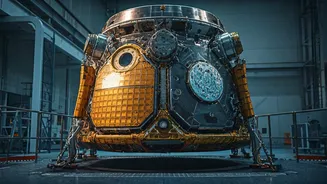
The Gaganyaan project is India’s ambitious endeavour to send a crew of up to three astronauts into a 400-kilometre orbit for a three-day mission and bring them back safely to Earth. First announced in 2018, the mission represents a monumental leap for the Indian
Space Research Organisation (ISRO) and the nation. If successful, India will join an exclusive club of nations—after Russia, the United States, and China—capable of independent human spaceflight. This isn't just about planting a flag in orbit; it’s about demonstrating technological sovereignty, inspiring a generation, and opening up new avenues for scientific research and international collaboration. The journey from blueprint to launchpad is a marathon of meticulous planning and, most importantly, rigorous testing.
The Gauntlet of Tests
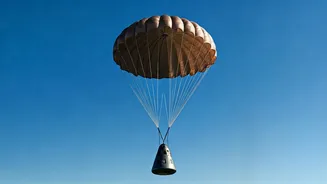
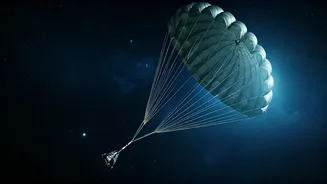
Before any astronaut boards the Gaganyaan capsule, every single component must be proven to be safe and reliable. This is where the recent series of tests have been so critical. ISRO has been systematically validating the mission's key systems, with a particular focus on the crew's safety during the fiery return to Earth. A crucial element is the complex parachute system, designed to slow the crew module from orbital speeds to a gentle splashdown. In a series of Integrated Air Drop Tests (IADT), a test article matching the crew module's weight was dropped from an aircraft to validate the precise, sequential deployment of 10 different parachutes. These tests simulate worst-case scenarios, ensuring that even with potential failures, the system can bring the crew home safely. From drogue parachutes that stabilize the module at high speed to massive main parachutes that ensure a soft landing, every test success is a vital step forward.
More Than Just a Machine
At the heart of Gaganyaan are the humans—both the crew and the vast team on the ground. India’s astronaut-designates, selected from the Indian Air Force, have been undergoing extensive training. This includes everything from physical conditioning and spacewalk simulations to learning to operate the spacecraft's systems inside realistic mock-ups. ISRO has even developed a humanoid robot, Vyommitra, to fly on the initial uncrewed test flights. Vyommitra will simulate human functions, allowing scientists to gather crucial data on how the life support and other systems perform before a human crew is on board. This human-centric approach underscores the mission’s ultimate priority: ensuring the safety and success of the astronauts who will carry India's aspirations into orbit.
The Road Ahead
With many ground tests completed, the path to the first crewed launch is becoming clearer. The next major steps involve a series of uncrewed test flights. The first of these, G1, will be a full dress rehearsal without astronauts, testing the launch vehicle, orbital module, and re-entry and recovery operations. These flights, scheduled to begin in 2026, will provide the final green light for the historic human mission, currently slated for 2027. Each successful test, from a parachute deployment to an engine firing, builds confidence and moves the programme from the theoretical to the practical. The thousands of completed tests are the silent, steady drumbeat marking the mission's progress.