









Understanding Feline Territory
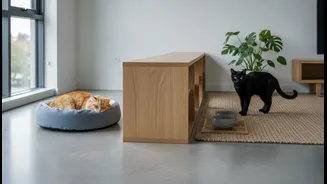
To your resident cat, your apartment isn't just a home; it's a carefully mapped territory. Cats use scent to mark their domain, creating a world where familiar smells equal safety. A new cat, with its unfamiliar scent, isn't seen as a potential friend
but as an intruder. This can trigger territorial aggression, which includes hissing, swatting, chasing, and stalking. The goal of a behavioral introduction isn't to force an immediate bond, but to slowly merge their worlds, teaching each cat that the other is not a threat to their resources or safety. This is especially true in smaller apartment spaces where territory is limited and valuable.
Step 1: Create a Separate Safe Room
The introduction process begins before the cats ever see each other. When you bring your new rescue home, place them directly into a pre-prepared separate room with their own litter box, food, water, and toys. This 'safe room' serves two purposes. First, it allows the new cat to decompress from the stress of the shelter and a new environment in a secure space. Second, it establishes a physical barrier that prevents immediate confrontation, allowing the cats to become aware of each other through sound and smell from a safe distance. This separation is non-negotiable and should last for at least a week, if not longer, depending on the cats' reactions.
Step 2: The Power of Scent Swapping
Once the new cat has settled in, you can begin introducing them through scent, which is a primary communication tool for felines. Start by swapping blankets, beds, or toys between the two rooms. You can also take a clean sock or cloth, gently rub it on one cat’s cheeks to pick up their facial pheromones, and then place it in the other cat’s space for them to investigate. The goal is to make the other cat's scent a normal, non-threatening part of the environment. Some behaviorists also recommend 'site-swapping' after a few days: letting the new cat explore the main part of the apartment while the resident cat investigates the safe room, allowing them to gather information through scent without a face-to-face meeting.
Step 3: Positive Association Through Feeding
The next step is to build a positive association with the other cat's presence. Begin feeding both cats on opposite sides of the closed door to the safe room. They can hear and smell each other while enjoying something positive—a meal. This process, known as counter-conditioning, helps rewire their response from 'intruder' to 'that smell means good things are happening.' If both cats eat calmly, you can gradually move their food bowls closer to the door over several days. If either cat shows signs of stress like hissing or refusing to eat, move the bowls further apart and proceed more slowly.
Step 4: The First Visual Meeting
When both cats are relaxed with scent swapping and eating near the door, it's time for the first visual introduction. This must be done through a barrier. Stacking two baby gates in the doorway is a common and effective method. Open the door and let them see each other through the gates for short periods. Keep these initial sessions brief and positive by offering high-value treats or engaging in play on both sides of the barrier. Watch their body language closely. A little hissing or swatting at the gate is normal, but any intense aggression means the session should end immediately. The goal is for them to see each other without feeling threatened.
Step 5: Supervised Time Together
After several successful visual meetings with no signs of significant aggression, you can allow short, supervised interactions without a barrier. Ensure the space is neutral and that both cats have clear escape routes. Keep the initial sessions short—just a few minutes—and end them on a positive note, before either cat becomes overstimulated. If a minor scuffle occurs, make a loud noise or toss a soft toy to distract them; never use your hands to separate fighting cats. Over time, you can gradually increase the duration of their shared time. The entire introduction process can take weeks or even months; patience is the most crucial element. Success isn't necessarily about them becoming best friends—peaceful coexistence is a huge win.