






An Introduction to Vetiver
Before they were a staple of the modern wellness toolkit, vetiver cones were simply a product of the earth. Vetiver, known locally as ‘khus’, is a perennial grass native to India. Unlike other grasses, it’s prized not for its blades but for its complex
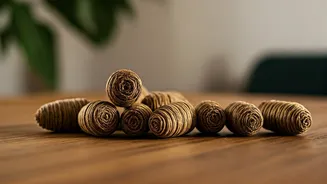
root system, which can grow several metres deep. These roots contain a fragrant essential oil, and when harvested, dried, and bound together into small, conical shapes, they become vetiver cones. When lightly spritzed with water or simply left to sit, they release a distinct, lingering aroma into the air. They are a natural, chemical-free alternative to the synthetic plug-ins and sprays that have dominated home fragrance for decades, offering a scent that is complex, subtle, and deeply grounding.
The Scent of Petrichor
To describe the scent of vetiver is to describe a feeling. It’s not a simple floral or citrus note. Instead, it’s earthy, woody, smoky, and slightly sweet—often compared to the beloved smell of the first rain on dry soil, or petrichor. This olfactory connection is potent, evoking a sense of calm, coolness, and connection to nature. In a world of artificial fragrances designed to smell like an idea—‘ocean breeze’ or ‘spring meadow’—vetiver smells like something real. It doesn’t mask odours; it transforms the atmosphere, grounding a space with its rich, loamy character. This complexity makes it a favourite in high-end perfumery, but its purest expression is found in these simple, raw cones.
From Traditional Coolant to Modern Wellness
The use of khus is far from a new trend in India; it’s an ancient practice being rediscovered. For centuries, woven mats and screens made from vetiver roots have been hung in doorways and windows. Sprinkled with water, they cool the hot summer air through evaporation while releasing their signature scent. Khus is also a key ingredient in traditional sherbets and Ayurvedic remedies, celebrated for its cooling and calming properties. The handcrafted cone is simply a modern, compact evolution of this heritage. It takes the ancient wisdom of using khus for its atmospheric benefits and packages it for contemporary urban living, fitting as neatly on a minimalist work-from-home desk as it does in a traditional courtyard.
The Artisan and the Aesthetic
The “locally handcrafted” aspect of these cones is not just a marketing tag; it is central to their appeal. This trend is part of a larger consumer shift towards products with a story and a soul. Mass-produced diffusers and candles are being set aside in favour of items made by local artisans. These cones are often created by rural communities, providing a sustainable livelihood that relies on traditional skills. By choosing a handcrafted vetiver cone, a consumer is not just buying a home fragrance product. They are participating in a micro-economy, supporting craftsmanship, and bringing an object of authenticity into their home. This narrative value is a core component of the new wellness aesthetic, where the origin of an object is as important as its function.
Redefining the Ambiance of Home
Ultimately, the rise of the vetiver cone symbolises a fundamental shift in how we approach our living spaces. The home is no longer just a backdrop for life, to be decorated for visual appeal alone. It is increasingly seen as an active participant in our well-being—a sanctuary. This new aesthetic prioritises a multi-sensory experience. It’s not just about what a room looks like, but what it smells, feels, and sounds like. The natural, earthy scent of vetiver contributes to a biophilic design philosophy, which seeks to connect us with nature even within our urban homes. It’s a move away from the sterile and towards the soulful, proving that sometimes the most powerful shift in ambiance comes from the simplest, most natural sources.