








The Calorie Burn Conundrum
When it comes to burning calories, the answer isn't simple, as it depends heavily on workout intensity, duration, and your body weight. Generally, high-intensity running tends to burn more calories per minute than moderate swimming. For example, a 70
kg person might burn 300-370 calories in 30 minutes of running, compared to 200-330 for swimming. However, this gap closes significantly with vigorous swimming. Strokes like the butterfly can match or even exceed the calorie burn of a high-speed run. Because water is much denser than air, your muscles work harder against its resistance, which can also boost your metabolism for hours after you leave the pool.
A Question of Joint Impact
This is where swimming has a clear and significant advantage. Running is a high-impact activity, meaning that with every stride, your joints—especially your knees, hips, and ankles—absorb a force of two to three times your body weight. This can lead to overuse injuries like shin splints and stress fractures. Swimming, on the other hand, is famously low-impact. The buoyancy of water supports about 90% of your body weight, dramatically reducing stress on your joints. This makes it an ideal exercise for people with arthritis, joint pain, or those recovering from injuries, as it allows for intense conditioning without the jarring impact.
Muscle Toning and Development
While both activities build strength, they do so in very different ways. Running is a lower-body-dominant exercise, powerfully building your quadriceps, hamstrings, glutes, and calves. Swimming, by contrast, is a true full-body workout. It engages nearly every major muscle group simultaneously, from your arms, shoulders, and back to your core and legs. The constant resistance from the water helps build long, lean muscle tone across the entire body, offering a more balanced approach to muscular development than running.
Cardiovascular and Respiratory Health
Both running and swimming are champions of cardiovascular health, strengthening the heart and improving circulation. Studies show that both activities are effective at lowering blood pressure and reducing the risk of heart disease. Running can be particularly effective at increasing your VO2 max—a measure of how much oxygen your body can use during exercise. However, swimming offers a unique benefit for lung capacity. The need for controlled, rhythmic breathing can make your lungs more efficient at processing oxygen over time.
The Deeper Dive: Benefits of Laps
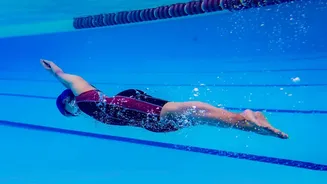
Beyond the physical metrics, swimming laps offers unique advantages. The rhythmic, repetitive motion combined with controlled breathing can have a meditative effect, helping to reduce stress and anxiety. Many swimmers enter a 'flow state', focusing only on their stroke and the water, which provides a mental break from daily worries. It’s a full-body workout that builds strength and endurance while being gentle on the body, making it a sustainable form of exercise you can do for a lifetime. The technical skill involved also offers a continuous opportunity for improvement and engagement.
Accessibility, Cost, and Convenience
In terms of pure accessibility, running often comes out on top. All you truly need is a good pair of shoes, and you can do it almost anywhere, anytime. This flexibility makes it easy to fit into a busy schedule. Swimming requires access to a pool or safe open water, which can involve membership fees and travel time. While the initial cost for swimming gear like a suit and goggles is low, ongoing pool access can be a bigger financial commitment than lacing up a pair of trainers.