




A New Life for Leftovers
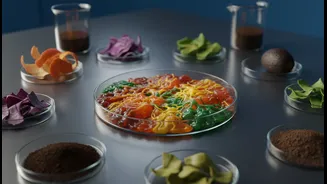
The core idea is simple yet revolutionary: upcycling. Instead of letting organic waste rot in landfills, we can use it as food for tiny, microscopic organisms like bacteria, yeast, and fungi. This process is called fermentation. These microbes consume
the nutrients in the food waste and, in turn, produce a biomass rich in protein. This end product, often called microbial protein or single-cell protein (SCP), can be harvested and processed into a powder. It serves as a sustainable and nutrient-dense ingredient, primarily for animal feed, which can help reduce reliance on traditional protein sources like soy or fishmeal.
The Science of Upcycling
Fermentation is a natural metabolic process you've seen in products like yogurt and bread. In this industrial application, food waste is first prepared to create a suitable 'substrate' or food source for the microbes. This might involve grinding, heating, or other pre-treatment steps to break down complex materials. The prepared waste is then placed in a controlled environment called a fermenter or bioreactor, where specific strains of microorganisms are introduced. Over a relatively short period, these microbes multiply rapidly, converting the waste's carbohydrates and other nutrients into protein-packed cells. The resulting biomass is then separated and dried, yielding a final product that can have a protein content comparable to meat.
Not All Waste Is Created Equal
Here's where the primary challenge lies. The term 'food waste' covers everything from clean agricultural byproducts to mixed post-consumer kitchen scraps. The quality and composition of this feedstock are incredibly variable. One batch might be rich in sugary fruit waste, while another could be heavy on starchy grains or oily residues. This inconsistency directly impacts the fermentation process and the final protein yield. More importantly, waste can be contaminated with plastics, heavy metals, pesticides, or harmful pathogens. Without strict sorting and quality assessment, these contaminants could end up in the final protein product, posing a significant safety risk. An ideal feedstock needs to be consistent, clean, and well-characterised to ensure a reliable and safe output.
Building a Safe and Scalable System
Because of the risks associated with variable feedstock, robust production standards are non-negotiable. This goes beyond simply checking the raw waste. It involves establishing a clear, traceable, and hygienic process from start to finish. Companies in this space need to implement Hazard Analysis and Critical Control Points (HACCP) systems, just like any conventional food or feed producer. This means continuous monitoring of the fermentation process for temperature, pH, and potential contamination. The final product must be rigorously tested for toxins, heavy metals, and nucleic acid levels, which can be high in some microbial sources and require management. Clear regulatory frameworks are crucial to ensure safety, build consumer trust, and create a level playing field for the industry.
The Indian Opportunity
For a country like India, which faces challenges with both waste management and protein security, this technology holds immense promise. Valorising agricultural and food industry byproducts can create a circular economy, turning a costly problem into a revenue stream. Producing high-quality animal feed domestically could reduce import dependencies and lower costs for the poultry and aquaculture industries. Furthermore, it aligns perfectly with national goals for sustainability and building smarter, cleaner cities. However, the success of this vision depends entirely on adopting a quality-first approach. It requires investment in waste segregation infrastructure and the development of clear, enforceable standards for production.