




A Quick Refresher on ChaSTE's Mission
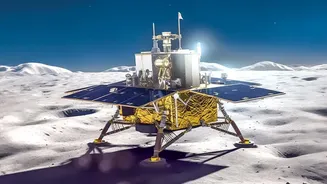
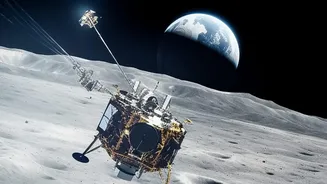
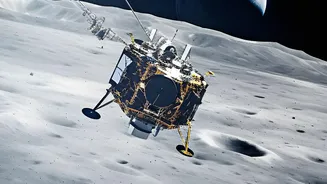
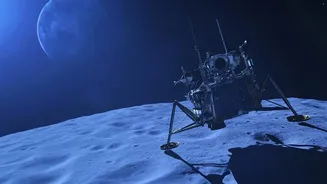
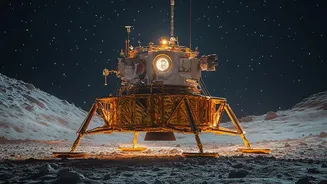
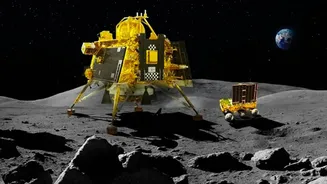
Before we delve into the new discovery, let's revisit the hero of this story: the ChaSTE instrument. Short for 'Chandra’s Surface Thermophysical Experiment', this device was one of the key scientific payloads aboard the Vikram lander. Its primary job
was to study the thermal behaviour of the Moon's surface near the south pole. To do this, it was equipped with a probe capable of penetrating up to 10 centimetres into the lunar soil, or regolith. This probe was fitted with 10 highly sensitive temperature sensors to create the first-ever detailed profile of temperature variations just below the lunar surface in that region. When ISRO released the first data from ChaSTE in 2023, the world of science was already stunned by the extreme temperature difference it found between the surface and a few centimetres below.
The Initial Shocking Temperature Drop
The first major finding from ChaSTE was a dramatic temperature gradient. While the lunar surface sizzled at around 50-60 degrees Celsius, the temperature plummeted to a frigid minus 10 degrees Celsius just 8 centimetres below. This massive 70-degree drop over such a short distance was far steeper than scientists had anticipated. It immediately suggested that the topsoil of the Moon was an incredibly effective insulator, but it also raised a new question: what were the physical properties of this soil that allowed it to insulate so well? Further analysis of the ChaSTE data, including how the probe physically entered the soil, held the answer, and it was more surprising than anyone thought.
Uncovering the 'Unexpected Structure'
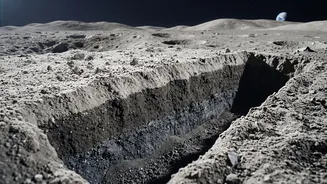
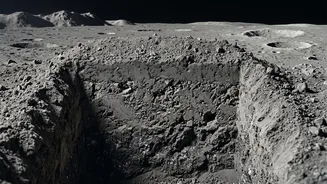
The 'unexpected structure' isn't a buried artifact or a hidden object. Instead, it's a surprising physical characteristic of the soil itself. Detailed analysis has revealed that the top layer of lunar soil is not uniform. The data indicates that the first 2 to 3 centimetres consist of a very low-density, highly porous material—almost like a fluffy, loosely settled powder. This layer is what acts as a powerful thermal blanket. However, below this fluffy layer, the soil's properties change significantly. It becomes much denser and more compact. It was the combination of the thermal readings and data on the resistance the probe faced as it pushed downwards that allowed ISRO scientists to deduce this layered composition. This two-part structure—a light, airy blanket over a more solid base—was not what previous models had predicted for the lunar poles.
Why This Finding is a Game-Changer
Previous knowledge about lunar soil, primarily from the Apollo missions, was gathered from equatorial regions. Those samples suggested a more homogenous regolith. The discovery of this unique layered structure at the south pole fundamentally alters our understanding of the Moon's surface geology. It suggests that the extreme temperature cycles at the poles, combined with other factors, create a distinct soil environment. This fluffy top layer is a far better insulator than previously believed. Think of it like a high-tech layer of aerogel, a synthetic material known for being mostly air and an excellent insulator. The Moon, it seems, has created its own natural version. This discovery is a testament to the importance of in-situ measurements; we had to go there and physically probe the ground to find this out.
Huge Implications for Future Lunar Ambitions
This finding is far from just an academic curiosity; it has profound practical implications for the future of lunar exploration and habitation. Knowing that the surface is covered by a super-insulating material is a massive boon. Future lunar habitats could potentially use this readily available topsoil as an insulating shield, piling it onto structures to protect them and their inhabitants from the Moon's wild temperature swings, which can range from over 120°C in sunlight to below -130°C in darkness. This could dramatically reduce the complexity and mass of habitats that need to be transported from Earth. Furthermore, understanding the soil's mechanical properties is critical for designing rovers that won't get stuck and for building landing pads and foundations that are stable. Every future mission to the lunar south pole will now be planned with this new Indian discovery in mind.