

Why the South Pole?
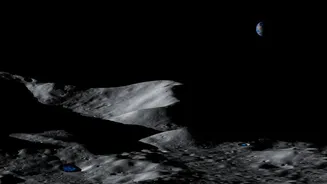
The intense interest in the Moon's South Pole comes down to two critical resources: light and ice. Unlike the equatorial regions, which endure two-week cycles of blazing heat and deep-freeze darkness, certain areas on the rims of polar craters are bathed
in near-constant sunlight. These 'peaks of eternal light' are prime real estate for solar power generation. Just a short distance away, inside the deep, permanently shadowed regions of these craters, temperatures plummet to some of the lowest in the solar system. It is here, shielded from the sun, that scientists believe vast quantities of water ice have been preserved for billions of years. This ice is the key to sustainability, offering a local source for drinking water, breathable oxygen, and even rocket propellant.
The Challenge of Power
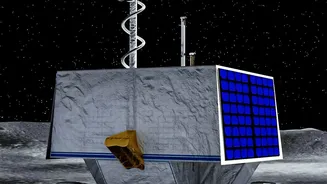
Even with access to near-constant sunlight, generating reliable power is a major hurdle. The low angle of the sun at the pole means solar arrays must be tall to avoid being blocked by shadows from terrain or other base components. Companies like Blue Origin are developing vertical solar array towers, some as tall as 20 meters, designed specifically for these conditions. However, for ventures into shadowed craters or to survive lunar nights, solar is not enough. To ensure a continuous power supply for life support and operations, space agencies are also developing small, mobile nuclear fission power systems that can provide steady energy regardless of sunlight.
Building with Moon Dust
Transporting building materials from Earth is prohibitively expensive, with some estimates putting the cost at over $1 million per kilogram. The solution is to 'live off the land' through a process called In-Situ Resource Utilization (ISRU). A primary focus is using lunar regolith—the layer of fine dust and broken rock covering the Moon—as a building material. Several methods are being developed, including 3D printing technologies that use microwaves or lasers to melt and fuse the regolith into solid, interlocking blocks. This approach could create landing pads, radiation shields, and even the basic shells of habitats. These structures would offer crucial protection from the Moon's harsh environment, including extreme temperature swings, cosmic radiation, and micrometeoroid impacts.
Extracting Buried Treasure: Water Ice
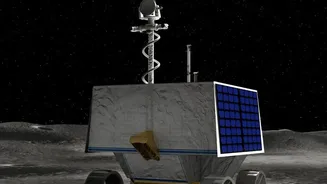
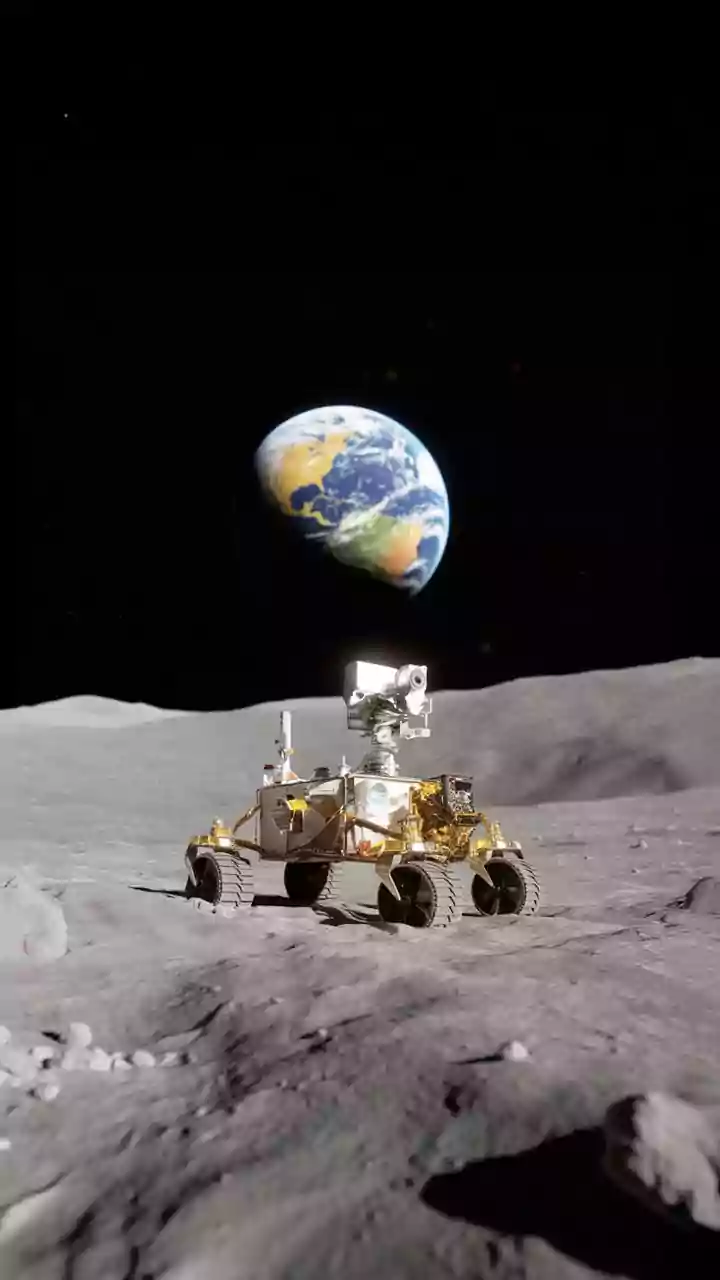
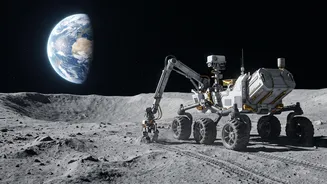
The water ice at the South Pole is not a clean, solid block but is mixed in with the lunar soil in permanently shadowed regions. Extracting it is a complex process that requires robotic rovers, like NASA's planned VIPER mission, to first map the deposits. Actually harvesting the ice will involve excavating the frozen regolith in extreme cold and darkness, then heating it in a contained environment to sublimate the ice into vapor, which can then be captured and condensed into liquid water. This water is vital not just for life support but can be split into hydrogen and oxygen through electrolysis, providing breathable air and the two key components of rocket fuel.
Surviving the Hostile Environment
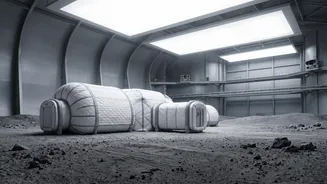
A lunar habitat must be a self-contained ecosystem, but the dangers lie just outside its walls. Without an atmosphere to burn them up, micrometeoroids constantly bombard the surface. Then there's the lunar dust itself—fine, abrasive, and electrostatically charged, it clings to everything and poses a significant health risk if inhaled. Habitats must be impeccably sealed, and robust systems will be needed for dust mitigation on suits and equipment. Above all, there is radiation. The Moon has no global magnetic field to shield it from galactic cosmic rays and solar particles. This means habitats will need to be heavily shielded, likely by burying them under several meters of regolith, or by locating them inside natural underground shelters like lava tubes, which NASA is actively investigating.