







Maximise Your Visibility
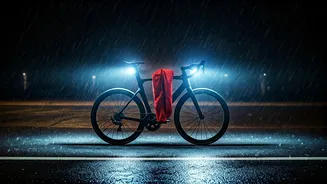
In the grey, dim light of a downpour, you become nearly invisible to motorists. This is the single biggest danger of monsoon cycling. Your first line of defence is to light yourself up. Ensure you have a powerful, waterproof front headlight and a bright,
flashing rear light. [6, 22] These should be used even during the daytime in heavy rain. [4] Beyond lights, invest in high-visibility clothing. Neon green, yellow, or orange jackets make you stand out against the urban landscape. [6, 22] Many cycling-specific jackets and accessories also come with retro-reflective panels, which bounce light from vehicle headlights directly back at the driver, making you glow in their line of sight. [12, 19] Consider reflective ankle straps or decals on your pedals; the constant motion of your feet creates a strong visual cue that drivers recognize more easily. [15]
Adapt Your Braking System
Wet roads drastically increase your stopping distance. Standard rubber brake pads can become slick and ineffective when wet. Before the monsoon begins, inspect your brake pads for wear and consider upgrading to pads specifically designed for wet conditions. [2, 21] Disc brakes generally perform better than rim brakes in the rain, but whatever system you have, it must be in perfect working order. Test your brakes regularly in a safe, open area to understand how they respond on wet surfaces. The key technique is to brake earlier and more gently than you would in the dry. [5, 26] Avoid sudden, hard braking, especially in corners, as this can cause your wheels to lock up and skid. [6, 20]
Equip Your Bike for the Wet
A few key accessories can transform your monsoon riding experience from miserable to manageable. Full-length mudguards (or fenders) are non-negotiable. [4, 5] They prevent water and road grime from spraying up your back and onto your drivetrain, keeping you cleaner, drier, and protecting your bike's components. [16] Check your tyres, as well. For better traction on slippery surfaces, consider reducing your tyre pressure by about 10-15 PSI, which increases the contact patch with the road. [5, 25] Just be careful not to go below the manufacturer's recommended minimum to avoid punctures. Some riders also opt for tyres with deeper tread patterns designed to channel water away. [18, 20]
Waterproof Yourself, Not Just the Bike
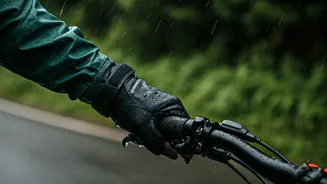
Staying dry is crucial for comfort and to avoid getting dangerously cold. A high-quality waterproof and breathable cycling jacket is your most important investment. [3, 11] Look for features like taped seams and a dropped tail for extra coverage. [13] Waterproof overtrousers, shoe covers, and gloves are also essential for keeping the rain out. [3, 18] A cycling cap worn under your helmet can be surprisingly effective; its peak keeps rain from running into your eyes and obscuring your vision. [10, 16] To protect your essentials like a phone and wallet, use a fully waterproof backpack or pannier, or at least a waterproof cover for your existing bag. [4, 5]
Master Defensive Riding Techniques
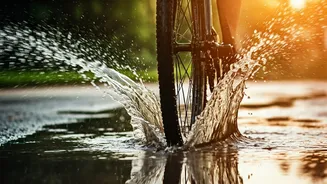
Monsoon rains transform city streets into an obstacle course. Puddles can hide deep potholes or other debris that could cause a crash. [6] It's always best to ride around puddles, but if you can't, proceed slowly and try to stay in the centre, where the surface is likely most stable. [6] Be extra cautious of painted lines and manhole covers, which become incredibly slippery when wet. Reduce your overall speed to give yourself more time to react to hazards. [20] Maintain a greater distance from vehicles, as their stopping distance is also increased. Be mindful of gusty winds and the strong drafts created by large vehicles like buses and trucks. [6]
Prioritise Post-Ride Maintenance
Rainwater, mixed with road salt and grime, is highly corrosive and can quickly rust your bike’s chain and other metal parts. [2, 9] After every wet ride, take a few minutes to rinse your bike with fresh water and wipe it down with a dry cloth. [9] Pay special attention to the chain, drivetrain, and brakes. Once the chain is clean and dry, apply a high-quality, water-resistant 'wet' lubricant to protect it from rust and ensure smooth shifting. [2, 9] This simple 10-minute routine will significantly extend the life of your components and ensure your bike is ready for your next ride.