

The Reigning Moon King
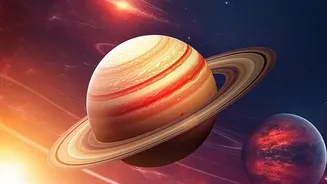
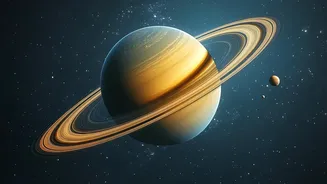
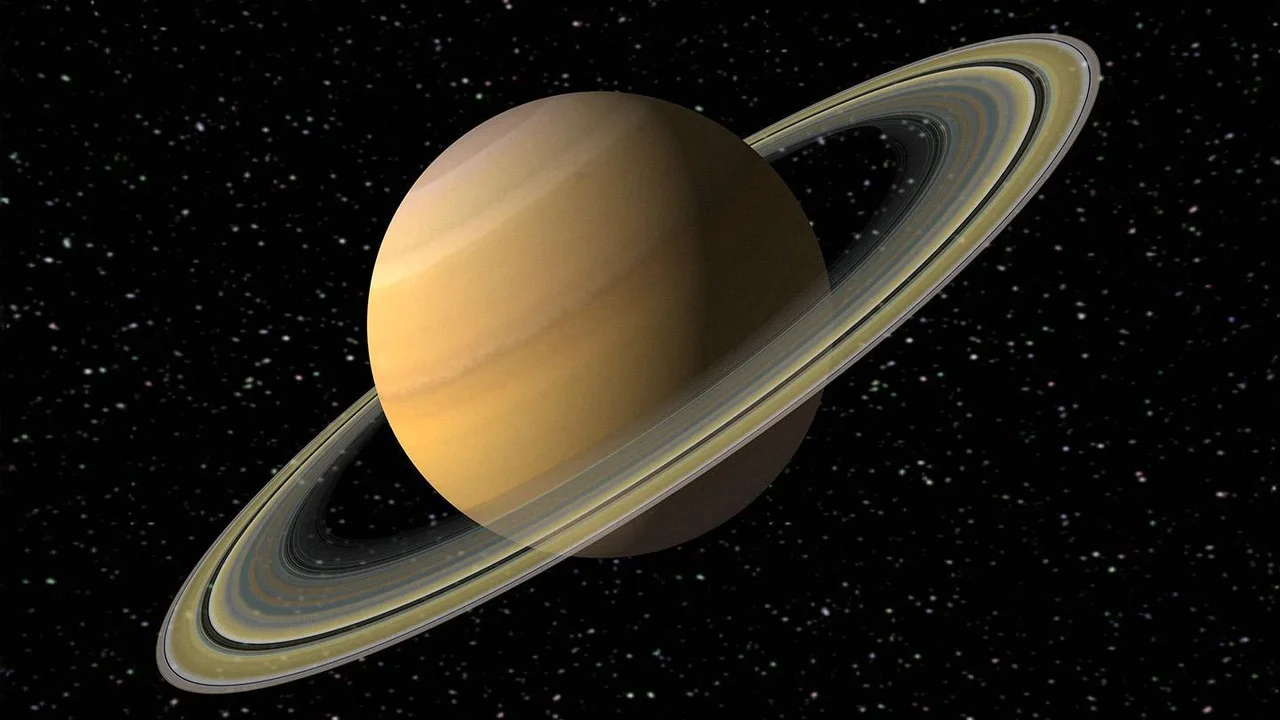
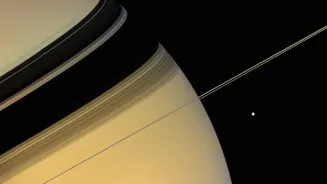
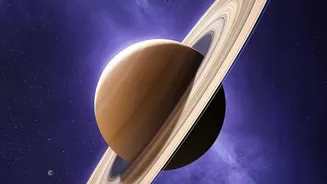
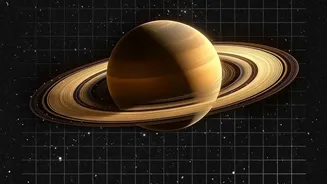
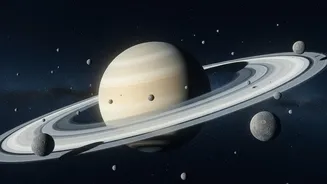
As of mid-2026, Saturn has the most known moons of any planet in our solar system, with the official count reaching a remarkable 293. This number firmly places it ahead of its rival, Jupiter, which has just over 100 moons. This cosmic leaderboard is not
static; it's a dynamic tally that has shifted back and forth between the two gas giants for years. The frequent updates are a testament to our improving ability to peer deeper into the cosmos. Not long ago, in early 2023, Jupiter briefly held the title with 92 moons to Saturn's 83. However, a cascade of discoveries, including a massive announcement of 128 new moons in 2025, catapulted Saturn into a commanding lead.
What Officially Makes a Moon?
One might assume the definition of a moon is straightforward, but it's more nuanced than you'd think. The International Astronomical Union (IAU) defines a moon, or natural satellite, as a celestial body that orbits a planet, dwarf planet, or even an asteroid. Unlike the strict definition for a 'planet', the term 'moon' is applied more generally. The real challenge lies in distinguishing a tiny, new moon from the countless bits of rock and ice that make up Saturn's famous rings or the asteroids that are just passing through. To be confirmed, an object must be tracked long enough for astronomers to calculate its stable orbit around the planet. This process can take months or even years of painstaking observation, which is why the count often jumps in large batches after discoveries are verified.
The Hunt for Hidden Worlds
So how do scientists find these small, distant objects? The days of discovering large moons with simple telescopes are long gone. Today's moon hunters rely on powerful ground-based observatories, like the Canada-France-Hawaii Telescope, and sophisticated data analysis techniques. They use a 'shift and stack' method, where they take many sequential images of an area of the sky near the planet. They then digitally shift the images at the speed they predict a moon would be moving. If a faint object is present, this process causes its light to stack up and become visible, while the background stars streak and fade into the noise. This technique has been instrumental in finding dozens of new, tiny satellites. Many of these recent discoveries are incredibly faint and small, some measuring only a few kilometres in diameter.
A Cosmic Needle in a Haystack
Discovering new moons is a monumental challenge for several reasons. First, these objects are incredibly faint and small, often no bigger than a town, and are located hundreds of millions of kilometres away. Second, they are orbiting a planet that is immensely bright, and the glare from the planet can easily wash out the faint light of a tiny nearby moon. The third challenge is confirmation. A single sighting isn't enough. Astronomers must re-observe the candidate moon over an extended period to confirm it is truly orbiting the planet and not just a background asteroid. Some of these moons have very long, irregular orbits, taking years to complete a single trip around Saturn, making the confirmation process a long-term commitment.
Why This Celestial Census Matters
Counting moons might seem like a simple exercise in astronomical record-keeping, but it holds profound scientific value. Many of these newly found satellites are 'irregular' moons. They have large, tilted, and often backward (retrograde) orbits, suggesting they were not formed with Saturn but were instead captured by its immense gravity long ago. These captured objects are pristine relics from the early solar system, offering invaluable clues about the environment in which the giant planets formed. By studying their composition and orbits, scientists can piece together a more complete history of our cosmic neighborhood and better understand the chaotic processes that shaped the planets we see today.